














Vilnius has become a second home for many international students. Among them is Rothy Catherine Dass, a 25-year-old from Dhaka, Bangladesh, who came to Lithuania in pursuit of her academic dreams.
From Dhaka to Vilnius: the path less travelled
Rothy wanted a different university experience, and this is how she ended up in Lithuania. The Covid-19 pandemic disrupted her first year of university in Bangladesh, and she was determined to find a new path.
“I was really sad because I didn’t want my university experience to be online,” she recalls.
Her brother had earlier decided to study in Estonia, and this opened her mind to the possibility of studying in the Baltic region. While initially considering the Czech Republic, Rothy stumbled upon Vilnius University’s English philology program online. “Vilnius just felt right at that moment,” she says.
Lithuania’s affordability was a key factor, as she planned to cover her own expenses. “I saw that in Vilnius it was possible for me to study and work.”
What first drew her to VU, she admits, were quite superficial reasons.
“Looking at the university’s videos and pictures, my first thoughts were that it was quite aesthetically pleasing, just a really beautiful place.”
However, her interest deepened upon discovering that the university’s program perfectly matched her academic goals.
Growing up in Dhaka, Rothy was always drawn to the English language. “I always knew I wanted to study English, or something related to it,” she shares.
Her father, an avid reader, played a significant role in nurturing this passion. “He is the one who has always influenced me into reading English books,” she says.
This early love for literature continues to be a source of comfort for her even today. “I still read a lot of books; it’s something comforting for me,” she explains, adding that she also enjoys writing for herself, be it diaries or short stories.
Confronting stereotypes and cultural differences
Because of her Asian background, Rothy has faced her fair share of stereotypes. She has often been mistaken for an Indian.
“I get it, it’s a very common mistake,” she says, “but there is this misconception that all brown people are from India.”
She has also experienced moments of casual racism, particularly when looking for housing.
“I had landlords tell me that you can’t rent this place because it’s going to smell,” she recalls, referring to the use of spices in South Asian cooking. Some landlords would also demand higher security deposits from her because she was a foreigner.
Despite these challenges, she says she hasn’t experienced “that much racism in Lithuania”, though she has encountered hostile comments on the street.
People are often surprised by her command of English, which she finds frustrating.
“I’ve had people ask me things like, ‘Are you sure you're from Bangladesh?’ and ‘Are you sure you didn’t grow up somewhere else?’” she says. “And then I think to myself, we also have education here,” she smiles.
Cultural differences were also a part of her adaptation. She notes the stark contrast between the collectivist culture of Bangladesh and the more individualistic nature of Lithuania.
“Everyone seems to mind their own business, and people are not very friendly at first,” she says, adding that the impression changes once you get to know them.
Fashion differences were also a surprise.
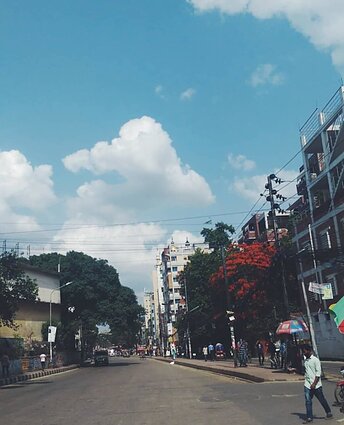
“Everyone seemed to wear dark, neutral colours, which was odd for me to see at first because where I come from it’s normal to dress very brightly.”
Even after living in Lithuania for three years, she still feels the weight of people’s stares, particularly from the older generation.
However, one of the bigger things that she needed to adapt to was the weather. “Something that always bothered me is the weather,” she admits. “It was almost shocking.”
She notes that, while she had expected the weather to differ, it was a shock to see how cold it could get in only a matter of days.
Patriotism and personal freedom
Rothy was pleasantly surprised to find a strong similarity between her home country and Lithuania: a deep sense of patriotism. “You cannot talk badly about the country, or you will receive bad looks from people around,” she observes.
She finds historical parallels in the struggles both nations have faced against foreign powers, developing a similarly fierce sense of national pride.
Among the chief differences, she notes the role of gender. Growing up in a Muslim country, she faced traditional expectations for women. “In Bangladesh, it doesn’t matter if you’re going downstairs for a few minutes; you have to wear a scarf for modesty to cover your chest,” she says. In Vilnius, she feels a greater sense of freedom.
A wish for better support
When asked what could be improved for international students, Rothy points to a lack of clear information.
“I would have liked it if there had been clearer instructions regarding healthcare options,” she says.
She notes that she was unaware of some of the perks associated with her residence permit for almost half a year.

Newsletter
Every Friday morning.