









Lithuania’s incoming government is facing criticism after floating the idea of buying back private investors’ shares in Ignitis Group, the country’s largest energy company.
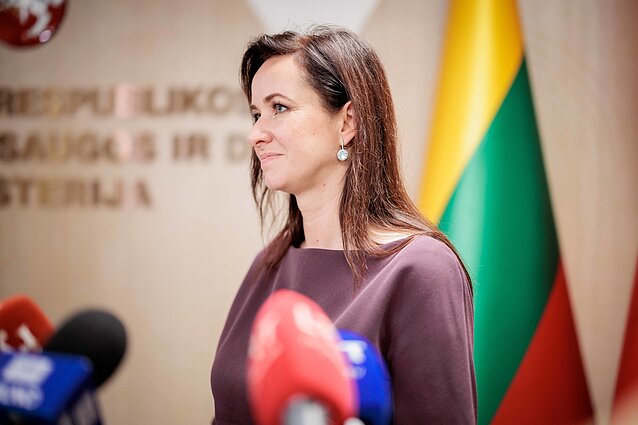
Designated Prime Minister Inga Ruginienė moved quickly to calm concerns, saying any buyback would happen gradually. She argued that during a tense geopolitical period, a strategic company like Ignitis should be fully owned by the state.
Critics warn the plan could cost taxpayers up to half a billion euros, take two decades to pay off, and still leave unanswered the question of why it is necessary. President Gitanas Nausėda’s office also noted the lack of clear arguments for the move.
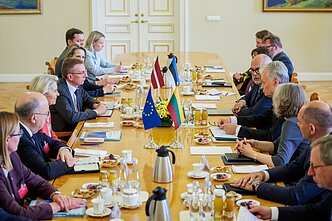
The buyback plan was not included in the coalition agreement signed last week by the Social Democrats, the Nemunas Dawn party and the Farmers and Greens Union.

Economists who reviewed the agreement said it clearly signals new policies: an additional tax on banks, scrapping the Food Council created to monitor prices, higher excise taxes on alcohol and tobacco, and a freeze on fuel excise hikes.
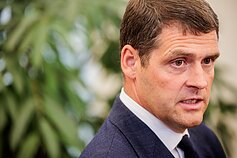
Former Finance Minister Gintarė Skaistė, of the conservative Homeland Union, warned that halting fuel excise increases could trigger problems with Brussels, where Lithuania has committed to raising climate-related taxes.
This is the second coalition deal signed by the Social Democrats in just over six months. This time, the Farmers and Greens Union replaced the more business-friendly Democrats “For Lithuania” party.
The agreement also sets out commitments on defence, education, healthcare, infrastructure and the economy.
“Without question, much attention in the coalition agreement is paid to social issues. Pensions will be indexed more generously than before,” said Social Democrat faction leader Remigijus Motuzas.

Skaistė countered that the government must still balance the state budget. “Indexation is usually increased by one or two percentage points above the base rate. The question is, how much faster is ‘faster’?” she asked.
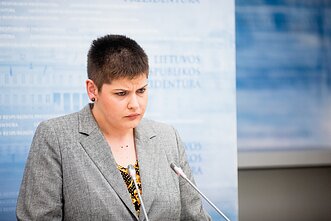
Vilnius University lecturer Živilė Simonaitytė-Vasiliauskienė warned that using the state social insurance fund’s reserves to boost pensions would be unsustainable. “It’s a short-term increase. We eat up the money, raise pensions, and then what?” she said.
Some economists argue part of the reserve could be used for pensions, if carefully managed. “What we really need to think about is how to invest that reserve. Letting it lose value is also a problem,” said Vilnius University associate professor Algirdas Bartkus.
The coalition also pledged to introduce a new “financial stability tax” on banks once the existing solidarity tax – a levy on windfall profits unleashed by the European Central Bank’s monetary policies – expires this year.
“I think this came from the Farmers [and Greens Union], and it looks like a revival of the bank asset tax once proposed by Zbignev Jedinskij,” Skaistė said, referring to a former parliament member known for his proposal to tax banks. “Now it’s being framed as a tax on bank liabilities.”

She warned the measure could backfire, since liabilities include household and business deposits. “That means banks would pay a set percentage on people’s savings – and there are examples of this in countries like Hungary.”
Simonaitytė-Vasiliauskienė added that the tax could push more banks to relocate. “We already have one major bank that moved operations to Estonia. Others may follow, leaving us with fewer taxpayers and lower revenues.”
Sweden’s SEB group announced in 2024 plans to consolidate its three Baltic banks into one headquartered in Tallinn. Former PM Ingrida Šimonytė, in whose cabinet Skaistė served, then commented it was part of long-term optimisation and would not affect services to Lithuanian clients.
The new coalition also plans to freeze fuel excise hikes while raising taxes on tobacco and alcohol. Supporters say the move will keep gasoline and diesel prices stable while encouraging healthier lifestyles.
“By making these products more expensive, people may think twice about whether those expenses are worth it,” Bartkus said. “Buying them is basically buying yourself a chance at a trip to the oncology ward.”
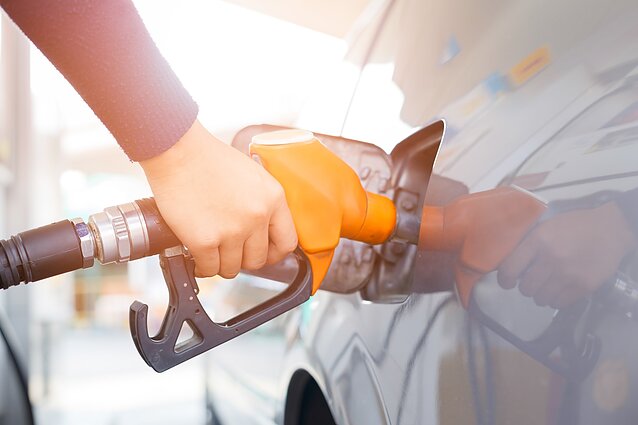
Skaistė warned that freezing fuel excises could put Lithuania at odds with the EU, where climate-related taxes are tracked as part of emissions reduction commitments.
Ruginienė countered that stabilising fuel prices would help consumers directly. “Every resident feels the impact of rising costs. Our standard of living and dignity depend on controlling that,” she said.
Bartkus noted that state revenues would not necessarily suffer. “Once the money goes into the treasury, it doesn’t matter whether it’s from VAT, excise, or speeding fines – it’s still revenue.”
Coalition leaders also promised to ease the pressure of rising prices by raising household incomes, not by controlling prices directly.
Speculation has surfaced about a second, undisclosed coalition deal that could include the Ignitis buyback. Ruginienė denied such a pact but admitted the issue came up during negotiations.
Ignitis, Lithuania’s biggest energy company, sold 25% of its shares to private investors in 2020. It raised nearly half a billion euros in what the company called the “deal of the decade”.
It coincided with the EU-mandated electricity market liberalisation where the state scrapped price controls for household users and invited other suppliers to compete with Ignitis. However, the company remains by far the biggest market player.

The Nemunas Dawn party has since criticised the sale of Ignitis shares, with its leader Remigijus Žemaitaitis saying the state must reclaim its assets.
Žemaitaitis, who welcomed his party’s control of the Energy Ministry in the new government, argued that buying back shares would help stabilise electricity prices.
“There is no reason to fear that one day we will suddenly spend hundreds of millions to buy back 25% of Ignitis,” Ruginienė said. “We only agreed to study the possibilities.”

Simonaitytė-Vasiliauskienė dismissed the idea as “populism”. But presidential adviser Augustinavičius noted that in France, similar moves were made because private investors’ short-term goals clashed with long-term energy projects.
Still, he questioned the financing. “We should start with the main point: What exactly is the goal of this idea?” he said.
Skaistė said the buyback would be a costly distraction. “It would cost about half a billion euros. The state would recover that money through higher dividend payments only in about 20 years. At a time when we need funds for defence, is this really the priority?”

Newsletter
Every Friday morning.