











Lithuania has restricted part of its airspace ahead of the upcoming Zapad military exercises, with the armed forces given authority, in extreme circumstances, to shoot down aircraft that violate the no-fly zones. Pilots would first be warned by radio – although small aircraft and gliders are not required to carry radio equipment.
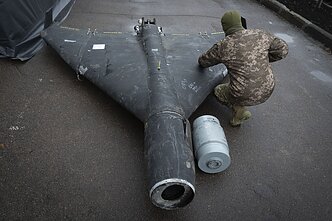
The decision was accelerated after two Russian Gerbera drones crossed into Lithuanian airspace in July, one carrying explosives. Acting on a request from the Chief of Defence, the Transport Ministry swiftly introduced additional security measures from August 13.
“The decision was taken in view of the security situation and the risks posed to the public, including threats to civil aviation from drone incursions into Lithuanian airspace, as well as the need to create the necessary conditions for the armed forces to carry out their statutory duties in peacetime when responding to such violations,” the Transport Ministry said in a written statement.
Six new restricted zones have been introduced along the border with Belarus. All pilots are required to check updated information before each flight to ensure they do not enter prohibited airspace.

Recreational flights near the frontier are considered particularly hazardous. In cases where an unidentified object enters the no-fly zone and cannot be contacted, the military has the right to take it down.
This is particularly important given that hobby pilots do sometimes violate airspace rules, according to flight instructor Arūnas Rupkus.
“It can happen that they enter the border zone by as little as 100 metres. Such infringements do occur, especially now with GPS signal disruptions. Pilots generally avoid flying near the border areas. From experience, it is not something that is strongly emphasised in training, but these cases are not frequent either,” he said.
According to the Lithuanian Transport Safety Administration, nine such violations have been recorded over the past five years.

“So far this year we have had no violations, while in 2024 there were two,” said Margarita Paulauskienė, senior adviser at the Civil Aviation Division.
She noted that violations used to be far more frequent.
“They have decreased significantly. In the past, breaches of border zones and incursions into restricted areas were very common. Since the Transport Safety Administration began issuing fines for such offences, compliance has improved considerably. Penalties have now been raised – starting at €1,500. Previously, when no formal reports were filed, the aviation community made little effort to follow the rules. But after stricter enforcement, such incidents are now isolated and largely harmless,” emphasised Paulauskienė.
Unlike commercial and military aircraft, ultralight planes and gliders are not required to carry transponders or radios, making identification and communication difficult.
Aviation groups say mandating radios for all small craft would be hard to enforce.
“I can’t really imagine how that could be implemented. On planes, it’s no problem, but on a powered hang glider there’s nowhere to install it. Even if you had the connection, you wouldn’t be able to pinpoint your exact location while flying over the forest. I know of examples in other countries: there are apps – not radio systems – where, once the aircraft is registered, you activate the app on your phone. While flying, it tracks and identifies you. I believe that Latvia has already implemented such a system,” explained Rupkus.

The active phase of the Zapad exercises in Belarus is scheduled for September 12–16. Security experts have warned of possible provocations. Retired colonel Ignas Stankovičius said closing the airspace was a vital precaution, citing the 2014 downing of Malaysia Airlines flight MH17 over Ukraine as an example of what can happen when restrictions are not imposed.
The closure along parts of the Belarusian border will remain in place until October, and may be extended if the threat from drone incursions persists.

Newsletter
Every Friday morning.