












Jesuit priest Andrius Rudamina is the first known Lithuanian to set foot in India in 1625. At the time, such a voyage was tantamount to madness: six months at sea, illness, death, and an utterly foreign culture ahead. This year marks the 400th anniversary of that extraordinary journey.
A crazy journey
Laimonas Talat-Kelpša, former ambassador to India and author of the book Rudamina: The First Lithuanian in India, told LRT RADIO that Rudamina was his starting point for developing a narrative around Lithuania–India relations.
“He was a pioneer, the first documented Lithuanian to arrive in India. Not only is the year recorded, but also the precise month and date. Perhaps earlier, during our pre-Baltic times, when Aryans migrated across continents, there were proto-Lithuanians who reached that land. But from modern history, as far as we know, Andrius Rudamina is indeed the very first,” said Talat-Kelpša.
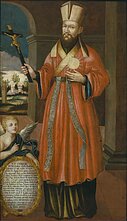
The book’s illustrator, Elzė Milašiūtė, said she agreed without hesitation to contribute to the project. She not only had to depict Rudamina himself but also reconstruct his environment and illustrate the book in full.
She admits to learning about Rudamina only recently – when she was invited to join the project.
“I was shocked that we had someone who reached India at such a time. Back then, it was an absolutely crazy journey,” Milašiūtė remarked.
Talat-Kelpša pointed out that Rudamina is part of a much broader picture – one still largely unfamiliar to the public. Rudamina’s life, he said, reflects early modern Lithuania: what was happening there, who lived there, what they studied, read, and hoped for.
“Rudamina is part of that whole world. And this book, his life story, very well illustrates the gaps we still have – which, once explored, are filled with the most unexpected details,” he explained.
A turn away from politics
The former ambassador recounted how Rudamina’s parents had sent him to study in Leuven – then part of the Netherlands, now in Belgium. In Western Europe, he studied law, engaged with Latin texts, and translated them into Polish.
“He was an educated, enlightened man. But he felt a calling – a divine calling – and chose that path. His father had envisioned a political career for him,” said Talat-Kelpša.
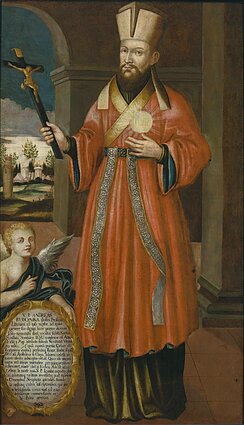
Had his father not died prematurely, Rudamina might have become a leading statesman, he suggested. The family even tried to dissuade him from a clerical life.
“They rallied together and tried to ‘save’ him from his calling – rushing to marry him off. So, when he fled from the chosen bride, he left for good,” Talat-Kelpša said, smiling. “Once he joined the Jesuits, he was sent to study in Rome. There, according to his own or his friends’ accounts, he had a vision. And that vision called him to India for missionary work.”
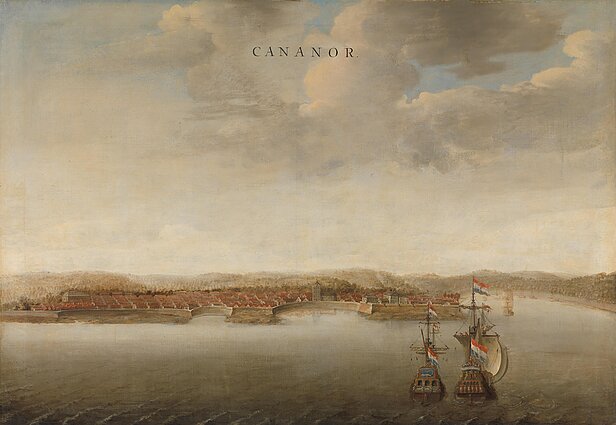
In the spring of 1625, once the seas had calmed, Rudamina and eleven other missionaries set off in a small vessel with almost no food or fresh water, enduring a six-month journey.
“Some died en route from illness. And finally, you land in a completely unknown land, an unfamiliar culture. You can’t even communicate with the people you meet, yet you must connect with them and begin your pastoral mission. That was Rudamina,” said Talat-Kelpša.

The former ambassador noted that Rudamina is better known in Lithuania as the first Lithuanian in China, as his time in India was short-lived. After a mosquito bite and a decline in health, he was sent to China, where the climate was considered more suitable.
“He left a significant legacy in China, too. There are translations. He was, by some accounts, relatively proficient in Mandarin. Throughout his life, he was interested in astronomy, and one legend claims he introduced the Chinese imperial court to astronomical instruments,” Talat-Kelpša said.
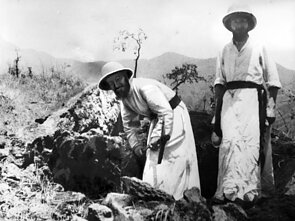
Talat-Kelpša added that Lithuanian–Indian relations have seen other “good madmen,” such as Antanas Poška, who retraced Rudamina’s journey to India by motorcycle some 300 years later.
“He, too, came up with the idea, had a vision, and decided to carry it out – regardless of what obstacles lay ahead,” said Talat-Kelpša.

Newsletter
Every Friday morning.