








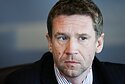

NATO members are ramping up military spending and will agree on a new target, says Secretary General Mark Rutte, which will be well north of 3% GDP for “hard” defence. Otherwise, he warns, “you will still have all your wealth, but you’ll have to speak Russian”.
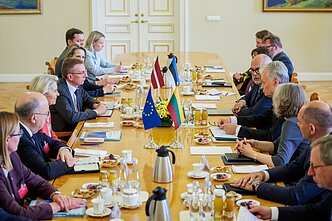
Rutte spoke on the LRT TV programme Topic of the Day during his visit to Vilnius this week.
We have heard clear statements that countries of our region are ready to increase defence spending. But 2% of GDP is not enough, we need to be ready for more.
Absolutely. And I really commend you for what you guys are doing, Lithuania, but also Latvia and Estonia, Poland. You are all ramping up defence spending from what was historically this famous 2%, which is already higher in many of the countries here. And you want now to move to 4 or 5, even 6%. I think Lithuania is now committed to end up next year between 5 and 6%. So that’s great news.
How long 5% will be enough to keep Russia away from our borders?
I think it will, because what we are doing is agreeing on all the gaps we have in our capabilities. NATO as a whole needs to be able to do X, Y and Z to be able to protect ourselves against a potential Russian attack.
Of course, we also have to take into account a Chinese military build-up. And with this type of defence spending […], if we do that, we can defend ourselves.

But some countries will find it very difficult to find more money immediately. From 2% to 5% is a big step.
Well, we are still having that debate within NATO to have a hard target considerably north of 3%. And then we need to agree on a target for defence-related spending, for example, investing in your defence industrial base, investing in your infrastructure, which also has to be able to move military groups around.
When it comes to preparing your society when it comes to defence. And of course, this is difficult because more money spent on defence cannot be spent on something else.
But in the end, if the Russians win, you will still have all your wealth, but you’ll have to speak Russian. Nobody wants that.

Before this week’s Vilnius summit, you called Russia a long-term threat to NATO. Does that mean that Russia is preparing to attack NATO?
Well, at least we have to make sure that they will never think about this option. That means that our deterrence has to be such that they will never try this.
Of course, they attacked Ukraine and we still are in the middle of this full onslaught of Russia against Ukraine, unprovoked, a sovereign country invaded by the Russians.
And what you have to make sure is that whatever is cooking on the Russian side and in the heads of Putin and others, that not only now he knows we can defend ourselves, but also three, five or seven years from now.

And as they are investing in their defence industrial base, getting the military ramped up on their side, we have to make sure that he will not try anything because he knows our reaction will be devastating.
Ukraine has conducted one of the most successful attacks on Russian air bases, and President Volodymyr Zelensky said that it would pressure Russia to be ready for a ceasefire. What is your opinion about that?
I think it was very impressive what the Ukrainians. And let’s not forget that these these Russian capabilities they attacked were part of the reason why Ukraine is under fire from the Russians.
So they took out some of those capabilities used to attack Ukraine, Ukrainian cities, innocent civilians.
So I think it’s really considerable what Ukrainians did.

When will Russia agree to a ceasefire?
I cannot predict, but we have to make sure that it’s clear for Russia that there is no way to win this, that we are totally united. All NATO countries, but also other countries like New Zealand, Australia and Japan were actively helping us to help Ukraine to fight off this Russian onslaught. So they have to know we are united.
We will make sure that Ukraine has what it needs going forward to stay in the fight, and that we are totally committed to a lasting and durable be it a long-term ceasefire or, even better, full peace. That’s what we are working towards.
Do you see any signs that the war in Ukraine is coming to an end?
At the moment, it’s still very much ongoing and Russian attacks are still very much happening.
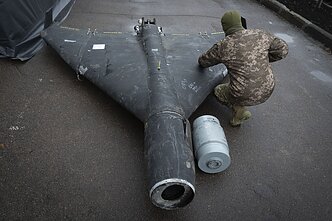
And we have seen over the last two weeks that the Russians have really increased their attacks through drones and missiles on innocent Ukrainians and Ukrainian cities, and not only the military.

Ukraine never asked for this war. They say the Russians had no reason to do this. They invaded a sovereign nation. Totally unacceptable.
But we have to make sure, whatever is in the hearts and minds and thoughts and discussions in Moscow, that they know that we will not let go, that we are totally committed to keep supporting Ukraine.
Will Ukraine receive any promises of NATO membership during The Hague summit”
Well, in Washington, NATO agreed that there is this irreversible path to NATO membership for Ukraine, and we are currently building that bridge through joint activities we have in Poland, where we capture all the lessons from the war, the command in Wiesbaden, which is there to make sure that Ukraine gets all the military support it needs, packaged in a way that they can make maximum use of it, including helping Ukraine to train its armed forces. What we are doing with the ongoing commitments to spend money on military support for Ukraine. All of this, of course, is building that bridge step by step.

Russia is repeating the same demands for years. Is Russia, in your opinion, in a position to dictate terms and make any demands to us?
No, not at all. They are the aggressor, and the aggressor should never be able to dictate terms.
And I’m very glad that US President Donald Trump broke the deadlock with Russia, started to have direct talks with Vladimir Putin. I think that was important. It’s important that the Americans are closely coordinating with Europeans, with Ukraine.
This will be a step-by-step approach. But it is not up to Russia to decide Ukraine’s future or its geostrategic position. They don’t have a vote or a veto on Ukraine’s NATO membership, EU membership. It’s, first of all, Ukraine deciding they want it, and then it is NATO and the EU taking the necessary steps to see how we can get them there.

Newsletter
Every Friday morning.