








Lithuania’s incoming Social Democrat-led government has revealed its draft programme, outlining the key priorities over the next four years. Here are the key points.
Keep in mind, the final programme is still due for approval by the parliament next week. Meanwhile, the official cabinet handover will take place on December 12 – so far, the president has also only approved 10 out of 12 candidates.
China and foreign policy
Paluckas previously said he would strive to improve relations with Beijing and restore full diplomatic ties after China had downgraded them and recalled its ambassador. Ties between the two countries deteriorated after Lithuania allowed Taiwan to open a de facto embassy under its own name, which angered China.
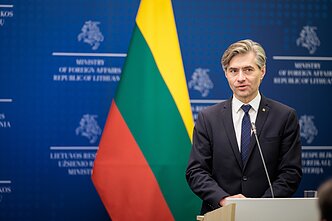
However, the incoming foreign minister, Kęstutis Budrys, who is the current chief security adviser to the president, said the “ball is in China’s court” as it wasn’t Vilnius that decided to downgrade diplomatic ties.
In the draft programme, the incoming government pledges to develop economic and cultural ties with Taiwan due to China becoming a “growing challenge” for Lithuania’s foreign and security policy. And when it comes to Beijing, Vilnius will seek EU and transatlantic unity in shaping relations with China.

Defence
The government’s draft programme calls for allocating at least 3.5 percent of GDP to defence, as well as being ready in time to host the 4,000-strong German brigade by late 2027.
In terms of Ukraine, the government has pledged to allocate no less than 0.25 of the country’s GDP for aid.
The defence issue will also expand to the health sector, with the government pledging to allocate an official to deal with the health system’s preparedness for military threats.
Social welfare and education
In short – the incoming government says it will place more emphasis on welfare, with more child benefits, as well as better accessibility to health services and education.
The new government will also review some schools that have imposed entry exams, which potentially limits access to education near children’s homes, as well as create a centralised school entry system.
The draft programme also proposes to roll back some of the reforms taken by the outgoing government, which also affected schools in Lithuania’s less populated regions.
Labour laws will also see a review, with a pledge to make it easier for unions to strike, as well as to establish liability for both individuals and organisations for cracking down on trade unions.

Energy and economy
The most vulnerable households will be able to return to the public electricity supplier, reversing the earlier policy of ensuring full electricity market liberalisation that was criticised for rising costs for the consumer.
The incoming government has also pledged to continue building two off-shore wind farms that could satisfy around half of Lithuania's electricity needs.
The programme also mentions security by protecting critical infrastructure from a “wide spectrum” of threats, as well as ensuring backup power generation and accumulation. The government will also encourage the ongoing construction of decentralised solar power capacity.
A special commission will be set up to analyse case studies to cut red tape. Debates about it were sparked by the earlier news of Teltonika, a Lithuanian high-tech company, stopping its multi-billion-euro investment due to alleged bureaucratic hurdles.
The government also pledges to treat foreign and domestic investors equally, as well as assign officials to oversee large-scale projects. The draft programme also calls for establishing a special fund to repair roads and bridges.
Taxes may also see a review, with the government pledging to make moves toward progressive rates.
Environment
The government plans to expand forests in the country and curtail the clear-cutting that had come under public criticism.
It also plans to improve livestock farming as well as promote ecological farming and accessibility to fresh produce.
Lithuania will also strive to become carbon neutral before the 2050 EU deadline and stop the decline in biodiversity.

Newsletter
Every Friday morning.