












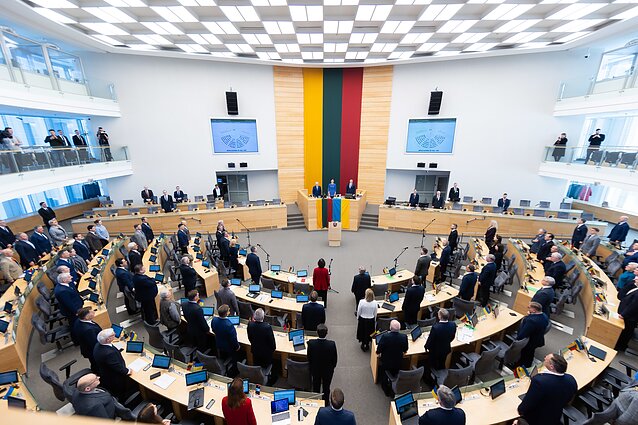
The Lithuanian parliament, Seimas, is starting the final session of its current term on Tuesday.
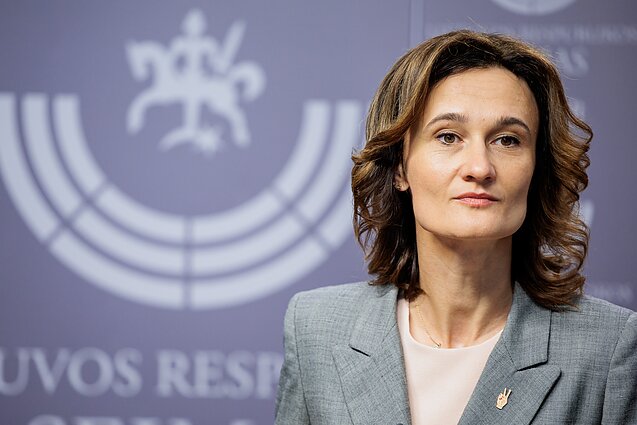
Parliamentary Speaker Viktorija Čmilytė-Nielsen told reporters on the eve of the session that she had three expectations for the upcoming session.
“The first one is that I would like to see the pre-election activity and generosity of MPs to be contained, because, naturally, it is a little more than a month before the first round of elections and there will be a temptation for the MPs to be very active, so I would like to see that not to be the main focus,” she said, referring to public spending initiatives by MPs eager to please voters before they hit the polls.
“Secondly, in this election period, we want constructive cooperation between all branches of government, [...] and thirdly, we want to do the things that are necessary,” the speaker added.
In particular, she said, this means drafting the government budget for 2025, debates on changes to the private pension scheme, and the adoption of the Law on National Minorities.
Čmilyte-Nielsen said it was difficult to say whether the same-sex civil union bill would be brought back to the Seimas agenda.
“The adoption of the partnership law requires the votes of the progressive opposition, it does not matter what the coalition will be in which parliamentary term; it requires the progressive forces, which are usually present in both the position and the opposition, to come together here. I do not see such resources, now that the Social Democrats have retreated. Of course, miracles happen, but the tendency has been for the opposition to retreat from this idea, from supporting it, despite the fact that ideologically it should be an issue close to the Social Democrats,” the Seimas speaker said.
The parliamentary autumn session starts on September 10 and ends on December 23.
As general elections will be held in October, this session will be concluded by the new parliament.

‘The most challenging term’ in three decades
Opening the session on Tuesday, Čmilytė-Nielsen said that the 2020–2024 term was among the most challenging ones in Lithuania’s recent history.
“It has been said many times, and from this rostrum as well, that the 2020–2024 parliamentary term has been one of the most challenging in the entire history of independent Lithuania. In terms of challenges and tensions, it can only be compared to the first Supreme Council-Reconstituent Seimas, which did not complete its term of office,” Čmilytė-Nielsen said, referring to the parliament elected in 1990 that declared the country’s independence from the Soviet Union.
Among the challenges she listed the Covid-19 pandemic and lockdowns, the 2021 wave of irregular migration via Belarus, the energy price shock, and the war in Ukraine.
According to Čmilyte-Nielsen, security issues – social, economic and national security – are the focus of the last session.
“We will also need to be constructive when finalising the bills we have already started to debate and while preparing for the adoption of the most important bill of the autumn – the 2025 budget. This requires a responsible, national approach that should not get overly unbalanced in the final stretch of the election,” she said.
She also mentioned the ratification of the defence agreement between the Lithuanian and German governments, the adoption of amendments strengthening the Riflemen’s Union, the Law on National Minorities, the bills reducing the availability of illegal gambling, a more balanced system of sanctions and punishments, and the improvement of the procedure of providing personal assistance.
The government has suggested that the parliament could vote on its tax reform bill that has stalled due to scepticism from the liberal coalition partners. However, Budget and Finance Committee chairman Mindaugas Lingė has indicated this is unlikely.

Newsletter
Every Friday morning.