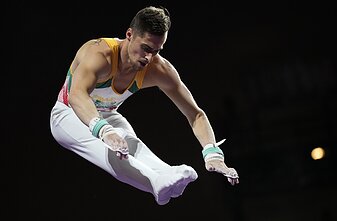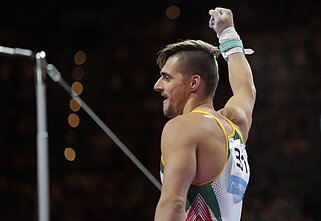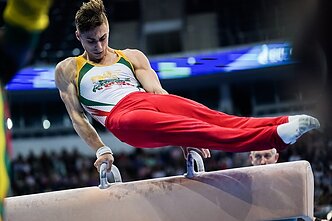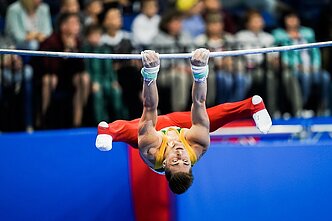















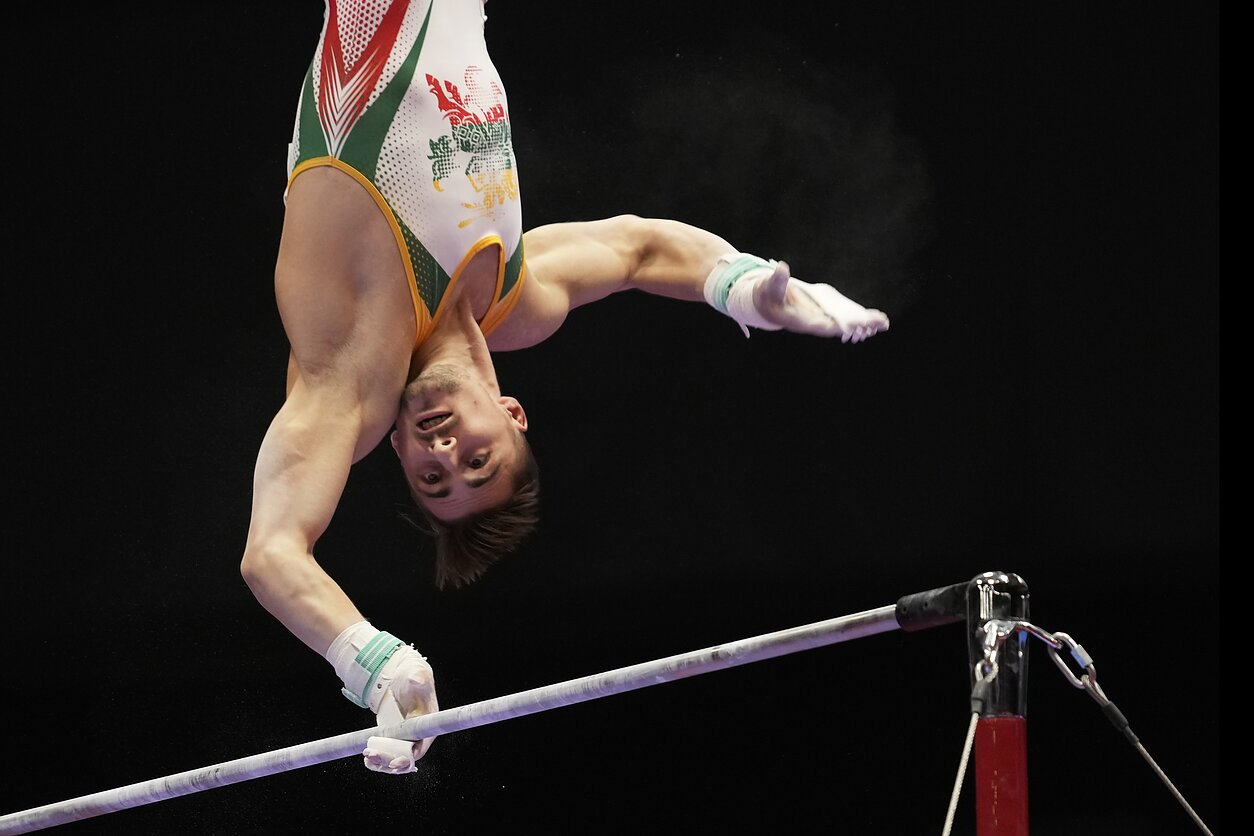
Among the 50 athletes in Lithuania’s Olympic team, Vilnius-native Robert Tvorogal, 29, is the only gymnast.
Tvorogal’s long-time coach Jevgenij Izmodenov says they’ll take risks this Olympics because there may not be many more opportunities in the future. During training, Tvorogal repeats new movements over and over again, waiting for his coach’s approval before going back to the bar.
In Paris, the athlete will also compete in the men’s parallel bars class, but Izmodenov pins most of his hopes on the horizontal bar, Tvorogal’s main strength. As the only Lithuanian gymnast who has won every rank of medal at the European Championships, he knows that the Olympic programme should be more complicated.

“Every day, we keep trying. Choreographing a new programme takes about two months and actually mastering it takes even longer. Sometimes it takes every day for a year to just hammer it down so it’s clean. A lot of the movements I’ve been doing for a long time, but I just haven’t been able to include them in a routine,” Tvorgalas said.
The athlete’s face betrays no emotion, but that’s just the appearance. Having suffered many injuries, he knows that mastering a new move requires overcoming fear, something he only achieves when he’s competing.
“There’s a lot of adrenaline during competitions. Then the fear automatically disappears. The risk is different there [at competitions]. You’re not afraid to get hurt. You don’t even think about the fact that you can fall and hurt your leg or shoulder. But, during training, that fear is always there because all of it could be for nothing,” Tvorgalas explains.
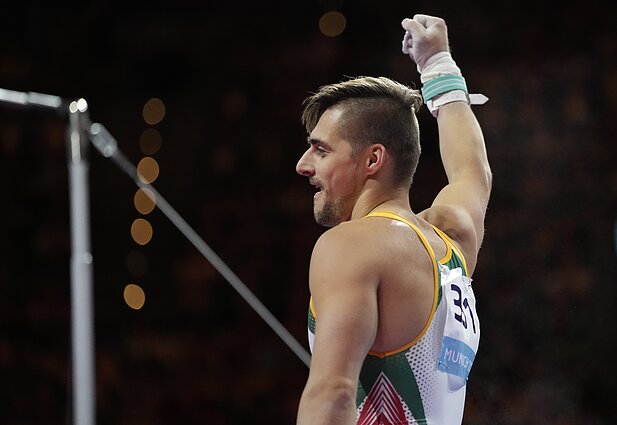
Preparation is difficult in Lithuania as the gymnast doesn’t have proper training conditions. Even though a gymnastics hall has been recently renovated, Tvorgalas says it’s not safe to train there.
“It’s pleasing to the eye, but that’s it. The equipment is new. I needed that equipment ten years ago, but now I don’t really need it. All I need is the bar and the landing pit. The pit wasn’t there before and it isn’t there now. There’s one for children, but you won’t be able to do much with it,” Tvorgalas said about the unsolved problem at the Vilnius gymnastics hall, something he’s been talking about over the years.
As a result, Tvorgalas mostly trains abroad. Conditions are not bad in Poland, but his team decided to train in France this year. The equipment in France is of the same brand as the one to be used in the games. Izmodenov says every detail is important before the competition.

Tvorgalas’s parents started taking him to gymnastics classes when he was five, but he started training professionally before the Rio de Janeiro Games of 2016 when he joined forces with Izmodenov.
“My coach is like family. He understands me well. That’s why we probably work so well together. We have a very good connection – not just as coach and athlete, but as friends,” Tvorgalas says.
“There was a different approach at the first Olympics. Not just as an athlete, but later as a friend. Life doesn’t stand still, everything moves forward. My approach changed, too. Then I had to push and yell but now everything is different. If you’re not friends at training and competitions, he can break. You have to look at everything very carefully so you achieve results,” Izmodenov says about his nine-year-long partnership with Tvorgalas.

When Izmodenov saw that a strong athlete could break under stress, he changed his tactics for the Tokyo Olympic Games. Tvorogal came to Japan with high ambitions. He triumphed in the European games in 2019, becoming the continental champion the following year, so he came to the Games with high expectations. He attempted a complicated and risky move and fell down.
“We try to make the most of opportunities and I’ll perform the routine as best as I can. I’ve done it a hundred times from start to finish, but achieving perfection is complicated. […] I believe there was too much stress,” Tvorgalas remembers his disappointment in Tokyo.
“It was hard after that competition,” adds Tvorgalas. The gymnast even thought about quitting, but his coach told him not to make rash decisions.
“Immediately after the Games, there were thoughts of a career’s end. I was very upset. I knew I would continue my work, but he was very disappointed. I first came to him and said that he had to forget about the competition and take a break from gymnastics. We decided he would take the break and we’d talk about it later. Later, there was no more reason to talk about quitting,” Izmodenov remembers the painful experience in Tokyo.
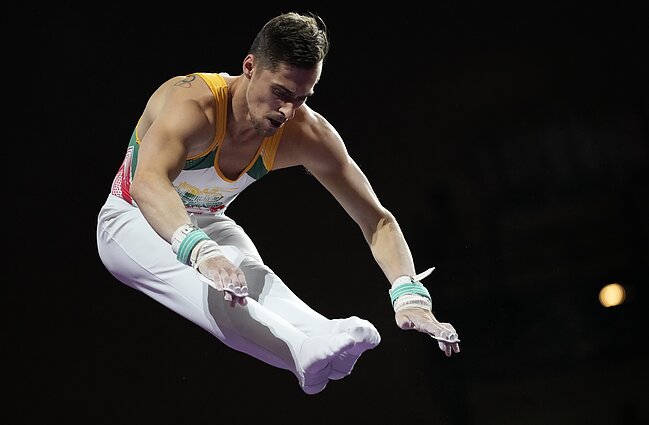
“I recovered and came back,” Tvorgalas says, adding that it only took him three weeks.
The gymnast was back on his victorious path quickly – he came second at the European Championships in 2022, winning another silver medal in the continental competition last year. This time, however, Tvorgalas is checking his Olympic ambitions.
“I’m not thinking too much about that. I don’t want to burn out. I just have the mindset to compete as best as possible. I’m not expecting too much from myself,” Tvorgalas says about his expectations for his third Olympics.
“The ambition is not as high as before. The main goal is to make it to the final. That’s the reality. As for the medals, we saw in Tokyo four people fall during the final. The winner of the third place had a very low score. The most important thing is to make it to the final, where everything can happen,” Izmodenov says.
Evenness and stability, which Tvorogal demonstrated during his path to the Olympics, will not be enough this time. That is why he is preparing a more complex programme. Whether to perform it fully will be a last-minute decision. A number of things will matter – including how he feels and what competition he’s facing. But they will be ready to take risks again, if it comes to that.
“When it’s your first Games, you’re not nervous, it’s all about participating and taking a better spot. When you’ve been ranking at the top throughout the season, then you start thinking about medals, finals and so on. You have the appetite for it,” says Izmodenov.
“Now we’re at our third Olympics, it could be our last. There will definitely be nervousness, unless you don’t take any risks. Last season was very unsuccessful for us, but this time it is much better. We won a medal at the European Championships, competing well. I believe that this will be our lucky year.”
Translated by Monika Jurevičius.

Newsletter
Every Friday morning.