














NATO says it is moving forward with plans to implement rotational air defence in the Baltics but is not giving further details.
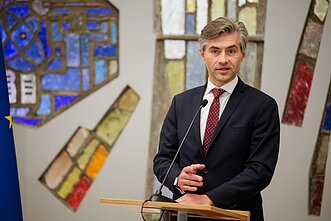
“I’m not going to talk about specific nations supporting specific capabilities in specific countries [...], but we are rolling that out from now,” NATO Deputy Supreme Allied Commander Europe Keith Blount told BNS during his visit to Vilnius last week.
According to him, rotational air defence is “a very important aspect” of NATO’s deterrence posture.
“And of course, it is receiving a lot of attention at the moment within the alliance,” Blount said.
NATO countries agreed on a rotational air defence model last June in response to calls from the Baltic states to reinforce the current air policing mission.
Defence Minister Arvydas Anušauskas said in early March that a rotational air defence system would be operational later this year and that Patriot air defence systems would be deployed in Lithuania. However, he did not name any contributing countries or specific dates.
Further reading
Blount said that “it’s not just about Patriots”.
“Let’s be clear. When people think about air missile defence, they very often move immediately to systems like the Patriots. An integrated air missile defence system is a system of sensors and shooters and shooters of varying degrees.” he told BNS.

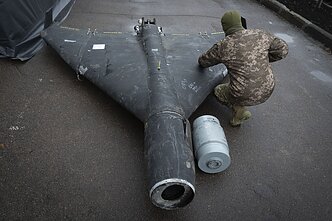
“If you look at Ukraine, the extraordinary innovation that Ukraine has demonstrated to us all is the development of an acoustic system to detect and indeed shoot at Shahed drones very successfully,” the commander added.
Lithuania has discussed the possibility of deploying air defence capabilities in the region with Germany, Sweden, the Netherlands, Italy, and Greece, but has not yet reached any concrete agreements.
With Russia increasingly shifting towards a wartime economy, Blount urged NATO member countries to accelerate their defence industries as well.
“We must absolutely make sure that we are standardised, that we have the defence industry operating at the capacity that we require,” he said. “If we can make things faster, then we can fire them, and if we can fire them faster than they can fire them, then we’re always going to win.”

Newsletter
Every Friday morning.