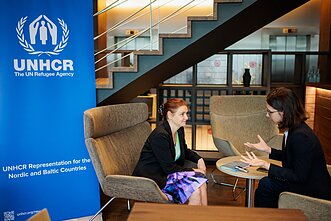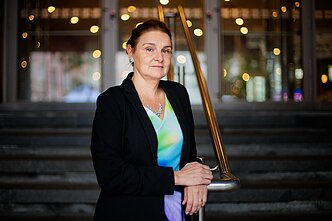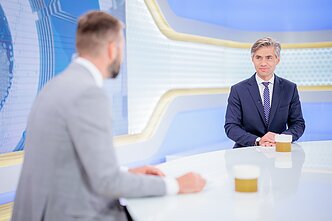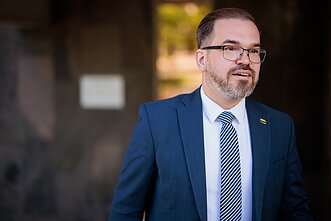











The number of refugees in the world is growing every year. Annika Sandlund, the new United Nations Refugee Agency (UNHCR) representative for the Nordic and Baltic countries, praises Lithuania’s integration of Ukrainian refugees but criticises its decision to turn away those crossing from Belarus.
The UN statistics show that the number of refugees in Europe and other continents is growing every year. What are the current hot spots?
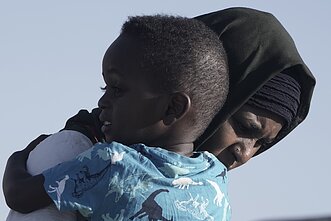
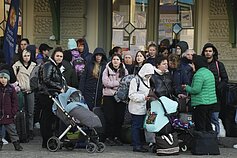
Obviously, the most important thing over the past two years has been the war in Ukraine, which led to millions being displaced. Not only in Europe, where there are over 7 million Ukrainian refugees, but also internally in Ukraine, where people continue to be displaced.
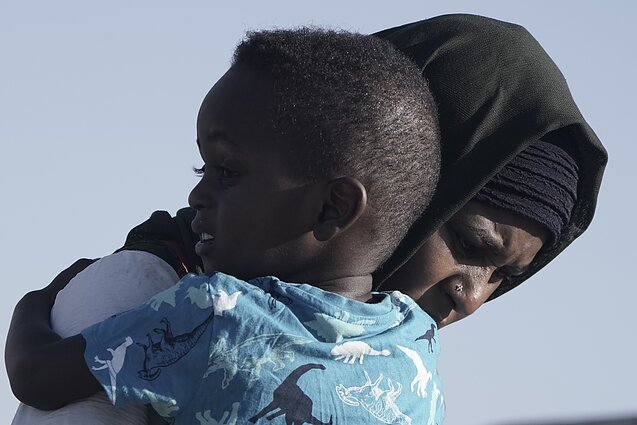
Secondly, the situation in Sudan has led to over a million people fleeing to the neighbouring countries and, again, many more internally displaced. Also, we have wars and conflicts that are never-ending, such as in Venezuela, Syria, and Afghanistan, which have been producing refugees for 40 years, and there are already second or third-generation refugees.
I think from our point of view, the worst thing is that anyone who has to leave their home is traumatised by their experiences and needs additional support to integrate into the new country – it might be language, culture, etc.
We report a lot of information to the UN Security Council, which is good because they get an overview of the humanitarian situation. The bad thing is that, even though we are aware of the situation, real political negotiations and solutions are not happening today.
But wars are becoming longer and longer, they’re also cyclical, as they come and go. Even now in this neighbourhood, everyone hopes for a quick and peaceful resolution, but it’s not forthcoming.
You mentioned political solutions. What kind of solutions do you think are needed?
As human beings, we can only do our best. I think the Ukraine war showed that Europe can actually make political decisions and they can open hearts and minds.
If we compare it to the previous crisis, we heard from politicians that Europe was full, that we couldn’t take in any more refugees. But the war in Ukraine showed that refugees can move and be welcomed when people understand the context.
We see and you mentioned yourself that in Europe, Ukrainian refugees and refugees from Africa or Asia are treated differently. Why do you think these differences exist?
I’m from Finland. My father was a refugee as a child. He was sent to Sweden when the Russians bombed Helsinki at the time. I think in this region, we have a historical context, the war feels close to us.
Actually, 86 percent of all refugees in the world go to neighbouring countries. If you look at the refugees leaving Sudan, most of them go to South Sudan and Egypt and are not coming to Europe. The same for Afghanistan – most Afghan refugees are actually in Pakistan and Iran.
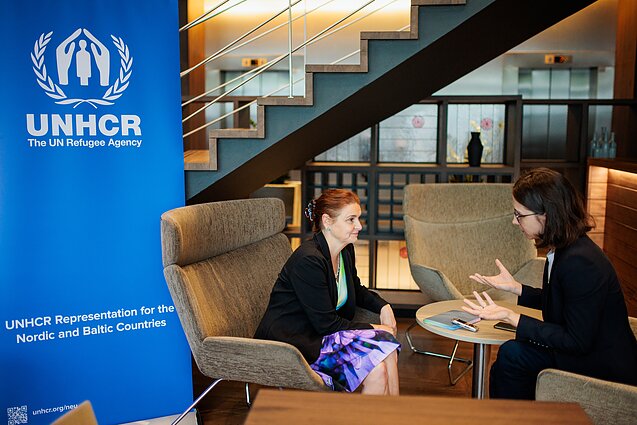
So, it’s human nature – we understand our own context and history better and it’s easier to help someone we can identify with.
For UNHCR as an institution, of course, a refugee is a refugee. There’s no difference, and we really appeal to all countries to keep their borders open to everyone. Then, it’s for the state to determine the reasons for fleeing and whether they are refugees or migrants.
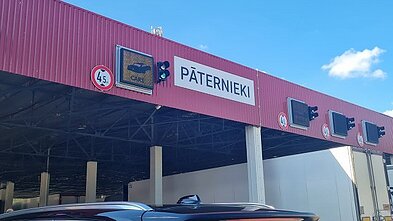
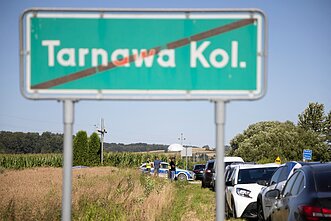
We should mention the migrant pushback policy along the Lithuanian, Latvian, and Polish borders with Belarus. We also refer to these people as migrants, not refugees. What do you think about the terms used and the pushback policy in general?
Being a migrant or a refugee is not dependent on your nationality, right? Everyone coming across the border should be allowed access to the territory. As UNHCR, we are also very frustrated when people are used as instruments for political goals – that goes against the refugee convention.
We are frustrated about that and we understand the frustration of the neighbouring states when people are being used, but I also think everyone recognises that they are being used. It’s not their fault that they are being instrumented.
We would ask Lithuania that they be allowed access to the territory and that the Lithuanian state officials do their job, which they’re very competent at, and determine once they’re on the territory, whether they’re refugees or migrants. And then, there are different possibilities, but based on a person's face, you cannot make that determination.
After the largest migrant wave from Belarus, Lithuania sent some of them to their country of origin. How do you assess this decision?
There should always be an individual assessment. UNHCR has quite clear guidelines, and we have non-return advice in place for certain countries. That means that even if you’re not found to be a refugee, in our opinion, you cannot be sent back to that country, and you would have to be given some kind of legal status to stay. Because the country needs to make sure that everybody in its territory is legal and has access to some kind of residence permit with rights.

However, the Refugee Commission also says that if you’re not in need of international protection, you can indeed be sent back. I’m sure in any population flow, there are people who are in need of international protection, as well as those who are not in need of it, who leave for economic reasons or who are tricked by smugglers and human traffickers about a better life, which is very seldom the case. And if the state determines that they’re not refugees, and they go through the appeal process, then, from our point of view, you can send people home if they’re not in need of international protection.
You once said that other countries could learn from Scandinavia and the Baltics about innovations in refugee integration and reception. What are those innovations or experiences that other countries could learn from us?
One of the things, which I think your country can be very proud of, is a very quick attempt to integrate the Ukrainian refugees. A very high percentage of them are already working, and many of the children are in school, which, of course, is the best-case scenario. If we look all over Europe, we have almost half a million Ukrainian children who are not in school in many of the European countries [...].
You can also be very proud that Lithuania has opened up its social security system and that’s not the same all over Europe. The temporary protection regime is the same, but each country has decided what kind of assistance to give. And even if we compare with some of the Nordic countries, the Baltic states are doing better than the Nordics on this. And of course, this is fundamental for integration. You need to feel that you’re the same. If you feel that you’re being treated differently, you risk getting depressed, but you also don’t feel welcome and don’t really want to integrate.
This is a new position for you, having previously worked in Africa. What are your goals in Scandinavia and the Baltics?
I’ve worked mainly in Asia and Africa, so this is very new to me. But everywhere we work, we work to support the governments to make better policies for refugees that are in line with international conventions and laws.
I do have a few ambitions for this role, which also includes Lithuania, to make sure that people have access to the territory and that there is understanding in the population as to why this is important.

Also, we all hope for peace in Ukraine, but unfortunately, it doesn’t seem to be happening. So, we also have to think together with Europe about how to manage after the temporary protection regime. What are the rights that should be given? How can we support Ukraine, the Ukrainian population, and refugees?
Ukrainians are clearly the largest group of refugees in Lithuania. There are tens of thousands of Ukrainians in Lithuania and under 1,000 refugees from other countries. So, clearly, in one way, the integration challenge is with the Ukrainians, and it’s the same for all of the neighbouring countries.

Newsletter
Every Friday morning.