










Lithuania used to boast that it lies at the geographical centre of Europe and even built a park around the spot as part of its campaign to “rejoin Europe” in the 2000s. The park has been somewhat neglected in the following decades but is now up for a facelift.
Poland, Slovakia, Ukraine, the Czech Republic, Hungary, Belarus, Estonia all claim to be the geographical centre of the continent. Geographers say such a variety of interpretations is possible because Europe as a continent is not very strictly defined, with a number of islands lying off its shores. Some include them in their measurements, others do not.
Scholars at the French National Geographic Institute decided in 1989 that the centre of Europe is located some 26 kilometres north of Vilnius.
Lithuanian geographers say they themselves were surprised to hear it from their French colleagues – but it resonated in a country fighting to regain a place in Europe as an independent state.
“It was not the Lithuanians who did the calculations, not the Lithuanian Geographical Institute, but the French Geographical Institute. One can say this was more objective – we were not stretching data, as all the other countries were in order to claim the centre,” says Algimantas Česnulevičius, professor at Vilnius University.

In the run-up to Lithuania’s accession to the European Union in 2004, the government allocated half a million litas – or some 145,000 euros – to mark the site of the Geographical Centre of Europe, building a marble-paved square and a tourist information centre. The grand opening of the park happened on May 1, 2004.
There is also a monument on the site, designed by the sculptor Gediminas Jokūbonis, with the date of Lithuania’s accession to the European Union, although the inscription is now virtually illegible.

The entire surrounding park is in a similar state of neglect. Initially, it was managed by the Ministry of Economy, which later unsuccessfully tried to find a tenant and eventually, a buyer.
Being at the centre of Europe stopped being as important for Lithuania as it actually became better integrated into the European Union.
“Today, Lithuania presents itself as a Northern European country,” says Marius Gurskis, head of the government’s Strategic Communication Unit. “In fact, we don’t widely advertise that we have the geographical centre of Europe. Sure, it could be a highlight in tourism marketing to attract travellers, but the infrastructure needs to be put in place for that.”
Vilnius District Municipality has decided to reconstruct the Geographical Centre of Europe. It is currently looking for contractors to draw up the plans.
The architects Simonas Čaikauskas and Faustas Lasys, who are among those who responded to the call for tenders, say they will try to preserve what is already there but add to it.

“There is simply a need for a modern building where employees could feel comfortable and work, as well as a venue for conferences and outdoor classes. Our proposed building would be a continuation of the composition created 19 years ago,” explains Lasys, architect at the firm Architektūros Linija.
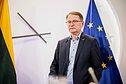
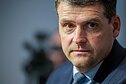
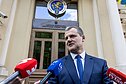
Robert Duchnevič, the newly elected mayor of Vilnius District, says the renovation of the centre of Europe park will cost 3.5 million euros, with the funding coming from the central government, the EU, and the municipality.
“It is worth doing for the sake of promoting tourism and sites in Vilnius District. It doesn’t matter whether it is the centre of Europe or the centre of Northern Europe – what matters is that it is lively and people are coming to see it,” says the mayor.
The renovation of the park is expected to last four years.

Newsletter
Every Friday morning.