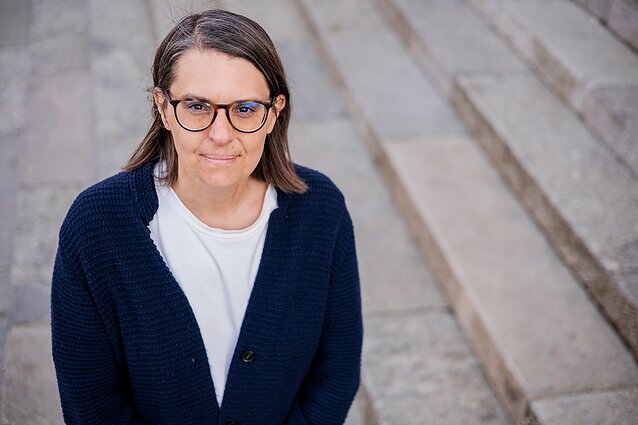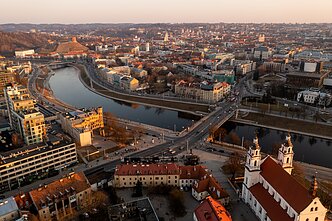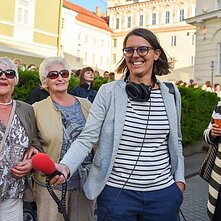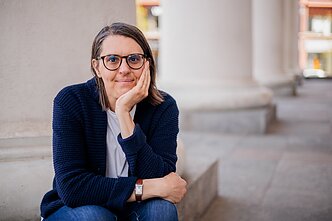











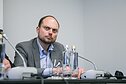



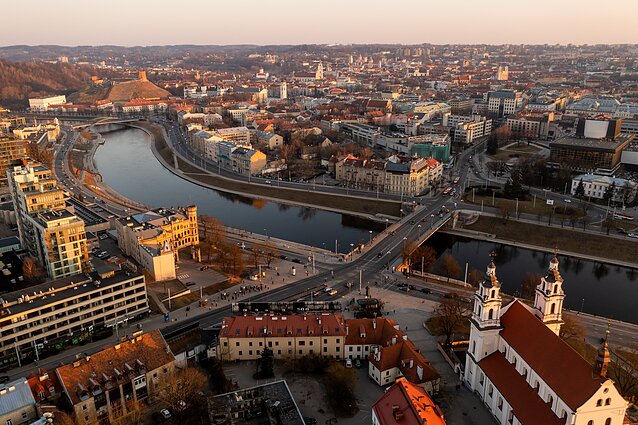
Marielle Vitureau, the Baltic correspondent of the French public radio, has been living in Vilnius for a quarter of a century. The journalist, who calls Vilnius her home, says there are only a couple of things that bother her in Lithuania – the lack of print newspapers and the unusual “food rhythm”.
“What a small airport,” was the first thought of Vitureau when her plane landed in Vilnius in 1998. Having previously visited Lithuania only for a short holiday, the then 25-year-old French woman had no idea that she would stay in Lithuania for so long.
“I lived in Germany before coming here. The opportunity to study German here came up, so I started studying. Later on, I started working as a journalist. And so, opportunity after opportunity, meeting after meeting, I’ve stayed here for all those years,” she tells LRT RADIO.
While living in Vilnius, Vitureau learned Lithuanian in less than two years. She took Lithuanian language courses at Vilnius University, but life itself forced her to learn the language faster, she says. Back in the day, there were no electronic checkouts in shops, so if you wanted to buy something, you had to talk to a salesperson.
Now, Vitureau feels at home in Vilnius, where she lives with her husband and their three teenage children. Her work also often takes her to Latvia and Estonia.
“As a reporter, I need to cover all kinds of topics. Of course, since February 24 last year, there is one major topic. I like to say that the large-scale attack on Ukraine is like an echo – it reverberates in all other areas,” the journalist says.
Before Russia invaded Ukraine, the French woman also covered other sensitive topics in Lithuania, including the so-called 2021 migrant crisis.
“Around 4,000 people crossed from Belarus. There were a lot of Africans who spoke French, so I was able to get quite close to these people, to follow their journey in Lithuania, to see how difficult it was to apply for asylum, and so on,” Vitureau recalls.
“Of course, it was necessary to be objective, to keep a distance, to report what Lithuania was doing, what the migrants were doing, and why. But they were shocking events nonetheless,” she adds.
But not all the reports are gloomy, as the journalist also pays attention to various good practices in the Baltics.

“It’s important that the report talks about life here, about society, about what’s changing, what the Baltics are doing well. For example, one of the most popular stories was when Lithuania introduced a deposit system for collecting plastic bottles because France still doesn’t have such a system,” she explains.
The French journalist also tries to report on cultural news – book and film presentations, as well as new exhibitions: “One of the reports a few years ago was about the opening of the MO Museum – how it happened, who was involved, and so on.”
Vitureau not only reports on the Baltic states for the French public radio but also translates texts from Lithuanian into French.
“As a journalist, I’m in a sense relaying what is happening here to France, and translation is just another way of doing that,” she says.
Her latest work is a translation of Kristina Sabaliauskaitė’s book Peter’s Empress.
“It was interesting to get to know such a personality [...] and that the whole story is seen through the prism of a woman. The book provides a bigger picture of what happened in the region in the 18th century,” Vitureau says about the book.

Sabaliauskaitė’s book has been praised by the French audience, and French critics called it “not a novel but a hurricane”. Meanwhile, Vitureau says she is planning to translate more works by Lithuanian authors into French.
“I have signed a contract to translate a new book Darkness and Partners by Sigitas Parulskis. Since last autumn, there has also been a project of translating the poetry of Jonas Mekas together with French poets,” she shares.
Having spent a quarter of a century in Lithuania, the French woman says she is already used to many subtleties of Lithuanian culture and lifestyle. However, some things still surprise her, ie the disappearing print media and the peculiar “food rhythm”.
“I always find it strange that at school my children eat lunch at 10:30 because the canteens are small, and not everyone can go at the same time. It all seems a bit complicated to me, but other things are better. When you live abroad for so long, you try to see only the good things,” Vitureau says.

Newsletter
Every Friday morning.