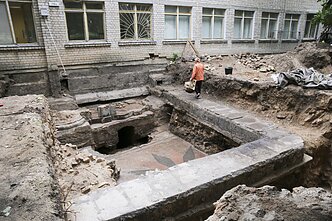










The complex of the remains of the Great Synagogue and the mikveh (ritual pools) building in Vilnius, as well as the complex of houses on Basanavičus Street where the first Lithuanian gymnasium in Vilnius was established, have been declared objects of cultural heritage protected by the state.
The decision will allow the objects to receive more funding from the state budget for conservation and management, the Culture Ministry said on Thursday.
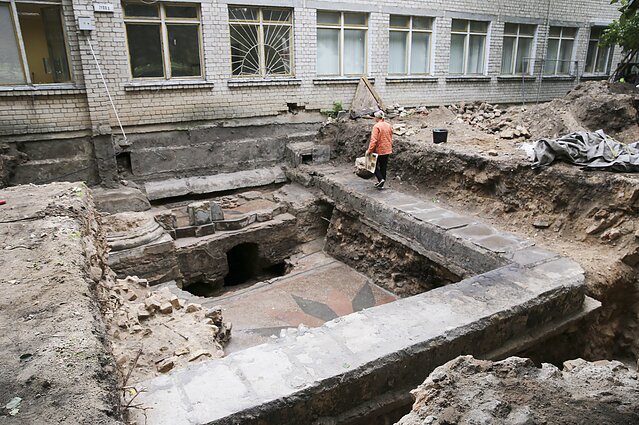
The remains of the Great Synagogue and the mikveh building are located in the Old Town of Vilnius. The exact date of the synagogue's construction is unknown.
Historians believe that it was built after King Wladyslaw IV Vasa in 1633 granted a privilege to set up a Jewish quarter in Vilnius. The architect of the synagogue is unknown.
The Great Synagogue was one of the largest Jewish religious institutions in Eastern Europe. It was known as an important Jewish spiritual and educational centre that gave Vilnius the name of Jerusalem of the North.
The synagogue was 25 meters long and just over 22 meters wide and 12 meters high. Since it was forbidden for a synagogue to be higher than nearby Christian churches, the structure was dug two meters into the ground.
The size and splendour of this Jewish house of worship are said to have surpassed all the synagogues built in the Polish–Lithuanian Commonwealth. Some historical sources say that it could accommodate up to 5,000 people.
The Great Synagogue and other buildings in the complex were badly damaged during World War Two.
The remains of the buildings were razed to the ground in 1955-1957 and a kindergarten, which is now closed, was built on top in 1964.
Archaeological research on the site of the Great Synagogue of Vilnius started in 2011.
In 2020, the remains of the synagogue and the mikveh building were handed over to the Good Will Foundation. The Jewish community of Vilnius is currently working with state institutions to develop concepts for the synagogue’s revival.

Newsletter
Every Friday morning.