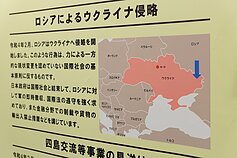










Lithuanians every day hear about Russia’s annexation of Crimea and its attempts to occupy more Ukrainian land. But Moscow’s expansionism is also familiar on the other end of the world. Japan has been unable to regain the Russian-occupied Northern Territories for 77 years. The war in Ukraine has only complicated the situation further.
The Northern Territories consist of the islands of Kunashiri, Etorofu, Shikotan, as well as Habomai, a group of smaller islands. The total area of the Northern Territories is twice the size of Luxembourg, while one of the Habomai islands is only 3.7 kilometres away from Japan’s northernmost island of Hokkaido.
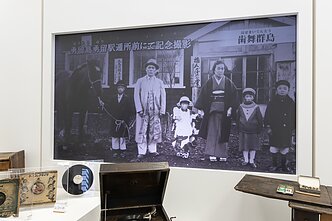
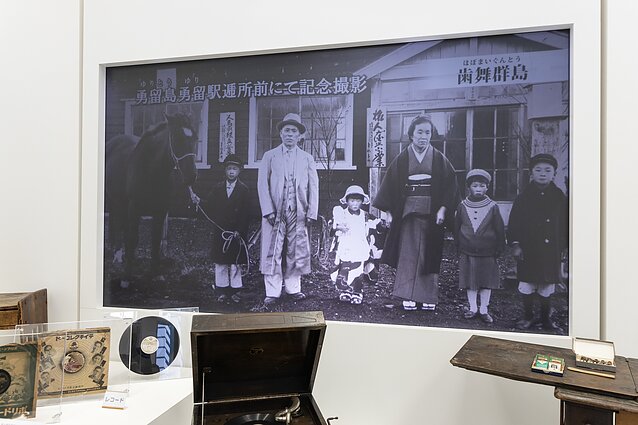
As the Second World War drew to a close, on August 9, 1945, the Soviet Union broke its neutrality pact with Japan, declared a war on it, and occupied the Northern Territories. Around 17,000 Japanese people living on the islands at the time were forced to leave their homes, with most of them relocating to Hokkaido.
According to the Japanese Foreign Ministry (MOFA) official, Moscow still claims that the incorporation of the Northern islands into Russian territory was “just a result of World War Two” and that “Japan as a loser must accept it”. But Russia cannot justify the occupation of the Japanese islands based on World War Two, he stresses.
‘Inherent part of Japan’
Japan discovered the Northern Territories in the 17th century and soon established control over the islands. Russia explored the Kuril Islands – often wrongly considered to contain the Northern Territories – in the 18th century.
In 1855, Russia and Japan signed the Treaty of Commerce, Navigation and Delimitation, which determined the border between the Kuril and the Northern Islands. As such, the Northern Territories were legally established as part of Japanese territory.
During the Second World War, the Soviet Union continued to attack Japan even after it accepted the Potsdam Declaration, expressing its intention to surrender. The Soviet Union also joined the Cairo Declaration, signed by the Allies, which said that “Japan will be expelled from all the territories which she has taken by violence and greed”.
According to the Japanese government, “the Northern Territories are an inhere part of the territory of Japan, which had never been part of any other country”, so the occupation of the islands cannot be based on World War Two documents.
In 1951, Japan also signed the San Francisco Peace Treaty with the Allies, which ended its role as an imperial power. In this treaty, Japan renounced any claim to the Kuril Islands, which, according to the interpretation of the Allies, did not include the Northern Territories.
The Soviet Union did not, however, sign the San Francisco Peace Treaty. Instead, the Soviet Union and Japan signed a declaration in 1956, re-establishing diplomatic relations and agreeing to “continue negotiations for the conclusion of a peace treaty”.
In 1993, Japanese Prime Minister Morihiro Hosokawa and Russian President Boris Yeltsin also signed a declaration, pledging to continue peace talks and to resolve the Northern Territories issue.
Stalled negotiations
Although 77 years have passed since the occupation of the Northern Territories, Japan has not yet been successful in regaining them. Frequent meetings between the country leaders and even the rapprochement of former Japanese Prime Minister Shinzo Abe with Vladimir Putin have not borne fruit in the negotiations for a peace treaty.
According to Japanese officials, however, the country’s government considers the Northern Territories issue an important and urgent question, as less than 6,000 of the former inhabitants of the occupied islands are still alive, while their average age is almost 87 years.
“They feel like they have little time left,” said Kawauchi Takahiro, Secretary General of the Association for the Return of the Northern Territories. Most of the former islanders have not given up hope of returning to their homeland, he stressed.
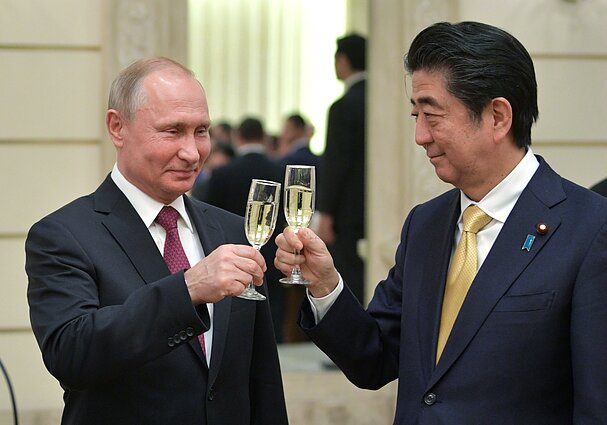
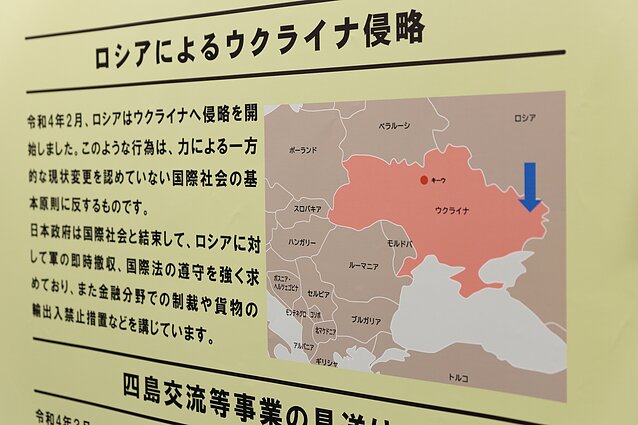
But Russia’s invasion of Ukraine has shaken up the geopolitical situation not only in the West but also in the Far East. Although Japan’s policy on concluding the peace treaty with Russia has not changed, the country has followed the West in imposing sanctions on the aggressor, suspending visa issuance for Russian citizens, and providing significant financial and humanitarian aid to Ukraine.
In response, Russia has accused Japan of an “anti-Russian course” and suspended peace talks, as well as a special agreement under which former islanders could visit the Northern Territories visa-free.
As officials from the Japanese Foreign and Defence Ministries have stressed repeatedly, the country’s government considers Russia’s invasion of Ukraine to be an outrageous act. Thus, this is not the time “to make any progress on the territorial dispute negotiations”.
“It’s the time for Japan to impose sanctions on Russia and support Ukraine with the international community to demonstrate clearly that Russia’s aggression against Ukraine should have significant cost,” said a MOFA official.
Military importance
Japan is not giving up hope of regaining the Northern Territories, but it is not only the war in Ukraine that complicates negotiations with Russia. It is estimated that around 18,000 Russian citizens currently live on the islands.
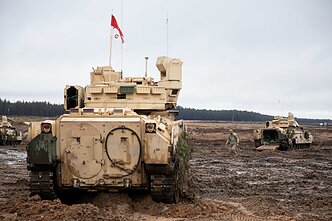
Russia is also successfully militarising the islands, which Japan considers to be part of its territory. The Sea of Okhotsk, adjacent to the Northern Territories, is also militarily important to Russia because it is a patrol area for the Russian Pacific Fleet’s ballistic missile submarines (SSBNs).
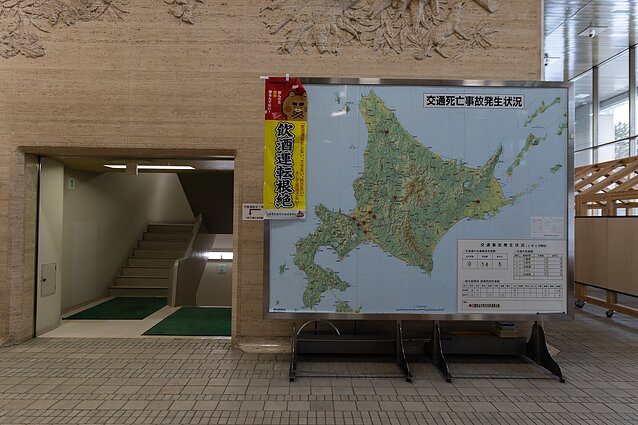
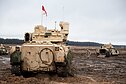
According to the Japanese Ministry of Defence, Russia has deployed units of the 18th Machine Gun-Artillery Division with approximately 3,500 troops, tanks, Su-35 multi-role fighters, missile systems, etc. on the Kunashiri and Etorofu Islands.
In addition, Russia is organising an increasing number of military exercises in the region. In March last year, Russian troops trained to repel an invasion of the Northern Territories. At the beginning of September, the Vostok 2022 exercise, which involved some 50,000 troops, took place in Russia’s Far East, including the Northern Territories.
According to Japan’s MOFA, Russia is continuing its militarisation of the Northern Territories despite Tokyo’s strong protests, which complicates a possible solution to the territorial problem. Moreover, amendments to the Russian constitution adopted in 2020 prohibit the ceding of parts of Russian territory to other states.
“We need to see drastic changes in Russia. Until then, we cannot do what we cannot do,” a researcher at Japan’s National Institute for Defence Studies said of the stalled peace treaty negotiations.
Japanese people working on the Northern Territories issue also admit that it is difficult to expect generosity from Putin. However, they hope that sooner or later the Russian regime will collapse.
“Soviet Union had undergone many changes during the perestroika period. It allowed the Baltic countries to seek independence. Yes, Putin is now in power but in the future, there might be some changes in Russia. That is why we will continue to demand the return of the Northern Territories without any hopes given up,” said Takahiro, Secretary General of the Association for the Return of the Northern Territories.
Educating the public
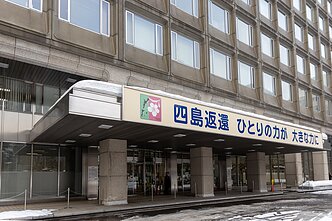
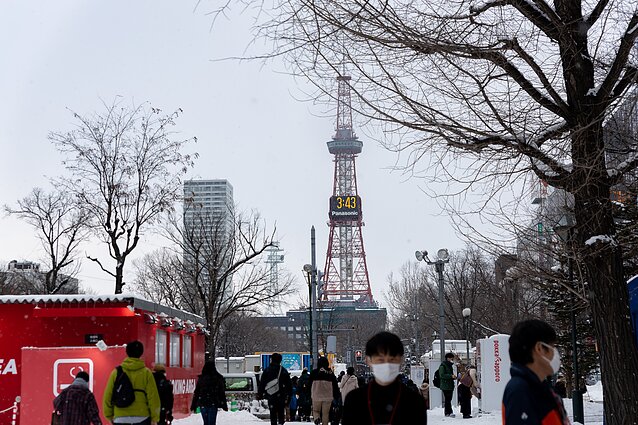
Japan considers the northern territories to be part of Hokkaido Prefecture. Due to its geographical proximity and a large number of former islanders now living in Hokkaido, the prefectural government has made the resolution of the Northern Territories issue “top priority”.
It is the national government which conducts negotiations with Russia, while the Hokkaido government “is a cheerleader for negotiations so that it could continue”, said Azumada Toshikazu, Director General for Northern Territories at the Hokkaido government.
Asked how the Japanese who have left the Northern Territories feel about the stalled negotiations, Toshikazu said that “they consider the Russian invasion of Ukraine to be just like the thing that happened to them. They are in great pain because of this. They understand that in the current situation, we cannot negotiate with Russia”.
Nevertheless, the Hokkaido government hopes that negotiations with Russia on the Northern Territories will be resumed as soon as possible, although it is unclear if this could be done while the Kremlin continues its war in Ukraine. So, according to Toshikazu, the most important task now is to educate the public, especially the youth, and maintain their interest in the territorial issue.
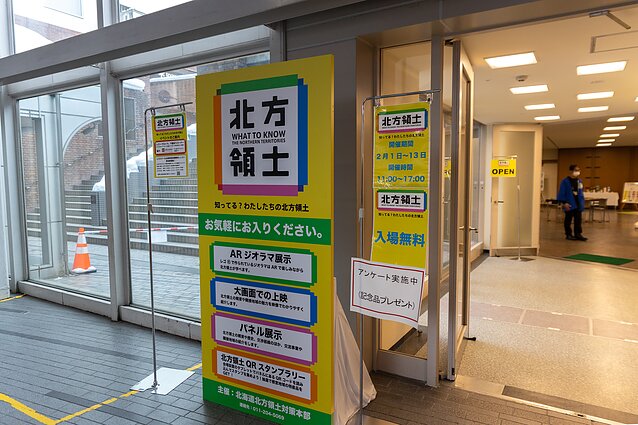
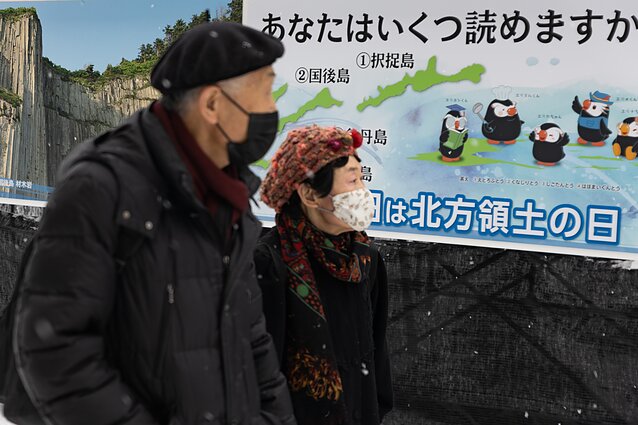
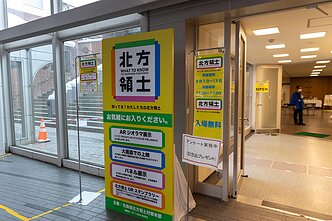
There are also several NGOs in Hokkaido that are promoting peaceful negotiations for the return of the Northern Territories. On February 7, Japan celebrates Northern Territories Day, and around this date, organisations are running an awareness campaign, collect signatures for a petition that demands the return of the islands.
“The Northern Territories issue can only be resolved through diplomatic negotiations between the governments. Our task is to integrate all the public support and give a boost to the negotiation,” said Takahiro, Secretary General of the Association for the Return of the Northern Territories
According to him, national surveys show that the majority of Japanese people are aware of the Northern Territories issue and consider its resolution important for the country. This is also reflected in Japanese attitudes towards Russia. A poll conducted by the Japanese government, published at the beginning of February, showed that 94.7 percent of the country’s population “do not feel friendly” towards Russia.
“Many people in Japan are very sceptical about the fact that Russia is a good country. Russia didn’t want to give tangible things to Japan over Northern Territories, which makes people sceptical about Russia as a partner,” said a researcher at Japan’s National Institute for Defence Studies.
However, the Japanese government still maintains diplomatic relations with Russia because “it is a neighbouring country”.
“We will make an utmost effort to keep a practical relationship with Russia. But we’re not sure to what extent Russia will accept this,” said a MOFA official.

Newsletter
Every Friday morning.