














Current NATO defence plans would not prevent Estonia from being wiped off the map and the capital Tallinn from being razed to the ground, the country’s prime minister, Kaja Kallas, was quoted as telling reporters on Wednesday by the Financial Times.
She said the alliance’s current plans envisage that the Baltic states would be overrun, but then be retaken 180 days later.
Noting that the invasion of Ukraine has been going on for over 100 days, Kallas said: “If you compare the sizes of Ukraine and the Baltic countries, it would mean the complete destruction of countries and our culture.”
“Those of you who have been to Tallinn and know our old town and the centuries of history that’s here and centuries of culture that’s here – that would all be wiped off the map, including our people, our nation,” the Estonian prime minister said.
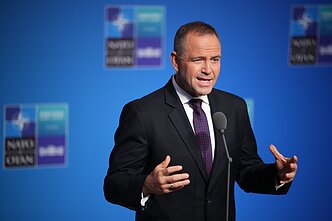
She was commenting on NATO’s defence plans ahead of next week’s NATO summit in Madrid, where the Baltic countries are asking the allies to reinforce their deployed capabilities and to change their defence strategy from the current “tripwire” approach to one where the alliance defends every inch of territory at once.

Commenting on the current plan to “lose [territory] and liberate it afterwards”, Kallas pointed out that atrocities in Bucha near Kyiv were committed by Russian troops within 80 of the invasion. “Now everyone sees that this tripwire concept doesn’t really work,” the Estonian prime minister stressed.
She said she had spoken to allied troops stationed in Estonia, most of them British, who told her that under current plans, the Russian invasion would wipe out the troops: “They are not fond of the idea that […] they are supposed to die.”
Asked about Kallas’ comments, an unnamed NATO official said that the alliance had plans to defend members, “but we never go into operational details”.
The official noted that strengthening deterrence and defence will be the focus of the Madrid summit.

“We will do more to ensure we can defend every inch of allied territory, at all times and against any threat. We will adapt the NATO force structure, with more forces at high readiness. We will also have more NATO forward-deployed combat formations, to strengthen battle groups in the east,” the official is quoted by the FT.
Kallas asks that each Baltic country be assigned a division of 20-25,000 troops. This does not mean that all the troops would be permanently deployed in the Baltics, notes the FT.
Berlin has proposed the creation of a brigade assigned to Lithuania, which would be stationed in Germany. Kallas commented that “I wouldn’t be so fixated on these different models as long as they deliver the result that we are able to defend ourselves from the first day.”

Newsletter
Every Friday morning.