












Throughout the world, the pandemic is said to have hit minority groups the hardest. What is the situation in Lithuania?
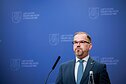
LRT Novosti spoke with Vida Montvydaitė, the head of the Department of National Minorities, about the challenges of the pandemic, the future of the Law on National Minorities and the high demand for the Lithuanian language courses organised by the department.
What was the last year like for national minorities in Lithuania?
Last year was doubtlessly hard for the entire country. Many plans had to be changed, in the daily activities of minority communities and projects funded by the Department of National Minorities. Some of the events were moved online, some were postponed or even cancelled.
However, pandemic difficulties have simultaneously opened up new opportunities. Active members of minority communities quickly mastered new technological opportunities, began to use social networks more actively and creatively, communication went beyond the framework of some national communities and the quarantine contributed to the expansion of communication and exchange of experience between different national minorities.
We can say that the quarantine and the pandemic not only didn't alienate national minorities from each other but, on the contrary, brought them closer.
Civil society organisations around the world say the pandemic makes vulnerable groups even more exposed to threats and warns about difficulties of reporting discrimination. Do you agree with that? What about the situation in Lithuania?
Indeed, these issues cause concern and they were raised at the UN forum on minority issues, held last November.
Personally, I struggle to agree that reporting discrimination has become more difficult – quite the opposite, all state and public organisations working under the quarantine conditions have became more flexible in terms of serving citizens and accepting documents, so reporting discrimination has become easier.
However, after all communication moved online – to the media, social networks, internet forums, etc. – you can see that the number of hate speech incidences has increased.
Nevertheless, we must pay tribute to both media representatives and large internet companies who manage social networks and pay enough attention to stop the spread of hate speech online by introducing self-regulation mechanisms.
Could you highlight the main points of the Law on National Minorities, which is to be debated and voted on in parliament this year?
The working group set up by the Department of National Minorities did a very serious job and, perhaps for the first time in the history of independent Lithuania, prepared the most comprehensive draft law on national minorities, but also coordinated it with all the interested parties – communities, public organisations, responsible ministries, and its departments.
Finally, the draft law gives definitions for terms like national minorities, national communities, national identity, and regulates the right to belong to a national minority group, thus directly strengthening and clarifying the legal status of minorities in the Lithuanian society.
It also regulates the right to use minority languages in municipal bodies – in those local governments where ethnic minority communities are concentrated.

The issue of education and media in minority languages is also regulated. The status of the Council of National Minorities was confirmed by law.
This year, the population census is being conducted remotely, and people in Lithuania are encouraged to fill in the data in their native language. Your department has expressed concerns that the real size of national minorities in the country will differ from the official figures. Why?
This is the first time the census is being conducted online, which raises a number of questions and concerns we tried to warn about and talked with the country’s statistics bureau even before the pandemic and the census itself.
Information about nationality will be taken from public registries, which often lack sufficient information, and not everyone will be able or willing to fill out additional questionnaires on nationality and religion. That’s why it’s obvious that information on national minorities will be inaccurate and incomplete. Therefore, for our part, we once again call on national minorities to actively participate in the census and fill in data on their nationality.

The Electoral Action of Poles in Lithuania [a political party with a predominatly Polish-speaking base] proposed to conduct a separate census of the Polish population – what do you think of such an initiative?
This initiative is political and our department cannot comment on it. Poles are the largest national minority in Lithuania, they are full-fledged members of the Lithuanian society, with the same rights as any other national minority in Lithuania.
Last year, your department organised Lithuanian language courses for members of national minorities – did it attract any attention? How do you rate this initiative?
The interest in the courses exceeded all our expectations and due to a large number of applicants, we had to close the registration ahead of time.
First, the courses were designed for local residents who did not speak or were fluent in Lithuanian. However, there were many newcomers among those who wanted to learn the Lithuanian language. The initiative showed that the need to learn the Lithuanian language is very high among the members of national minorities.
You once noted that for children growing in Šalčininkai or Visaginas – predominantly Russian-speaking towns – Lithuanian is like a foreign language. How can this situation change? How to solve problems related to the Lithuanian language exam for national minorities?
The Department of National Minorities together with scholars from Vytautas Magnus University are already working on these issues. We are developing recommendations on how to improve the knowledge of the Lithuanian language and exam results in national minority schools.
Last December, we completed the first stage of the project, during which special modules were prepared for students in higher education institutions and minority schools in south-eastern Lithuania. Last year, students had the possibility to deepen their Lithuanian language skills in preparation for final exams. Teachers were enrolled in courses to improve their qualification to help them.
Currently, it is too early to talk about any specific measures, but there is already a clear need to develop a special Lithuanian language programme for minority schools and to train more specialists who could teach Lithuanian in minorities schools.
Due to the pandemic, many cultural events have been cancelled. Are there alternatives for minority communities to socialise?
National communities have shown unprecedented ingenuity in organising traditional events online. Last May, on the Day of National Minorities, they exchanged virtual greetings without having the opportunity to meet directly. Lithuania's Estonian Community organised a virtual meeting with Estonian Lithuanians. Conferences, forums, meetings and celebrations took place online.
This year has been declared the Year of the Culture of the Tatar Community - what events will take place this year?
The plan for celebrating the year of history and culture of the Tatars was approved by the government last October. It foresees conferences and festive events, cultural, cognitive and educational activities, commemorative events, and different publications.

Newsletter
Every Friday morning.