



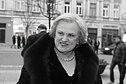





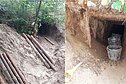


As a nationwide strike began in Belarus on October 25, some state workers already had to flee following the first wave of industrial action in August.
Gleb Sandras was an employee of Belaruskali, one of the largest manufacturers and exporters of potash fertilisers in the world. They also export a large share of their produce via the Lithuanian port of Klaipėda.
After staging a strike in the Belarusian state-owned company, Sandras had to flee to Lithuania but remained hopeful that the change could eventually come to his native country.
The 32-year-old miner comes from Salihorsk, a city built only 60 years ago after the discovery of potash salt in the area. Belaruskali employs around 20,000 people and is responsible for 90 percent of the city’s production.
The fertiliser manufacturer is also a key source of dollar revenue for Belarus. But recently, the enterprise has gone through a crisis. In 2020, its profits decreased almost seven times. Following the rigged presidential election in August, Belaruskali workers also went on strike and interrupted some of its production.

Demands
Sandras told LRT.lt how he, together with his colleagues, tried to convince the leadership of Belaruskali to join the nationwide protests against Lukashenko’s regime.
On August 14, “on a wave of emotions and dissatisfaction” with the rigged election, Belaruskali miners organised a meeting with its chief executive Ivan Golovaty.
Those who participated in the protests on the streets showed their injuries and delivered their demands to the company head who was also a member of the lower house of the Belarusian parliament.
“Their essence was political – Lukashenko’s resignation, fair elections, and the release of political prisoners. [...] The director asked not to stop production,” Sandras said.
After the meeting, Belaruskali employees started gathering on the Salihorsk square. The worker’s strike committee appealed to everyone to stop working, but the company’s management convinced the majority otherwise.
“Most still went to work. But the strikers stood firm in their position. All of them became subject to repressions,” Sandras, who served as the press secretary of the strike committee, said.
Read more: Belarusian exiles in Lithuania: ‘Vilnius is the political capital of Belarus’

Repressions
The Belarusian police detained Sandras on August 29. The official protocol said that he was arrested for “participating in an unauthorised event”.
“The chief of the police came into the office and said that he needed to have a serious conversation with me. He told me that I had two choices – to stop doing what I was doing or to go to prison for up to 10 years,” he said.
The police let Sandras go but made him transfer part of the money collected for the striking miners’ solidarity fund to charity. Instead, he withdrew the money, distributed it to miners, and fled.
“On August 31, I left the city. [...] Until September 7, I was still in Belarus. I laid low. On September 7, I left for Lithuania,” the man said.
Sandras went to the Lithuanian embassy to apply for a national visa, but there was a long queue. He had to hurry.
“I had a Schengen visa. I was told that I could go with this visa and at the border, they will let me through on a special list approved by the Lithuanian Interior Ministry,” he explained.
But at the Lithuanian border, Sandras had to leave the bus, as the list was not ready yet. He waited eight hours in the centre for political refugees until the Lithuanian Interior Ministry approved his entrance. He applied for a visa in Lithuania and has received it.
Currently, Sandras ives in a hotel in Vilnius and plans to rent an apartment in the future.

Ultimatum
On October 13, the Belarusian opposition leader and president-elect Svetlana Tikhanovskaya delivered demands that Alexander Lukashenko must fulfil by October 25. Otherwise, a national strike would start, she warned.
“Everything will depend on the efforts of the people. We need to make every effort to hasten the end of this regime,” Sandras said. “As for Tikhanovskaya, this is a very good statement.”
“In the dungeons of the KGB jail, Lukashenko announced a dialogue. According to him, ‘the Constitution is not written on the streets’, but there is no dialogue in prison either. We continue to see unprecedented violence on the streets, so the ultimatum was needed,” he added.
Historically, strikes have been among the most effective tools for nonviolent resistance, according to Sandras. He believed that they could lead to a change in Belarus as well.
“It is hard for me to predict what will happen after October 26. But I want to believe that something will work out. Optimism does not leave [me],” he said.
Read more: Raised under repressions, young Belarusians idealise life in Lithuania

Newsletter
Every Friday morning.