












The Lithuanian government is expected to reintroduce mandatory wearing of facemasks in shops and public transport this week.
After the government's Covid-19 crisis management committee approved the measure on Monday, the cabinet will make the decision on Wednesday.
Read more: Lithuania confirms 11 new coronavirus cases, infection rate a ‘cause for concern’
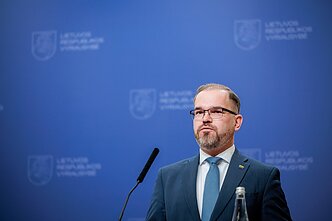
“We see that the number of cases is increasing both in Lithuania and around the world, and [...] we'll propose to introduce some additional requirements, [such as] to wear masks in public places,” Justice Minister Elvinas Jankevičius told reporters.
He said wearing face masks would be mandatory in indoor places like shops and public transport. The rule would come into force on Thursday, he added.
“For now, we'll propose to require wearing masks only indoors – in public transport, shopping centres and shops with a larger number of people,” the minister said. “We'll consider other alternatives, too, but we'll make final decisions at Wednesday's meeting.”
“We need to take decisive action, because if we [...] do nothing, the number of infections may increase and we'll have to shut down businesses, which we definitely won't do,” Jankevičius said.
“The economy must keep going and people must keep their jobs. So we need to learn to live with safety measures,” he added.

Wearing facemasks in public became optional, but still recommended, after the government lifted coronavirus lockdown in mid-June.
Growing number of coronavirus-affected countries
Loreta Ašoklienė, the Health Ministry's chief epidemiologist, said during the media briefing that people should be careful when making travel plans.
Read more: Lithuania updates coronavirus travel list, Spain added to blacklist
Eleven countries within the European Economic Area (including Switzerland and the UK) have had infection rates of above 16 new cases per population of 100,000 over the last two weeks, she noted.
Travelers from these countries must self-quarantine after arriving in Lithuania.
“It is a big number. The UK, France, Slovania, Poland are also close to being included in the list. Infection rates there are in excess of 10. It is hard to make predictions how these will change over this week,” Ašoklienė said.

Newsletter
Every Friday morning.