Radio documentaryDaugiau

Radio documentary. The Lost Manor
Jonas Vileišis was a signatory of the February 16th, 1918 Independence Act of Lithuania. He and his brothers played a significant role in building the foundation of the new country. He was also the mayor of Kaunas, the capital city of Lithuania during the interwar period.
Jonas Vileišis and his wife Ona Kazakauskaitė-Vileišienė bought a manor house in Girsteitiškis in 1914. Since the capital of Lithuania had only just begun to grow, Jonas Vileišis lived in a small, one-room apartment, and for the first years of his tenure as mayor, he didn’t even take a salary. Meanwhile, Ona Vileišienė and their children settled at the Girsteitiškis manor, which was the family’s main source of food and income while Vileišis was establishing the new capital.
The future fate of the manor was strongly shaped by historical events. What is more, the story of Girsteitiškis manor house reflects the fate of hundreds of manor houses small and large in Lithuania, as well as the constantly shifting history of the country. Wars, 50 years of occupation, and a sudden shift to capitalism has hidden not only the physical signs of the past.
At first sight, it seems that the collective memory has also been hidden under the shadow of historical trauma. But there is still something that connects those who lived in the time of the Vileišiai manor, with those who live in its surroundings now.
It’s a story of the meeting of the past and the present, childhood, nostalgia for home, and of lost things which will never be the same, but which might be reborn in a new form.
In 2018 Lithuania celebrated its centenary as an independent country.
Produced by Vita Ličytė with Simon Elmes for the international Åke Blomström Award 2018
Subtitles by Benas Gerdžiūnas
Nominated for PRIX EUROPA 2019
Radio documentary


Radio documentary. Why did Romas Kalanta self-immolate?
Radio documentary. Why did Romas Kalanta self-immolate?


Radio documentary. I Remember His Look. The Story of a Soldier and a Migrant
Radio documentary. I Remember His Look. The Story of a Soldier and a Migrant

Radio documentary. Chainsaw Landscaping (I)
Radio documentary. Chainsaw Landscaping (I)

Radio documentary. A Person in a Spacesuit
Radio documentary. A Person in a Spacesuit

Radio documentary. The Way, the Crossroad, Alanis and Me
Radio documentary. The Way, the Crossroad, Alanis and Me

Radio documentary. The Lost Manor
Radio documentary. The Lost Manor
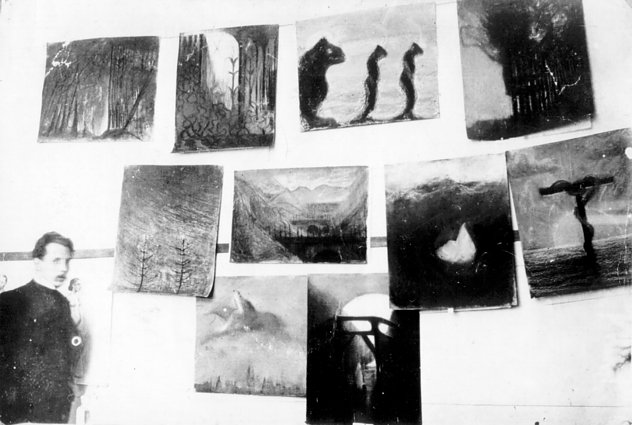
Radio documentary. The Mystery of Čiurlionis
Radio documentary. The Mystery of Čiurlionis
Kitos nuorodos: