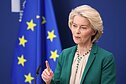














European Commission President Ursula von der Leyen has proposed creating a European Union security protocol modelled on NATO’s Article 4 to coordinate responses to hybrid attacks, but the idea has so far received limited support and raised concerns about duplication and political divisions within the bloc.
Von der Leyen raised the proposal amid a series of suspected hybrid threats across Europe, including drone incursions in several EU countries and an attempted attack at Leipzig airport. On the eve of her annual address, a drone was shot down over Lithuania.
“I believe the time has come for a European Article 4 – an emergency security protocol. If one member state activates it, all the others would come together,” von der Leyen said.
NATO’s Article 4 provides for consultations among allies when a member believes its security, territorial integrity or political independence is threatened. It has been invoked nine times.
EU defence ministers have discussed von der Leyen’s proposal, but support appears limited.
“The Commission president has raised the idea, and now we have to work on it,” EU foreign policy chief Kaja Kallas said.

Military officials say they will follow the political decisions made by EU leaders, while warning against unnecessary duplication of existing security arrangements.
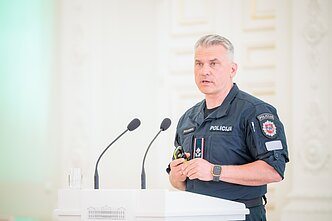
“The vast majority of EU countries are also NATO members. I think we should avoid duplication here,” Lithuanian army commander Gen. Raimundas Vaikšnoras said. “We need to find the right balance so that we do not interfere with or overshadow one another.”
Experts are also divided over whether the EU needs a separate protocol.
Marija Martišiūtė, an analyst at the European Policy Centre, said such a mechanism could be useful because NATO allies are not always willing to invoke Article 4. An EU protocol would give a country facing an attack another avenue to seek support, she said.

Under the proposed mechanism, a member state could present its assessment of an incident, explain how it occurred and identify the perceived threat before seeking assistance or a joint decision from other EU members.
The protocol could also provide for potential responses, Martišiūtė said, including an operation, increased monitoring and vigilance, sanctions or financial measures.
But Jacob Funk Kirkegaard, an analyst at the Bruegel think tank, called the proposal a mistake.
“It is a terrible idea. It just diverts attention,” he said.

Kirkegaard argued that NATO’s Article 4 consultations can already risk becoming a forum for empty talk when 32 allies cannot agree on a response. An EU version would be even more difficult, he said, given differences among member states over defence policy and spending.
He pointed to four neutral EU countries and said some members, including Ireland and Malta, were reluctant to engage on defence issues. Austria, he added, was also hesitant to some extent.
The EU already has a treaty provision requiring member states to provide aid and assistance if another member is the victim of armed aggression on its territory. Earlier this year, EU leaders asked the European Commission to draw up an action plan for implementing that mutual-assistance clause.
So far, member states have held tabletop exercises to exchange ideas about what such assistance would mean in practice. It remains unclear when the Commission will present a concrete action plan.

Newsletter
Every Friday morning.