










The government has already approved the budget, but it still needs parliamentary backing. The debate is expected to be difficult – spending will exceed revenue by €6bn, and the deficit could reach almost 4% of gross domestic product (GDP), above the EU’s Maastricht criteria.
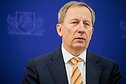
“Security for every individual and security for the state as a whole” is how Finance Minister Taurimas Valys describes the first national budget he has drawn up. It allocates almost €5bn to defence and around another €2bn to families and the most socially vulnerable.
“We are investing in security – both physical security and social security,” Valys says.
The minister has faced criticism even from coalition partners, who say they have yet to hear a convincing explanation for plans to increase the national debt further.
Pensions for older people will rise by an average of up to €88, the minimum wage by around €56, and salaries for teachers and workers in the cultural and scientific sectors by about €100.
Pay for uniformed officers, including police officers and border guards, will increase by around €130.
The country's budget deficit is expected to reach almost 4% of GDP, exceeding the European Union's agreed Maastricht criterion of 3%.

The minister says Lithuania is not the only country in this position, but acknowledges that servicing the national debt will become more expensive.
Next year, interest payments alone could amount to €1bn.
“Unfortunately, we do not yet have an alternative to borrowing and paying interest. So it is natural that these figures are rising. But this is not some supernatural phenomenon. You have to pay interest on debt. That is my comment,” the finance minister says.
Of greater concern, however, is that the deficit is expected to rise further in 2028, approaching 5% of GDP. It will also remain high in 2029.
“It looks as though the Social Democrats are doing nothing to break out of this cycle. The European Commission gave member states the opportunity to borrow additional money for defence over four years, and during that time countries were supposed to do something to avoid constantly living on credit.
“Instead, it seems that in this case we are living for the next government, with the attitude that after us, the deluge,” says former finance minister Gintarė Skaistė, a member of the opposition Conservatives.
According to Rytis Krušinskas, a professor at Kaunas University of Technology, if the outlook for the coming years is as described, tax rises will be unavoidable.
“I would very much prefer that we did not end up in a country governed by the attitude that after us, the deluge. That expression is particularly apt for southern European countries. The impression is that the governing parties, knowing that there is still room to borrow, are not pushing themselves into a corner.
“But Lithuania is approaching a situation in which we will reach what is known as a tipping point. That will inevitably force us to consider the structural reforms that are needed, and then it will be very painful. That is one side of the coin: once we reach that tipping point, we will inevitably be talking about tax increases, and everyone will be affected,” the economist says.
“The fundamental question is whether the measures chosen are effective and whether they will be sufficient. I do not see a clear explanation of the reasoning behind these choices in the government's communication,” he adds.

Coalition partners also critical
“The economy is growing, yet we are increasing the debt. At this point, the figures simply do not add up, either economically or financially,” says former prime minister Algirdas Butkevičius, a member of Democrats “For Lithuania”.
Butkevičius says he cannot recall such chaotic budget planning.
“I have been working on the Budget and Finance Committee since 1996, and I really do not want to subject anyone to severe criticism, but we have never had a situation like this in parliament,” Butkevičius says.
Even a Social Democrat, Algirdas Sysas, has called Valys an “astronaut”, implying that he is out of touch with reality.
Coalition partners say they have put forward proposals to increase government revenue.
The Democrats have called for higher taxes on the gambling industry, while the Farmers and Greens have proposed increasing excise duties on tobacco and alcohol.
However, they say their proposals have hit a wall.
“We asked the finance minister to give us arguments, because we are putting forward our figures. So what are the arguments for saying no?” says Aušrinė Norkienė, a representative of the Farmers and Greens.
“These proposals would generate very little revenue. In some cases, we cannot even consider them because they could bring in less money rather than more.
For example, excise duties on alcohol and tobacco are already higher here than in neighbouring countries, so raising them could have a completely different effect. I think we need sustainable solutions, because these proposals are not sustainable,” says Sysas.
He acknowledges that there are ways to increase revenue, but says they are deeply unpopular.

“Our colleagues, including those in my own party, are very reluctant to talk about tax changes. Take the property tax, which has been completely distorted. Next year, we will collect less than we did the year before last.
“Experts say this needs to be corrected because it does not harm economic growth. It is purely a domestic policy decision,” the Social Democrat says.
Sysas and the Democrats "For Lithuania" have also criticised what is missing from next year's budget. The coalition has decided to improve the country's demographic situation, but some politicians say key measures are absent.
For example, increased childcare benefits are not planned until 2028. Next year, millions of euros are earmarked for a payment to help parents prepare their children for their first year of school, as well as for children's extracurricular activities and summer camps.
The opposition argues that, given the size of the deficit, some of these measures should be reconsidered.
“We need to avoid new spending and, instead, live within our means,” Skaistė says.
Parliamentary approval
The battle over public finances will begin next week.
On Tuesday, the government will submit the draft budget to parliament. According to the prime minister, the coming months will be a test not only for the finance minister.
“The adoption of the budget will determine the future of the entire government. If it is not passed, the work of the coalition and the government will probably be disrupted,” Prime Minister Mindaugas Sinkevičius says.

Newsletter
Every Friday morning.