













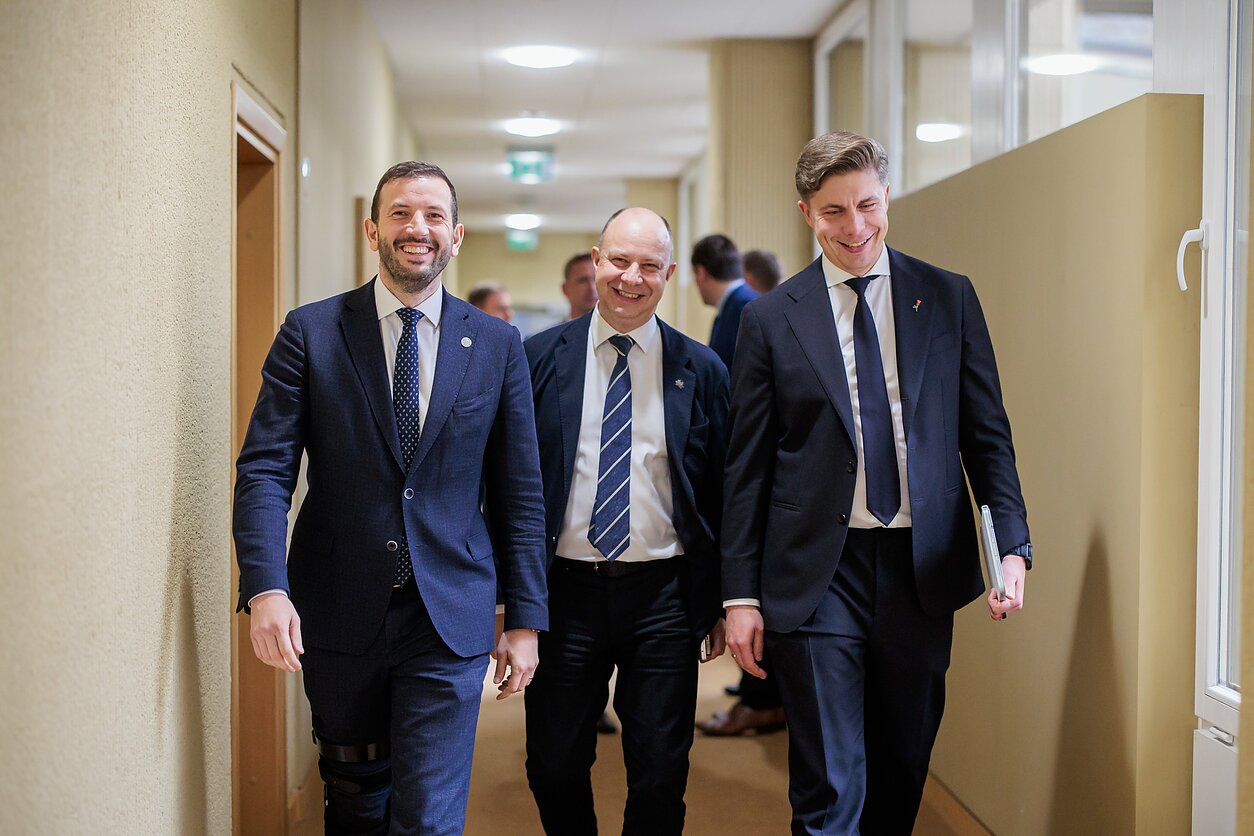
Lithuania's three incoming coalition parties have finalised their coalition agreement, with the Democrats "For Lithuania" confirmed to take control of the energy, health and agriculture ministries, and the identity of the next prime minister expected to be announced on Tuesday.
The coalition, comprising the Social Democrats led by Mindaugas Sinkevičius, the Democratic Union "For Lithuania" led by Virginijus Sinkevičius, and the Lithuanian Farmers, Greens and Christian Families Union, will hold 75 seats in the Seimas. The Social Democrats had earlier dropped the populist Nemunas Dawn party and invited the Democrats in their place.
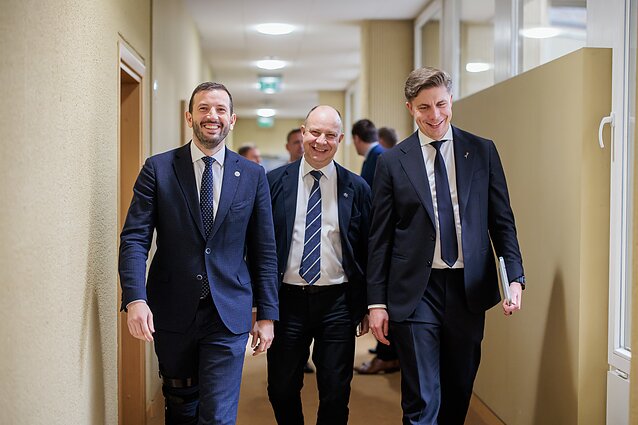
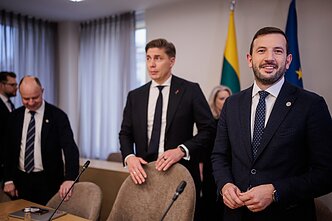
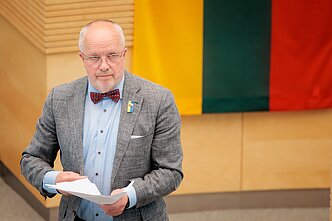
The ministerial split was confirmed by Social Democratic leader Mindaugas Sinkevičius and Democrats leader Virginijus Sinkevičius on Sunday. Specific candidates for the three posts have not yet been named, as they must first be agreed with the president.
Mindaugas Sinkevičius said he would announce on Tuesday whether he intends to take the premiership himself, a decision that will be presented to the Social Democratic council the same day.
He indicated that further changes to ministries currently held by the Social Democrats had not been ruled out, though no final decisions had been made.
Virginijus Sinkevičius said he preferred each party to staff its own ministries without cross-party deputy ministers, citing tensions that had arisen between the Farmers and the outgoing Nemunas Dawn coalition partner.
"I believe ministers should work with their own teams rather than having swapped vice-ministers, which leads to conflicts," he said.
How posts will be divided
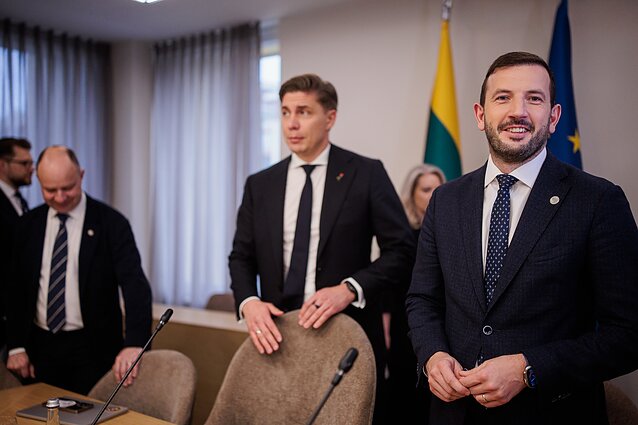
Under the coalition agreement, both the premiership and the Seimas speakership will remain with the Social Democrats. The Democrats will receive the first deputy speaker post, the Social Democrats will hold three further deputy speaker positions, and the Farmers one.
In terms of cabinet seats, the Social Democrats will nominate nine ministers, the Democrats three – energy, health and agriculture – and the Farmers' Union two.
Policy priorities
The incoming coalition has committed to a centre-left, socially oriented programme described as financially sustainable and investment-friendly, with priorities including quality public services, dignified employment, secure retirement, strong families and viable regions.
On defence, the most prominent commitment, the parties have pledged to maintain spending of no less than 5% of GDP, develop air threat detection and anti-drone systems, improve public warning infrastructure, and receive as well as equip the German brigade currently being deployed to Lithuania.
The agreement also sets a target for Lithuania's national division to reach full operational capacity by 2030, capable of operating alongside allied forces under NATO standards.
The parties have also committed to strengthening cybersecurity and commissioning audits of state registers and critical information systems.
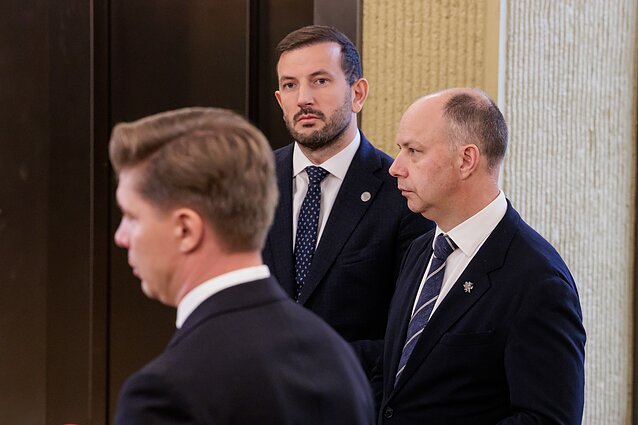
On foreign policy, the agreement reaffirms strong support for Ukraine, NATO and the transatlantic partnership, and commits to pragmatic normalisation of relations with China, without compromising Lithuania's security and sovereignty interests.
"We will seek to normalise diplomatic relations with China to the level of diplomatic representation that exists in other EU member states," the document states.
Lithuania's relations with Beijing downgraded in 2021 after Vilnius allowed Taiwan to open a representative office under its own name.
On social policy, the coalition has promised to overhaul the child benefit system so that families do not lose income when a child is born, expand childcare availability, strengthen after-school provision and accelerate pension indexation.
In healthcare, the parties plan to increase the state contribution to the compulsory health insurance fund, raise nurses' pay and reduce waiting times.
On energy, the coalition aims for Lithuania to generate more electricity than it consumes by 2028 through expanding renewable capacity, storage and grid infrastructure, while ensuring more transparent and stable pricing for consumers and businesses.
Other commitments include reducing administrative burdens on farmers, modernising waste management, accelerating building renovation, extending digital public services and combating corruption and the shadow economy.
Coalition discipline
The agreement includes provisions on coalition discipline. All members of the coalition majority are bound by its commitments, but any member who cannot support a proposal on grounds of conscience, conviction or fundamental political disagreement may abstain — provided they do not actively obstruct the vote, notify their group leader in advance, and, where the matter could affect coalition stability, inform the coalition council.
On sensitive social and ethical issues, including family policy, bioethics and human rights, the coalition council will determine in advance whether a given vote is treated as a coalition commitment or a matter of conscience.
Any coalition member whose parliamentary immunity is sought by the Prosecutor General must immediately declare publicly in the Seimas that they consent to its removal, without the formation of an investigative commission.
Updated: additional information on ministerial posts added as it became available.

Newsletter
Every Friday morning.