













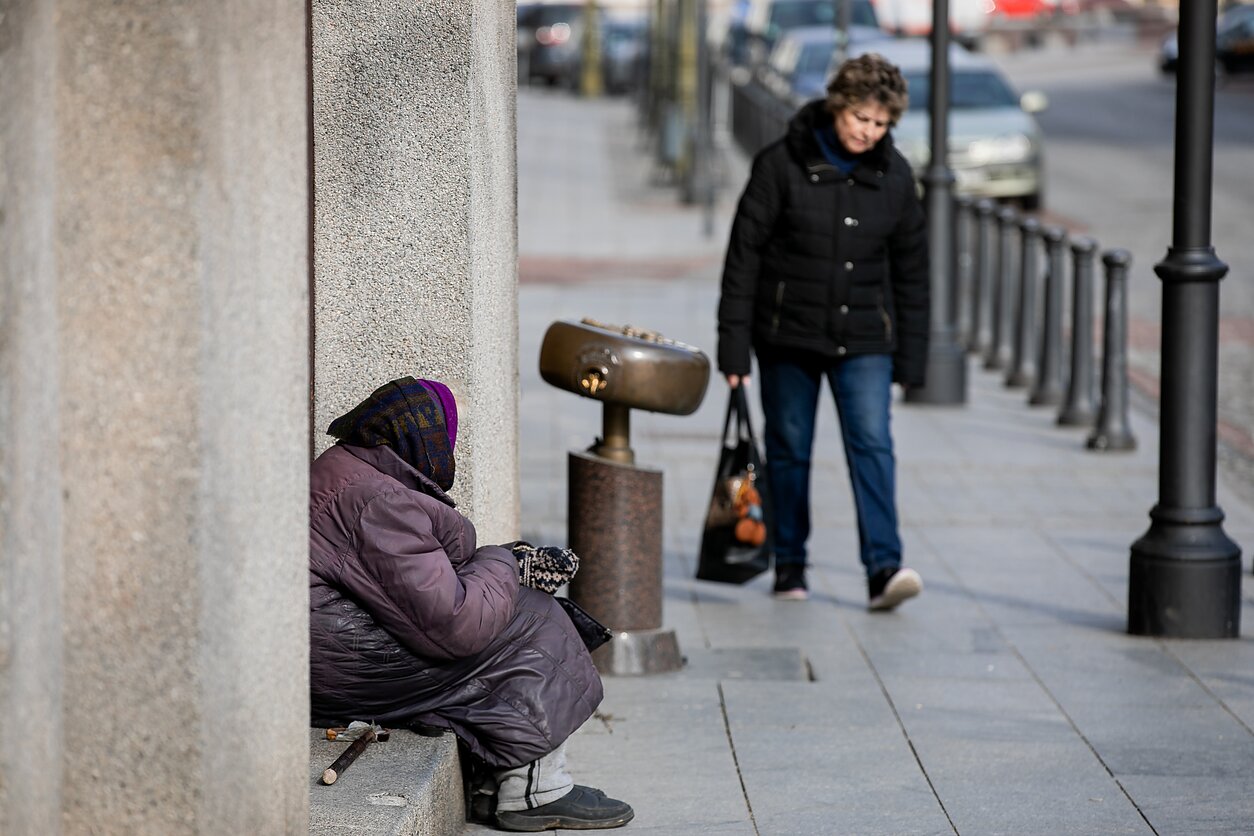
About half of Lithuania’s population fears the most becoming seriously ill or homeless, according to a survey by Baltijos Tyrimai commissioned by Lithuanian Caritas. In the same poll, respondents said they would be most likely to support the ill and the homeless, while migrants crossing the border would receive the least support – just 2% of the population.
Over 40% fear disability, while a third fear becoming refugees due to war, while the survey also showed that people suffering from addictions – alcohol, drugs or gambling – were unlikely to receive public support, with only 7% of respondents saying they would be willing to help.
A quarter of respondents are most afraid of addiction to alcohol, drugs or gambling, while 13% fear having to migrate. One in ten fears being left alone, and 9% say old age is their greatest fear.
Sociologist Professor Boguslavas Gruževskis said the findings were surprising.
“Loneliness is the easiest of these fears to manage, because no one wants to fall ill, and homelessness is again very difficult. But loneliness is becoming increasingly relevant in Lithuania. As sociologists, we have only been tracking it for five to seven years – especially since the start of Covid – as a risk and a fear, but now it is becoming ever more significant,” said Prof Gruževskis of Vilnius University.
The survey also found that higher income and social status do not reduce fear of ending up in vulnerable situations – they increase it. According to Gruževskis, these findings could be useful for policymakers, for example, when making decisions on progressive taxation.
“In situations of insecurity, those who have more also stand to lose more, so their contribution to security should be greater. But the current tax system does not sufficiently take this into account, even though these people were not opposed to it,” he said.
Gintaras Grušas, Archbishop of Vilnius, said there was also something positive in the findings: the survey showed that 17% of people believe everyone should be helped, regardless of whether they are migrants or seriously ill.
“It is important that we ourselves accept this and are ready to help others, regardless of how they got into difficulty or fell ill – to truly extend a hand,” he said.
However, reality suggests otherwise – a quarter said they had not supported anyone.
Yet, around a quarter of respondents said they had supported refugees and seriously ill people, while about a fifth had supported older people.

Newsletter
Every Friday morning.