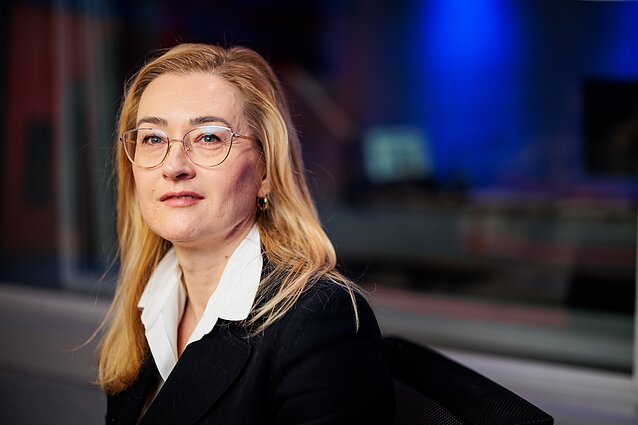















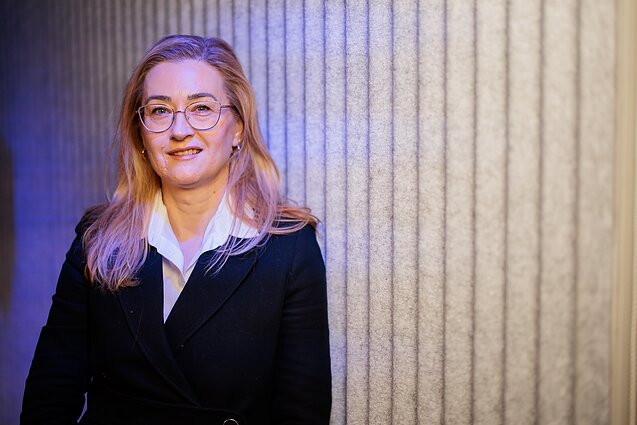
“For a foreign national, coming to Lithuania is not a right – it is a privilege. European court practice confirms that a state has the right to restrict the entry and residence of foreigners on grounds of national security,” said Indrė Gasperė, the newly appointed head of the Migration Department, in an interview with LRT.lt.
In the interview, LRT.lt discussed decisions by the Migration Department on temporary and permanent residence permits in Lithuania, legal disputes, the growing number of complaints about lengthy processing times, lack of Lithuanian language courses, and poor communication.
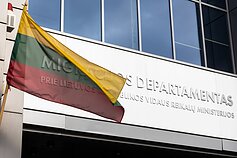
Gasperė was appointed head of Lithuania’s Migration Department at the beginning of January 2026. She previously worked for many years at the Ministry of the Interior, dealing with legal and administrative matters, including migration policy and the legal status of foreign nationals. She now heads the department and sets procedures for examining applications and taking decisions on foreigners’ requests.
The Migration Department has recently faced criticism over residence permits issued in Lithuania. Many people who receive negative decisions are left wondering what criteria are used to refuse or extend temporary or permanent residence permits. What are the most important criteria today?
The most relevant and important criterion is a threat to national security. If a third-country national seeking to obtain or extend a temporary residence permit poses a threat to national security, this is the primary reason for refusing to issue or extend such a permit.
Such decisions are not taken arbitrarily. They are explicitly provided for in Lithuanian law. Where there is a threat to national security, we make decisions based on an assessment by the State Security Department (VSD). The law obliges us to justify our decisions, but the key element is the conclusion provided by that department.
Are there other possible reasons?
Yes. These may include breaches of migration legislation or abuse of the status granted.
A simple everyday example: a person is issued with a temporary residence permit in Lithuania but in reality does not live or work here, using the permit instead to stay in other countries. This may be grounds for revocation.
A major concern for migrants is the time it takes to process applications for residence permits. The law provides for a maximum of four months, but in practice people report waiting seven to nine months. Are changes planned?
We will collect more precise statistics, but it is important to understand that processing times do not depend solely on the Migration Department. We are required to seek information from other institutions, including the State Security Department, the police and the State Border Guard Service.
Nevertheless, we will make every effort to ensure compliance with statutory deadlines. We understand employers’ concerns and the impact these processes have on the economy.
If necessary, we will raise the issue of increasing staff numbers or improving IT resources. The MIGRIS system is currently being upgraded and will be modernised from March 1, which should help speed up processes.

What about people who, because of delays, lose the right to work, access banking or healthcare services, and find themselves in a legal limbo?
We understand these concerns and will try to minimise such situations. We do not deny our responsibility, but we do not expect all related problems to be resolved in the immediate future. Where delays are the fault of the Migration Department, individuals are no longer expelled from Lithuania; instead, they are granted an additional period of stay.
It is also important for individuals to act in good time. The MIGRIS system has a function that allows users to receive reminders about document expiry dates – seven months and two months in advance.
We recommend starting the extension process at least six months before expiry. In most cases, this is sufficient.
Longer processing times usually involve more complex cases, for example where checks reveal new information not disclosed in the application.
Concerning the rights of spouses of Lithuanian citizens, why do they hold only a residence permit and limited access to social benefits during the first five years?
Spouses of Lithuanian citizens who hold temporary or permanent residence permits enjoy almost the same rights as other residents with the same status. Restrictions mainly relate to electoral rights. Social benefits depend on tax contributions. Citizenship may be acquired later through naturalisation if all conditions are met.
Another pressing issue is the lack of systematic support for integration, such as limited access to free Lithuanian language courses or assistance for low-income earners. How does the Migration Department inform foreigners about available resources if it does not handle integration itself?
Integration does not fall directly within the Migration Department’s remit. However, there are sufficient opportunities to learn Lithuanian: migration centres, university courses, municipal projects, online platforms and self-study applications are available.
We see that motivated foreigners, including Ukrainians, actively learn the language and achieve B1 level or higher. Vilnius and other municipalities run their own support programmes, such as Vilnius Helps.
The Migration Department is also criticised for poor communication. Migrants say there is a lack of dialogue regarding the regularisation of their status. Are there plans for greater openness and clearer explanations of decisions?
We recognise the need for greater transparency and will seek to communicate more with the public and the media where possible and permissible under the law and confidentiality requirements. This may help reduce misinterpretation and misunderstanding.

What about access to healthcare for working asylum seekers who pay taxes? Some immigrants say they have been unable to access basic medical services for years.
This is a matter for the Health Ministry and the Social Security and Labour Ministry. To our knowledge, such individuals are entitled to basic healthcare and may also pay for health insurance themselves if they wish. It is possible that problems arise because this information is not always communicated clearly enough.
Migrants sometimes encounter legal difficulties or differences in how laws are applied in different countries. Can administrative offences committed in Lithuania affect the granting of a permanent residence permit?
Minor administrative offences in themselves are usually not grounds for revoking a permanent or temporary residence permit. We are talking about very rare cases or systemic abuse.
For example, if a foreign national commits numerous administrative offences – dozens of traffic violations, unpaid fines, tax evasion, or avoidance of obligations to the state – this can escalate into criminal liability.
In such cases, the Migration Department may seek assessments not only from the police but other institutions as well. If the overall circumstances indicate risk or threat, a decision may be taken to revoke a temporary or permanent residence permit or even ban entry into Lithuania in cases involving serious crimes.

How many cases related to appeals against Migration Department decisions are currently before the courts, and how do you assess them?
At present, there are around 220 cases, most of them in administrative courts. We are reviewing our approach so that we go to court only in cases where the department’s position is genuinely strong.
We also plan to work more closely with other institutions, either to strengthen our position or, where possible, to seek amicable settlements with claimants.
It should be noted that lawyers actively make use of court procedures. In some cases, people are promised that legal action will allow them to retain the right to work in Lithuania, even though there are clearly defined legal routes for work visas and permits.
Preliminary data show that the department wins around 80% of cases, most of them related to refusals to extend temporary residence permits.
Is there a common trend in cases that go to court?
Yes. Most claims relate to work visas and decisions taken on national security grounds.
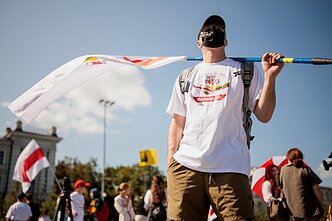
We are also reviewing cases involving individuals who previously worked in security services or related enterprises, for example in Belarus. In such cases, residence permits may not be extended, and this is one reason why many cases are currently before the courts.
At the same time, we are seeking to strike a balance between national security interests and business interests in Lithuania.
Some migrants are concerned about so-called “punishment for the past”. They understand that their biographies are linked to countries now considered unfriendly to Lithuania, but they do not understand why military service 20 years ago or work for companies such as Sberbank are cited as reasons to refuse permits.
The State Security Department has its own assessment criteria, which are not public. We do not know these criteria and do not have the competence to interpret them. If the VSD recommends refusing a temporary residence permit, we must take that conclusion into account, although the final decision rests with us and must be justified.
Employment in certain institutions is not in itself an automatic ground for refusal.

For example, a refugee who cannot return to their country of origin due to a real risk of imprisonment may be granted protection in Lithuania.
However, where a person worked in the interior ministry, the armed forces or similar institutions and regularly travels back to their country of origin, the VSD assesses whether they maintain links with that country’s regime. Factors considered include current contacts, travel patterns and social and professional ties.
A common myth is that “I am an ordinary person and of no interest to security services”. This is not true. Any individual may be of interest, particularly if they have contacts, networks or travel regularly. Even digital footprints can be valuable.
So, each case is assessed individually, taking into account family circumstances, children and the level of integration into Lithuanian society. Essentially, we assess where a person’s centre of life is – in Lithuania or elsewhere.

Applicants complain about receiving only a negative decision without detailed reasoning why it was made. Why does this happen?
Some information is classified. Even the fact that certain data exist about an individual may be secret. As a result, we cannot always disclose all the reasons behind a decision.
We always seek to balance Lithuania’s national security interests with the interests of the individual. We do not regard migrants as enemies. On the contrary, Lithuania’s migration policy is focused on attracting highly qualified specialists who can contribute to the economy and integrate into society.
Statistics confirm this: most foreign nationals living in Lithuania are citizens of Belarus and Russia, and Lithuania continues to issue and extend residence permits for them.
Applicants themselves do not often disclose all aspects of their personal history. Public court cases show examples where an individual presents one version of events, but it later emerges that the decision cited other, more serious reasons, including cooperation with security services.
When approaching journalists or the courts, people often emphasise what works in their favour and omit what does not. This is human nature. Our task is to remain objective and to take into account both the interests of the state and those of the individual.
Is there a statute of limitations for military service, employment in state institutions or participation in events that the VSD considers questionable?
The law does not provide for a formal limitation period. However, it is important to understand that the mere fact of having worked in a particular structure many years ago is not, in itself, an automatic or sole ground for rejecting an application. No such criterion exists in law.
What is always assessed is the totality of circumstances. The same fact may be evaluated differently depending on the context: how much time has passed, where the person lived afterwards, what their current connections are and how they conduct themselves.
Another aspect concerns migrant families. An example: a family holding a residence permit issued on humanitarian grounds cannot return to Belarus and has a child born in Lithuania. How is the child’s status legalised? What status will the child have? Will the family be able to obtain permanent residence in the future?
A child born to parents who hold a temporary residence permit in Lithuania is granted a temporary residence permit linked to the parents’ status. The child’s legal status is the same as that of any other foreign national holding a residence permit in Lithuania.

When taking decisions, we always assess the family as a whole and all its members. The presence of a child may serve as an additional argument in favour of granting residence permits to other family members.
Lithuania’s social system is based on the principle of solidarity: the amount of social protection a person can expect corresponds to the taxes they have paid. Basic social benefits do exist, but they are administered not by migration authorities, but by municipalities and other institutions. The Migration Department is not involved in these matters.
Family reunification in Lithuania is currently receiving particular attention. Under the Law on the Legal Status of Aliens, foreigners who already hold a residence permit may invite their spouses and children. How does this work in practice?
Not everyone is eligible. There are numerous criteria that must be met by both the foreign national and their partner. Generally, the foreign national must have lived in Lithuania for at least three years, have stable income and sufficient resources to support the family, and demonstrate that the marriage or relationship is genuine.
Employment stability is also assessed: over a two-year period, a person may change employers no more than twice. Frequent job changes and an inability to ensure financial stability may be grounds for refusing family reunification.
When assessing applications, criminal history, potential threats to national security and health indicators are also considered, including infectious diseases that may pose a risk to public health. Each case is examined individually.
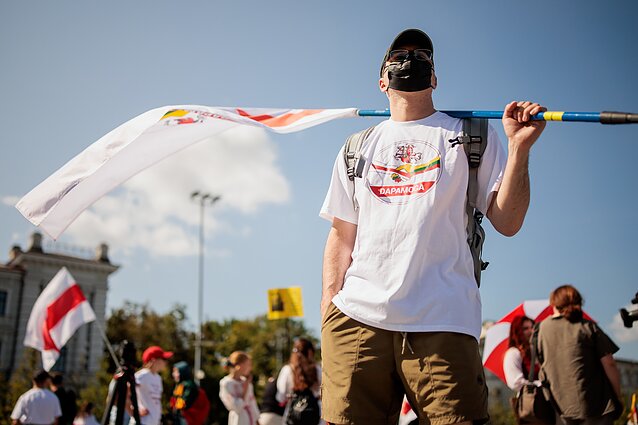
What is Lithuania’s policy towards Belarusians who cannot renew their own or their children’s passports due to the risk of persecution in Belarus?
We are aware of this problem. A foreigner’s passport is issued only to those who genuinely cannot return to their country or obtain a national passport. This concerns a small group of people.
For example, in 2024, 216 foreigner’s passports were issued, 155 of them to Belarusian citizens. This is a small number considering that around 50,000 Belarusians having arrived in Lithuania.
Still, if a person is not a political refugee, has not been sentenced to imprisonment in Belarus, regularly travels there and is able to obtain a national passport, there are no grounds for issuing a foreigner’s passport in Lithuania.
Are there any preferential arrangements for Russian citizens with Lithuanian roots who wish to move to Lithuania, integrate and renounce Russian citizenship?
Lithuanian roots do not automatically entitle a person to a residence permit or citizenship. If an individual meets the criteria set out in law, they may apply for the relevant status.
It is important to understand that these are two separate legal mechanisms. Entry to and residence in Lithuania under a residence permit involve one set of criteria, while the acquisition of citizenship involves an entirely different one.
If a person has Lithuanian roots and is entitled to Lithuanian citizenship by descent rather than by territory, they may apply for citizenship after renouncing their original nationality. In matters of citizenship, there is no criterion related to national security threats, as applies to foreign nationals. A state cannot deprive its citizens of the right to live in its territory, even if they pose certain risks.
However, when it comes to temporary residence permits, the situation is different. For a foreign national, coming to Lithuania is not a right but a privilege. European court practice confirms that states have the right to restrict the entry and residence of foreigners on national security grounds. In this context, Lithuanian roots do not provide automatic grounds for issuing a residence permit. Citizenship is a legal bond with the state; a residence permit is a temporary privilege.
Russia, like any other state, is not interested in losing its citizens. There are cases where a person is already in the process of acquiring Lithuanian citizenship, writes to the Russian embassy to renounce their citizenship and receives no response. This creates practical difficulties, but the issue falls outside the remit of the Migration Department and depends on political decisions and interstate procedures.
The interview is based on questions submitted by readers of LRT.lt and LRT Novosti via Telegram.

Newsletter
Every Friday morning.