












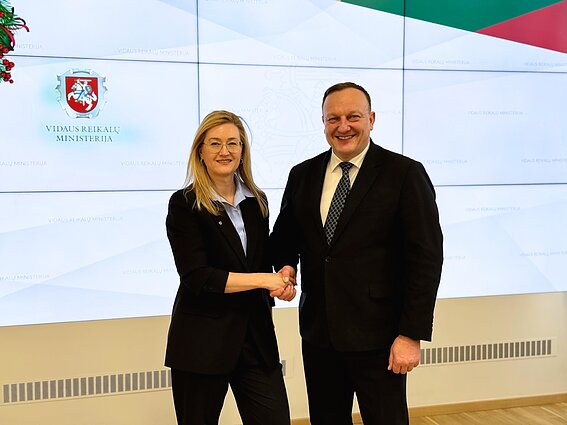
Lithuania’s new migration chief believes the country should tighten its migration policy to prevent abuse and document fraud by third-country nationals, but not to reduce the overall number of migrants.
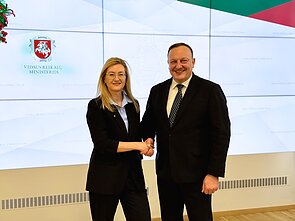
Indrė Gasperė, who this week took over as head of the Migration Department, said stricter rules are needed to ensure better control of immigration procedures and to stop foreigners from exploiting legal loopholes.
“We have not yet formed the Migration Department’s official position, but as I understand it – and from my experience as a former Interior Ministry official – the Interior Ministry’s position is to tighten migration policy,” Gasperė told LRT RADIO on Friday. “But to tighten it only so that migration procedures are not abused.”
She stressed that the goal is not to cut migrant numbers but to prevent misuse of the system, including the submission of forged documents or entering the country on one legal basis while staying for another.
“It is not that we want to reduce the number of migrants as such,” Gasperė said. “We want to tighten the system so there is no abuse, no forged documents, and no cases where people arrive on one basis and remain in Lithuania on another.”
According to Gasperė, foreigners can manipulate the immigration process in several ways, such as entering Lithuania for studies while actually working or entering into sham marriages.
“There are many cases of possible abuses of the immigration process itself,” she said.
The parliament, Seimas, in December began considering a government proposal to amend migration policy. The changes would require third-country nationals seeking temporary residence and work permits to meet at least one condition: either having appropriate qualifications or having worked for at least one year during the past three years. The amendments would also tighten rules for admitting foreign students.
Gasperė also said she will prioritise stronger migrant integration, including cooperation with foreign communities and encouraging learning the Lithuanian language.
“We need to cooperate with foreign communities and see a shared interest – that integration into our society is also in their interest,” she said. “We would all benefit from that. I see integration and the Lithuanian language as very positive changes.”
She added that migrants, especially those working in the service sector, should be required to learn Lithuanian at least at a basic level.
“They should be able to adapt and learn Lithuanian to some degree,” Gasperė said. “An A1 Lithuanian language certificate should be required for everyone working in the service sector. It is simply a sign of respect for the country.”
Gasperė, a longtime Interior Ministry employee, officially assumed leadership of the Migration Department on Thursday, replacing Evelina Gudzinskaitė.
The department is responsible for matters related to the legal status of foreigners in Lithuania, restoration and loss of citizenship, oath-taking procedures, and the issuance of identity documents for citizens, travel documents and residence permits for foreigners.

Newsletter
Every Friday morning.