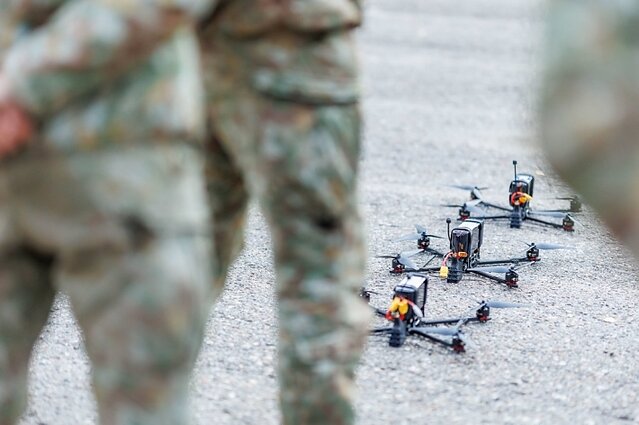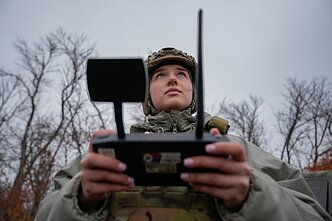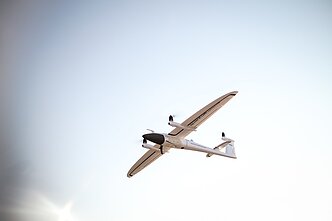














As a proposed “drone wall” for Europe has failed to gain broad political backing, countries along NATO’s eastern flank are increasingly moving ahead on their own to develop new air defence capabilities and integrate them into the alliance’s broader defence plans, experts say.
The stalled initiative has highlighted a growing reality: governments are relying on bilateral agreements with industry, shortening supply chains and accelerating production to counter the rising threat from unmanned aerial vehicles.
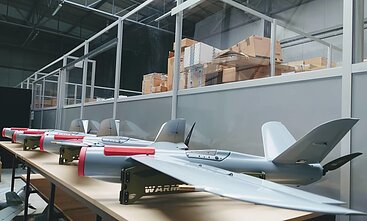
Lithuanian drone and technology companies are drawing increased attention from foreign investors, underscoring how cross-border partnerships are becoming the backbone of Europe’s defence industry. One recent example is ADV Defense, a Lithuanian firm expanding cooperation with foreign partners.
Several weeks ago, one of Teltonika’s companies signed a memorandum of understanding with German drone manufacturer Quantum Systems. Under the arrangement, components and production capacity would be based in Lithuania, while the drones would be supplied to a German brigade and potentially to Lithuania’s armed forces.
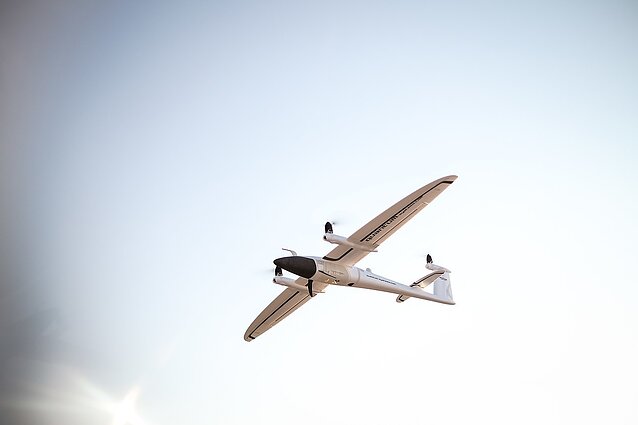
“We have calculated that we are currently capable of producing more than 50,000 drones per month, or more than 300,000 electronic components for drones,” said ADV Defense CEO Dovydas Rupšys. “This capacity could be dedicated to joint projects.”
Shorter supply chains and closer integration with NATO militaries are key priorities, particularly for countries on the alliance’s eastern flank, which face the most acute drone threats.
The broader “drone wall” concept promoted by Lithuania’s European Commissioner Andrius Kubilius has failed to gain traction in Brussels, a setback some industry representatives attribute partly to how the idea was framed.
“When people hear ‘drone wall’, they imagine drones constantly hovering in the air to form a barrier. But that was never the idea,” said Paul Strobel, a representative of Quantum Systems. “The idea is to integrate new technologies into existing air defence structures.”
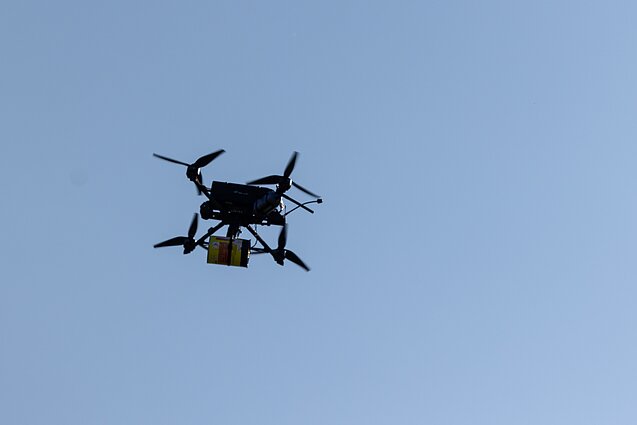
Current air defence systems rely on assets such as Eurofighter jets and Patriot missile systems, Strobel said, which are highly reliable but extremely costly. “What we have not yet answered is how to economically shoot down drones,” he added.
While the term “drone wall” has largely disappeared from the vocabulary of EU officials, it has been replaced by the concept of integrated air defence. Interest is strongest among eastern NATO members, which are grappling most directly with hostile drone activity.
Western European countries, despite incidents involving drones flying over sensitive sites, have placed their priorities elsewhere. Even among eastern flank states, there is no full consensus, with debate ongoing over whether hostile drones should be destroyed kinetically or neutralised through electronic warfare.
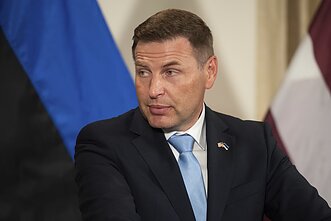
“We do not have the luxury of being pessimistic about this project. We need it,” Estonian Defence Minister Hanno Pevkur said. “The name is not important. What matters is the capability.”
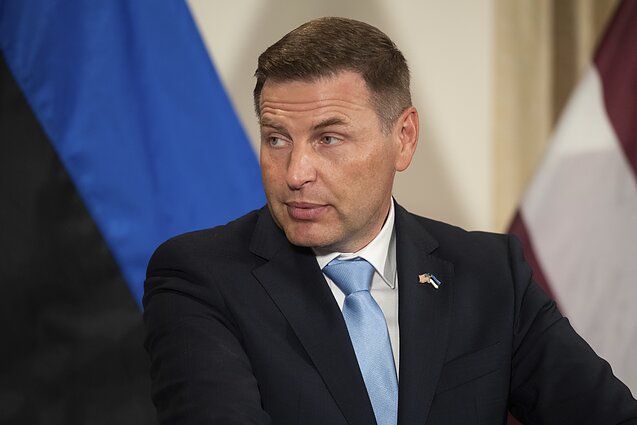
Pevkur noted that the situation differs sharply between peacetime and wartime conditions, stressing that in peacetime, authorities cannot simply shoot down every unidentified aerial object.
Lithuania has also faced a recent surge in incidents involving smuggling balloons, further underscoring the need for domestic solutions. The Economy Ministry has allocated funding and expects tangible industrial products within months.
The broader trend, officials say, is that each eastern NATO member must tailor its defences to national needs while also contributing to the alliance’s overall posture. NATO itself is often too slow to impose uniform solutions, making bilateral agreements increasingly central.
“Part of major defence procurements would turn into industrial cooperation in Lithuania with our companies,” said Vice Defence Minister Tomas Godliauskas. “That would create manufacturing and industrial capacities here.”
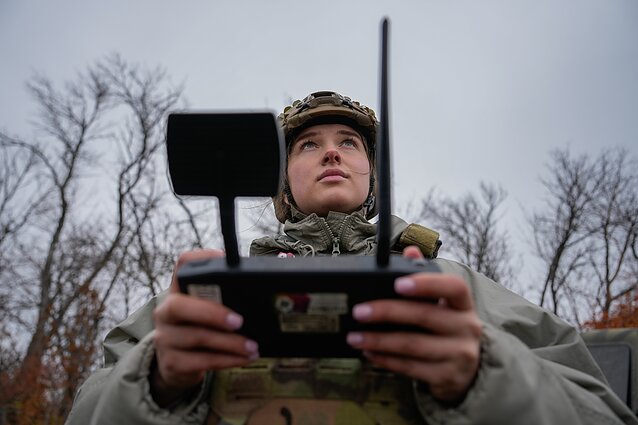
Analysts say NATO countries are increasingly following a model similar to Ukraine’s, where much of the needed weaponry is developed domestically or in close cooperation with European partners. That shift has been driven not only by Russia’s war against Ukraine but also by uncertainty over future US military support.
“This is the main motivation to develop weapons as quickly as possible,” said Lilija Slobodian, a co-head of Tech Force in Ukraine. “The geopolitical situation sends a clear message: we must rely on ourselves.”
Several Lithuanian drone manufacturers working with other NATO states say Lithuania’s military has made significant progress this year in integrating drones – more progress, they note, than has been publicly disclosed.

Newsletter
Every Friday morning.