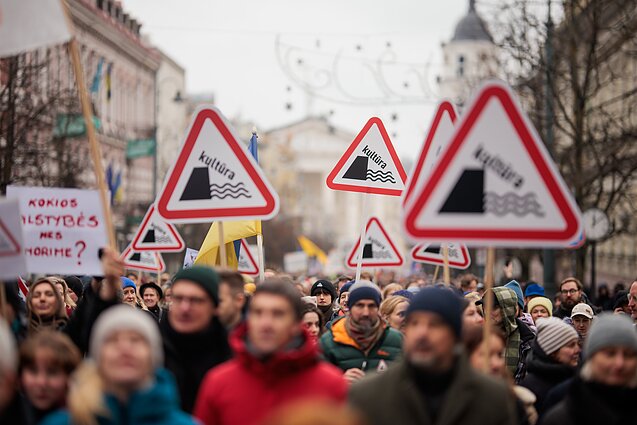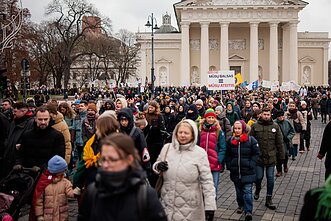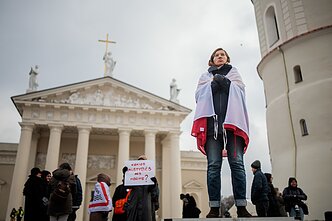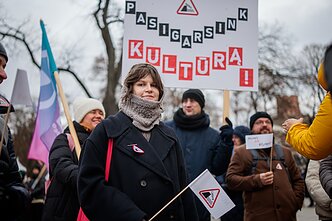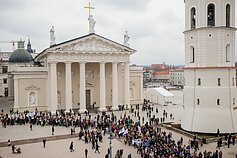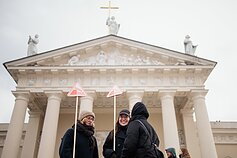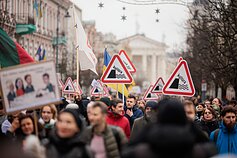














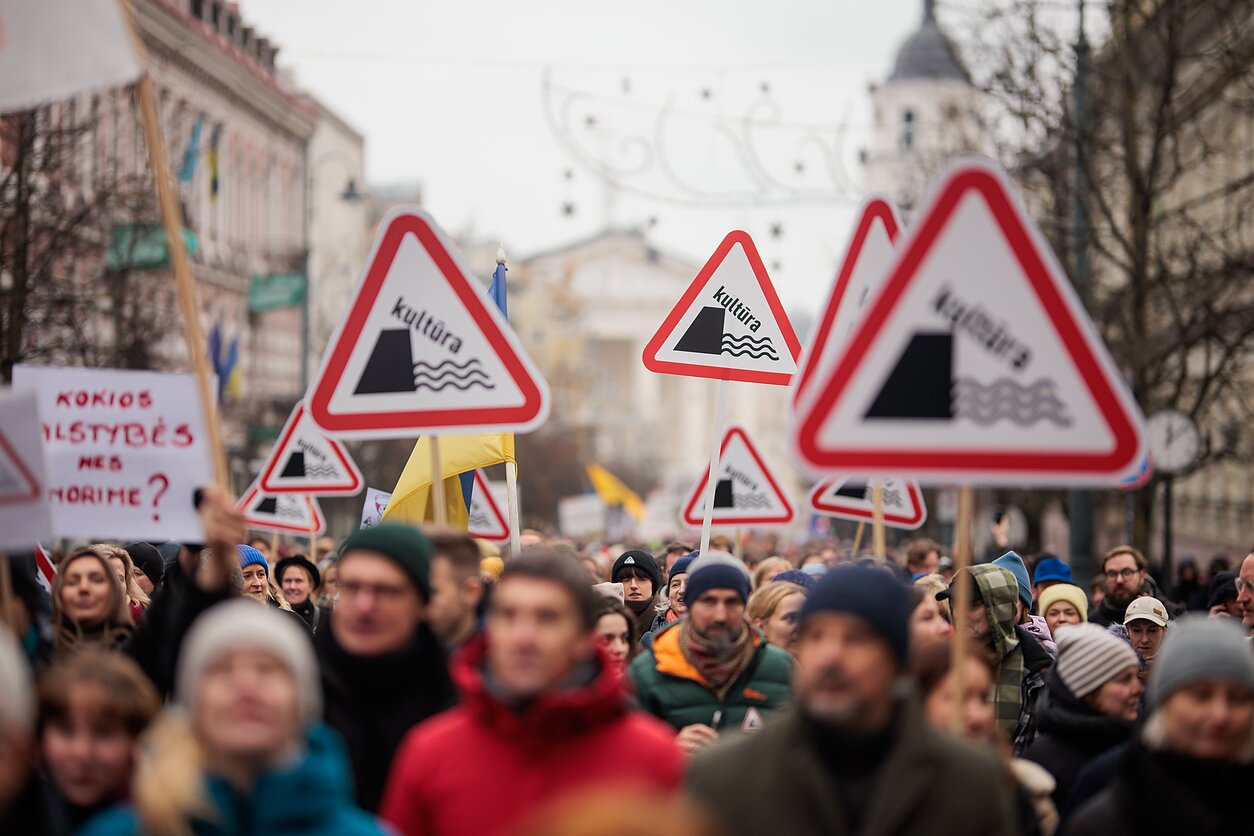
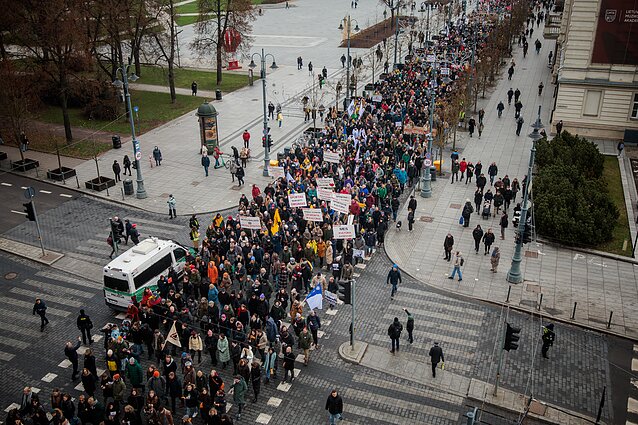
Thousands of people gathered near the Seimas on Friday in one of the largest civic demonstrations in Lithuania this year, as the country’s cultural community led a rally expressing deep concern about the nation’s political direction and the future of democratic institutions.
More than 5,000 people attended the protest, according to BNS estimates and police data. The event permit, coordinated with the Vilnius city government, allowed for up to 10,000 participants.
Under Lithuanian law, gatherings cannot be held closer than 75 metres to the Seimas, the Presidential Palace, the government headquarters or court buildings. As a result, protesters were not allowed into Independence Square. Instead, the stage was set up near the National Library, and 11 tractors lined Gedimino Avenue as farmers joined cultural workers in a show of solidarity.
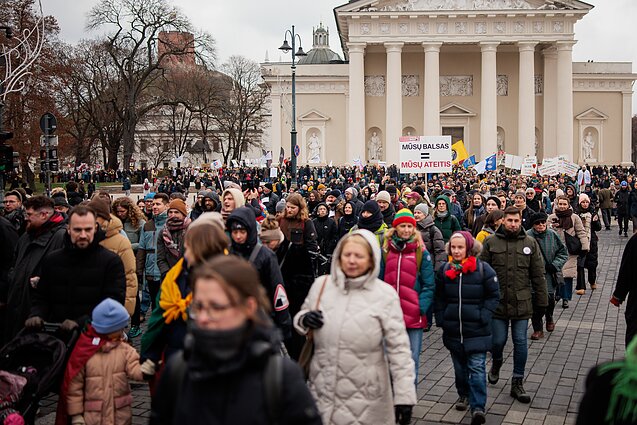
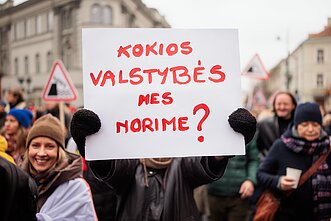
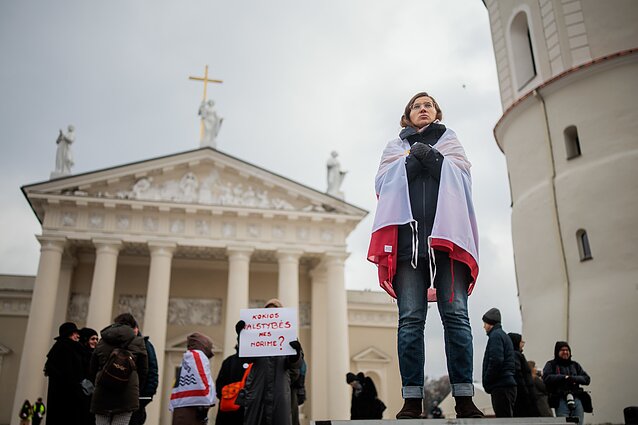
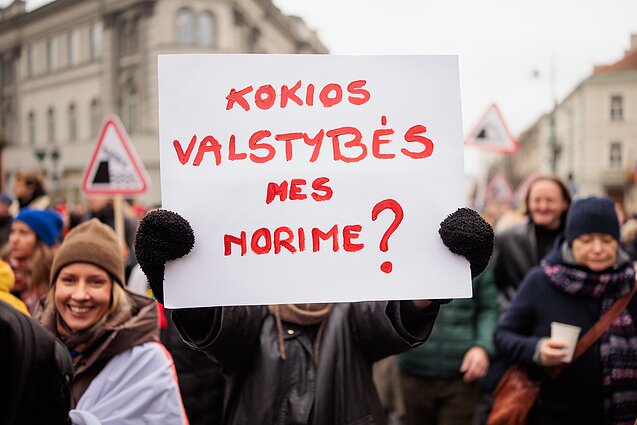
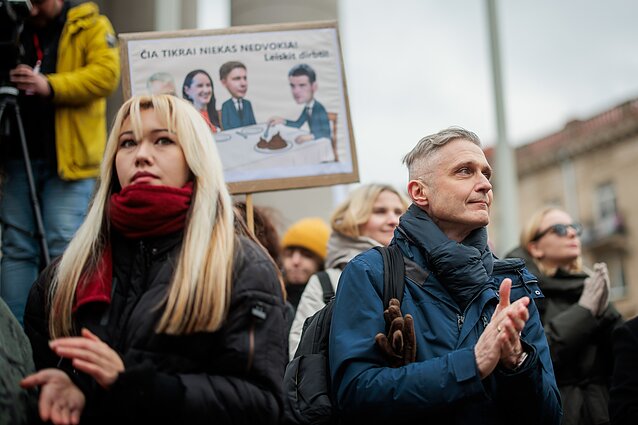
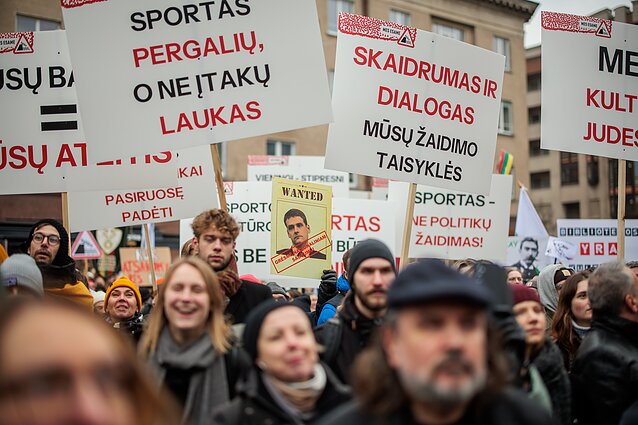
Participants carried Lithuanian and Ukrainian flags and held signs reading “Enough Mocking Lithuania”, “How Much Did You Sell Lithuania For?”, “Turn Up the Culture!”, and “I Care About Lithuania”. The rally began at noon with a march from Cathedral Square to the Seimas.
Organisers call for ‘training civic muscles’
Gintarė Masteikaitė, a member of the Cultural Assembly’s organising committee and head of the Lithuanian Dance Information Centre, told reporters that the protest movement now reaches far beyond cultural policy.
“The protest will continue and will train our civic muscles, because we see that they need training,” she said. “We have many problem points across Lithuania – in small towns, in regions – and assemblies are springing up like mushrooms after the rain. Each region is starting to raise its own concerns. This is not only about culture; culture is the unifying thread, but the issues are very broad.”
Masteikaitė said cultural workers still cannot be confident that no representatives of Nemunas Dawn, a party critics describe as anti-democratic, will end up in leadership roles at the Culture Ministry. Culture Minister Vaida Aleknavičienė, a Social Democrat, is still forming her team.
She added that Nemunas Dawn remains part of the ruling coalition and therefore “has all the tools to torpedo the Culture Ministry – and not only the Culture Ministry”.
“We see how state institutions are being undermined from within, how the public broadcaster is being targeted,” she said. “We see this as a major problem.”
She said the cultural sector feels a lack of political leadership and responsibility and wants coalition partners to take clear action against destabilising actors.
“We want very clear distancing and clear statements of values. Right now, they simply do not exist. That is why we see no plan or reason to stop protesting.”
‘This is about all of Lithuania’
Many protesters said they came not only because of cultural issues but because they fear broader political backsliding.
“I really don’t want a country where demagoguery thrives, where intimidation happens, where there is impunity,” said 22-year-old student Robertas Koraliovas. “That is why many people see meaning in being here.”
Seventy-year-old sociologist and former lecturer Vilius Leonavičius said the mobilisation of cultural workers gives him hope.
“Culture is our foundation,” he said. “Their mobilisation gives me hope they can become a force that influences cultural policy and affects the parties that come to power.”
Lina Šimonienė, 64, said she fears the country is drifting in a dangerous direction.
“I don’t want the kind of governance we have now, and I don’t want to go back to Russia,” she said. “The outbursts and attitudes of [Nemunas Dawn leader] Remigijus Žemaitaitis no longer make you laugh – they make you cry. This is frightening. If everything is destroyed in this one term, this is no longer just about culture – it’s about all of Lithuania.”
Farmers’ representative Eligijus Pocevičius said agricultural workers joined the rally because they are also dissatisfied with the government’s approach to the public.
“When the government starts taking into account society’s well-being, then maybe we’ll see satisfaction with the authorities,” he said.
Weeks of tension over Culture Ministry control
The cultural community united two months ago to block representatives of Nemunas Dawn from entering the Culture Ministry. Protests escalated after the ruling coalition agreed to hand the ministry to the party and President Gitanas Nausėda appointed Ignotas Adomavičius – who had no experience in the sector – as culture minister. Adomavičius resigned after one week.
A warning protest on October 5 drew hundreds of cultural institutions and thousands of participants nationwide. Cultural leaders say Nemunas Dawn’s influence threatens efforts to combat disinformation, protect free speech and uphold democratic norms.
The Social Democrats later reclaimed the ministry and appointed Aleknavičienė as minister. She has said no Nemunas Dawn nominees will hold leadership posts.
Despite that, Friday’s rally drew participants from health care, education, sports, agriculture and youth groups – a sign, organisers said, that frustration has widened far beyond the cultural sector.

Newsletter
Every Friday morning.