












Environmental officers in western Lithuania have discovered a 16-kilogram crocodile being kept illegally in a private home in the Šilutė district. The reptile, a protected species, was held without the required ownership documents and in unsuitable conditions, the Environment Protection Department (AAD) said.
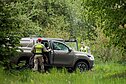
The AAD’s Klaipėda Wildlife Protection Division said it received an anonymous tip-off that an exotic animal was being kept unlawfully in a residential property. After obtaining a court warrant to enter the premises, officers carried out an inspection on October 28 and identified the keeper of the animal – a Caiman crocodilus, or spectacled caiman.
According to the department, the 1.4-metre-long crocodile was confined in a tank measuring just 1.42 by 0.68 metres. “The reptile was kept in conditions that did not meet the minimum legal standards for holding wild animals in captivity. Under regulations, crocodiles must be housed in an enclosure of at least 8 square metres, including access to a pool,” the AAD said in a statement.
The owner failed to produce any documents proving the legal acquisition or origin of the animal.
An administrative case has been opened, and the individual faces a fine ranging from €500 to €2,500 under Lithuania’s Code of Administrative Offences.

The crocodile has since been transferred to the Wildlife Care Centre at the Lithuanian University of Health Sciences for rehabilitation and proper care.
Anyone intending to keep exotic animals must first ensure they understand the legal requirements. Owners of protected species must hold certificates proving legal acquisition and origin, as well as a special permit from the Environment Protection Agency for trade or exhibition purposes.
“The living conditions for wild animals kept in captivity must comply with legal standards and reflect their natural habitat as closely as possible,” the department said. “Animals must receive appropriate veterinary care, species-specific nutrition and be kept in an environment that ensures both physical and emotional well-being.”

Newsletter
Every Friday morning.