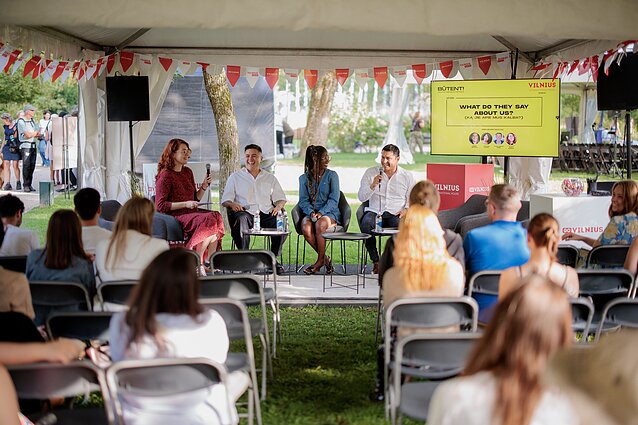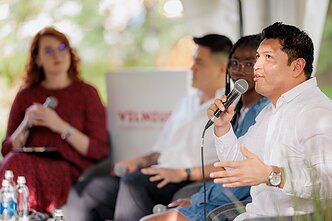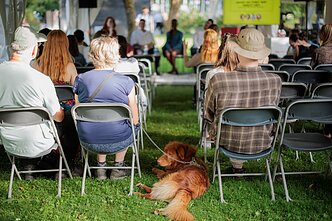















What do newcomers living in Lithuania really think about the country and its citizens? Foreigners who have successfully settled in Vilnius spoke about the country’s overlooked strengths, the moments that hurt, and the things Lithuanians may not realise about themselves at the Būtent! (Exactly!) discussion festival.
First impressions: grey skies and a lack of emotion
Fabian Sanchez from Ecuador, who found popularity on social media, said he knew nothing about Lithuania before arriving – until he met a few Lithuanians while working in the United States. Later, he became what he calls a 'love migrant', moving to Lithuania to follow his girlfriend. Today, he is known as a content creator, cheerfully introducing Lithuanian culture and cuisine online.
Like other participants in the Būtent! debate, he pointed to Lithuanian reserve and coldness – not only as a national trait but also as something that can make newcomers feel uncomfortable.
“When I arrived, it was a shock […]. In Mexico, people often smile in the street – it’s a way of showing that everything is fine. I thought, I don’t speak the local language here, so at least I’ll smile. It would have helped if someone had told me not to do that. If you smile randomly, in Lithuania, people look at you as if you’re crazy – or even glance around nervously,” Sanchez recalled of his difficult first months.
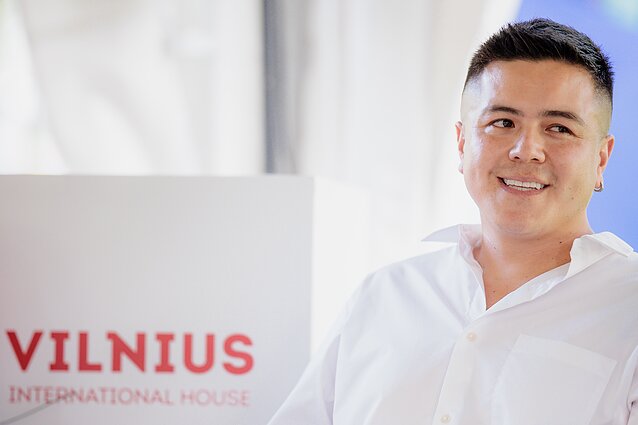
He joked that Lithuanians rarely show emotions – whether smiling or angry, they all seem the same.
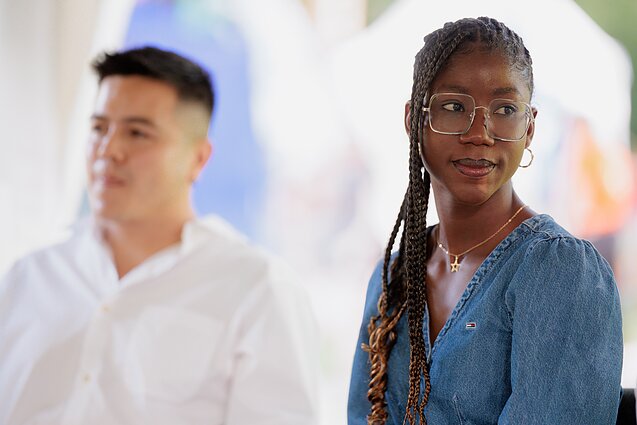
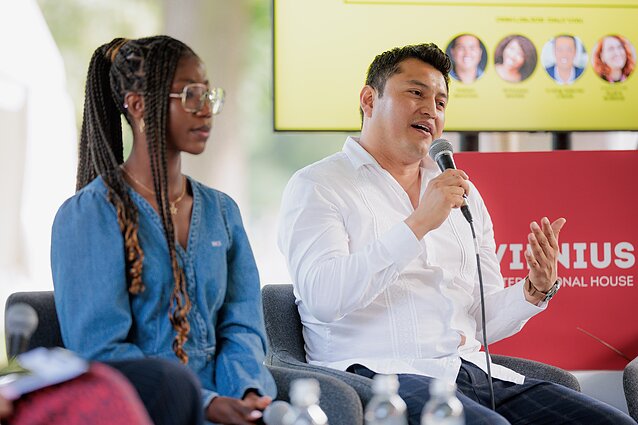
Meanwhile, Princess Benido, a student from Ghana who runs an African food store, had anticipated the cold before arriving in Lithuania to study – but it was only when she got there that she discovered the emotional reserve of the locals.
“I bought a coat, but it quickly became clear I needed more,” she recalled of arriving in January.

Mexican football coach Irving Gabriel Lopez recalls that there was very little information about Lithuania before he arrived.
“All I found mentioned the same things: be careful with the Lithuanian weather, and secondly, that Lithuanians are cold and rather serious,” he said.
Yet the foreigners soon began to develop a better understanding of Lithuania and its people.
“I realised that Lithuanians are not cold, that it just takes time for you to feel comfortable around people. For a while, I thought Lithuanians might be shy… I think they are very intelligent, honest, responsible, and extremely loyal people,” Lopez reflected.
He said he had been surprised that neighbours often did not respond to greetings. Still, having lived in Lithuania for 12 years, he noted that things had changed slightly over time.
“In my country, a greeting shows that you are well-mannered. Not being greeted initially shocked me,” he said.
After spending more time in Lithuania, he concluded that Lithuanians are big thinkers and are not quick to make decisions. In addition, they appear to be perfectionists, overly keen on maintaining control.
“More positivity, more flexibility, more openness. Sometimes people in attempt to present themselves as perfect, but no one is perfect – we are all human,” said the Mexican living in Lithuania.

Meanwhile, Ecuadorian Sanchez admits that he eventually realised that if he wanted to stay in Lithuania, he would have to adapt to the way locals are.
“Many foreigners get frustrated and ask: why are Lithuanians so cold, why don’t they greet you? I quickly understood that we are the guests here and we need to understand them. Lithuanians will not change for us,” he said.
Encounters with racism and hurtful remarks
Participants in the discussion also spoke of experiencing unpleasant incidents in Lithuania, including racism. According to Princess Benido, such comments online can be particularly hurtful. She is especially angered by remarks suggesting that black people are 'unclean' or that the African continent is a single country.
She also heard offensive words from her husband’s grandmother, who had never met a black person before. Benido believes stereotypes were at play.
“She asked why I was black, said she expected me to at least be an Indian. But that was an issue only in the beginning, and she quickly understood that I was just of a different race. She thought I was a witch practising magic,” Benido recalled. Today, her relationship with her husband’s grandmother is very good.
She admits that when she first began creating content for social media and reading comments, she told her husband she did not want to live in Lithuania, particularly after she started sharing photos of their daughter. She was worried about what might happen when her daughter started school.
“I kept thinking: how can people be so awful […]. I thought, they haven’t even seen her face, and my child is so beautiful,” Benido said.
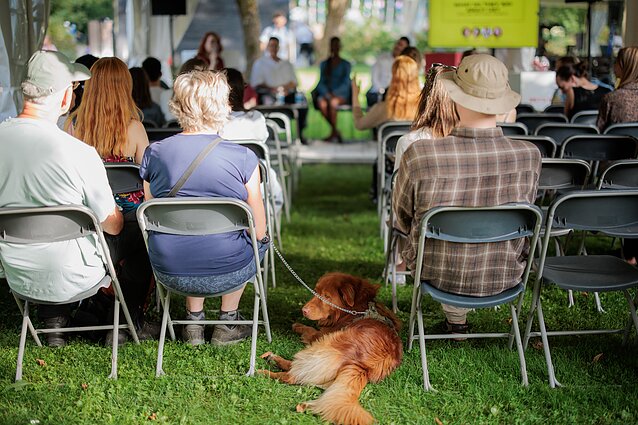
Her concerns were addressed by a woman in the audience at the discussion, who is raising a mixed-race son herself – still quite rare in Lithuania.
“Yes, people do look at him. But that only means that he gets noticed, and has lots of friends, he is genuinely a good-looking young man,” the woman reassured Benido.
Benido also produces a podcast about foreigners living in Lithuania. She explained that when the microphone is off, guests often share negative experiences that they wouldn’t speak about publicly. For example, it can be extremely difficult for foreigners to rent an apartment. Sometimes, when landlords see a non-Lithuanian, they claim they do not speak English, and agents openly admit that landlords simply won’t rent to foreigners.
Black residents in Lithuania recall being shoved or called the n-word. Benido’s Lithuanian husband also encountered racism when they were looking to rent a flat as a couple.
“He said, ‘she’s black,’ and upon seeing the expression on the woman’s face added that I had grown up in the United Kingdom,” she recalled, reflecting on how she had to bend the truth.
Benido also notes cultural differences that become evident in relationships. For instance, foreign women say it can be difficult to form more serious relationships with Lithuanian men, while Lithuanian men can feel hurt by Lithuanian women.
“Many men say that their Lithuanian girlfriends are very controlling. Some no longer want to date Lithuanian women; others say they don’t need love at all anymore,” she said.
Underappreciated advantages of living in Lithuania
Participants in the discussion noted that, despite cultural differences and challenges, foreigners living in Lithuania and their family members have come to appreciate the country’s advantages, such as its calm atmosphere and safety.
Speaking about the positives, Lopez highlighted his appreciation for Lithuanian driving culture and strict traffic laws.
“In Mexico, you’ll see a car accident on every corner. People drink and drive, ignore speed limits, and simply don’t respect each other. When my family visited me here, they were really surprised,” he said.
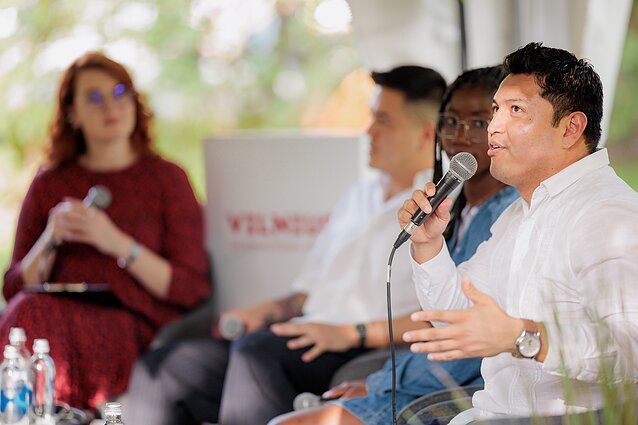
“I really like that people here are honest, and the country is safe. I wish it were like this in South America, because it can be very dangerous where I’m from. People here also have a lot of respect for nature,” Sanchez added, outlining what he values most about Lithuania.
He noted that Lithuanians often take their safety for granted. He did get mugged once but chose not to make a big deal of it.
“Sometimes I hear people say: maybe don’t go there, it’s unsafe after dark. That’s absurd – you have no idea what danger really is. You can safely walk around parks in Vilnius even at 2 a.m., Sanchez said.
Benido pointed out that Lithuanians are notable for their respect for personal space.
“In Ghana, everyone wants to know your business,” she said.
Lopez remembered that when his relatives visited Lithuania, they were struck by the unusual tranquillity and particularly enjoyed the Lithuanian autumn.
“My mum said: now I can see what life is like in Lithuania. You’re far away, but I know you’re safe and nothing will happen to you. Your brother lives right next to us, yet I worry about him more,” he recounted his mother's words.
A desire to learn the language
All three foreigners taking part in the discussion are very active on social media, posting content about life in Lithuania. They also make an effort to maintain their own cultural identities.
Lopez recalled that he is sometimes stopped on the street by other foreigners who say that his content inspired them to come to Lithuania, since the country is largely unknown in many parts of the world.
He organises Mexican cultural events in Lithuania and tries to challenge stereotypes about people from South America.
“We want to show that we live here and that we’re not drug dealers or weapons traffickers,” the Mexican said.
Benido added that one of the reasons she opened an African grocery store was her desire to preserve her culture. She reflected that she might have more Lithuanian friends if she tried harder to integrate.

“I think it’s very important for every foreigner, no matter how much you want to integrate, not to forget where you come from and to maintain your identity,” said Benido.
While trying to learn Lithuanian, foreigners often encounter situations where Lithuanians, upon hearing a foreign accent, switch to English.
“I understand they want to help us, but it would be nice if they responded in Lithuanian,” Sanchez explained.
Lopez joked that he would like to attend more weddings. Being invited to celebrations and introduced to families is the highest compliment a foreigner can receive in Lithuania, he said.
“And when they invite me, I’d like them to also explain more about the traditions,” he added.

Newsletter
Every Friday morning.