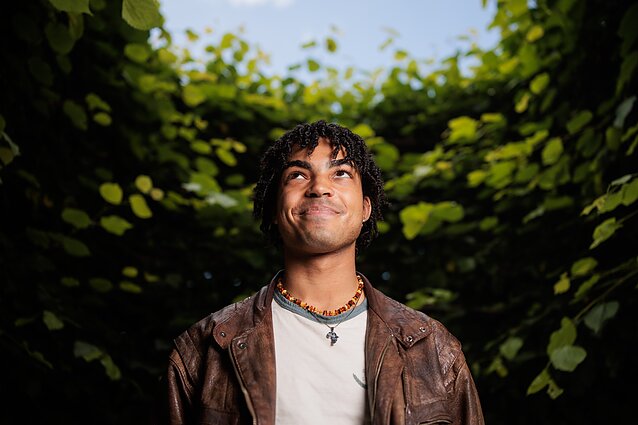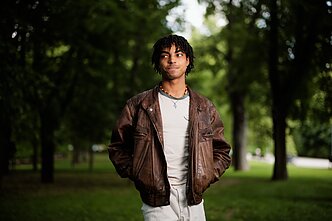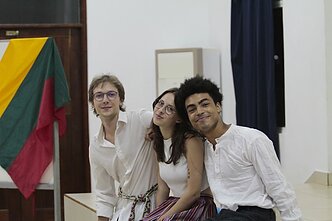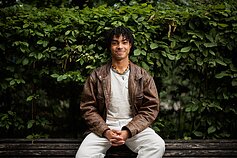





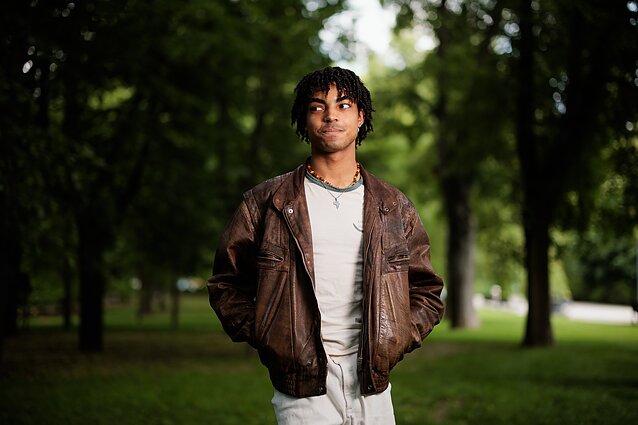
Nojus Adote Bolade Yannickas was born in the United States, raised in Lithuania, and spent the past three years living in Africa. His mother is Lithuanian, his father is from Benin. In Lithuania, he always stood out from the crowd; in Africa, he never felt entirely at home either. But over time, he came to embrace both cultures.
Growing up identifying with Lithuania
Nojus’ parents met across the Atlantic. His mother was working in the US one summer, while his father was a student there. Nojus lived in the States until the age of three.
“Mum really wanted me to speak Lithuanian – my grandparents are here. So we came back to Lithuania for a while, and shortly after, my parents separated, and we stayed – my mum, my brother and I. I don’t know if it was a long-term plan, but that’s how things turned out,” Nojus, born into a mixed family, told LRT.lt.
Though he grew up in Lithuania and Lithuanian is his native language, Nojus always felt just slightly apart.
“I always felt about 90 percent Lithuanian – the skin colour is different, and I knew, and others knew, that there was something else in my blood too,” he says with a smile.
His mother made sure he stayed connected to his Beninese roots, and he kept in touch with his father and grandparents as best he could – not an easy task with family spread across three continents. His father and some cousins lived in the United States, while his grandparents and other relatives remained in Africa.
“We used to write emails, then later came video calls. Sometimes I’d get gifts – like an African backpack – and that was really exciting. But growing up in Lithuania, Benin felt almost mystical,” he recalls.
Visiting Benin and school in Tanzania
In 2022, Nojus, his mother and brother visited Benin for the first time. At first, the experience was a shock – it revealed just how good life was in Lithuania. But he found the people in Benin to be much more laid-back than in Europe, and, most importantly, he could meet his extended family.
“It was strange. It felt like I sort of knew them from before, we’d talked, but meeting them helped me see them not as abstract beings but as real people. There are so many relatives – my grandmother’s cousins, my own cousins. We visited the house where my great-great-grandfather lived. It helped me realise that my blood lives there – I should have a connection to it, and I want that connection. It was amazing to get to know the family history,” he says.
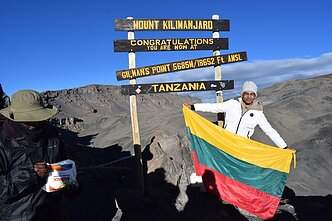
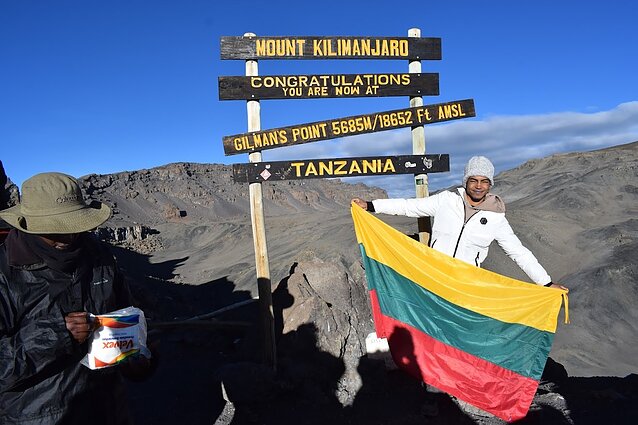
That trip to Benin inspired Nojus to explore Africa further, and he enrolled in an international school in Tanzania. He received a scholarship through United World Colleges – a global network of schools offering students the chance to study abroad.
“Sometimes I feel it was fate – my family actually lived in Tanzania for 10 years. So now that country is meaningful for both them and me,” he explains.
Nojus smiles as he recalls bringing traditional clothing from Benin, assuming it would be worn widely across the continent.
“I thought all of Africa was the same and had packed those clothes for Tanzania. But there, everyone dresses just like here. So I had to completely change my wardrobe within two days,” he laughs.
Navigating two cultures
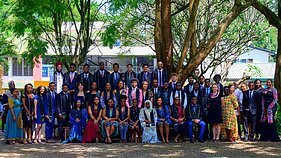
Nojus spent two years in Tanzania, studying alongside classmates from 80 different nationalities. The experience, he says, broadened his worldview.
“There were people from mixed families too – an Austrian who grew up in Tanzania, someone half-American, half-Indian. People are blending much more nowadays, and it showed me just how big the world is.”
He was glad to have other Lithuanians there to speak his language and cook familiar dishes – they even prepared cepelinai and shared fried bread with classmates. His time in Africa helped him appreciate Lithuanian culture in a new way.
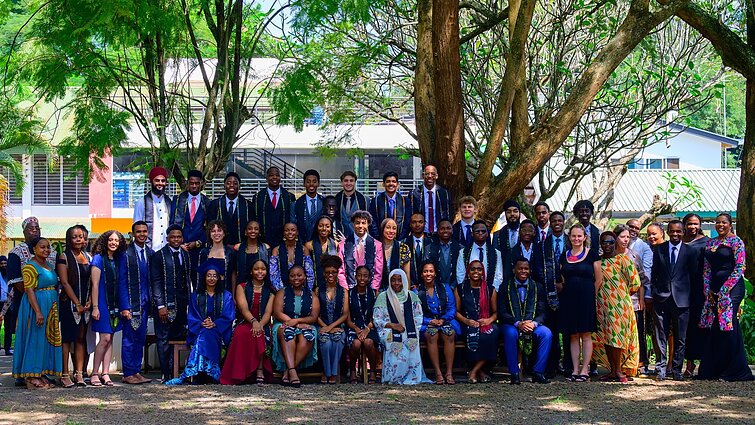
“It made me love Lithuanian culture more, but also helped me see that I don’t have to close myself off in it. I realised I don’t need to choose – I can embrace both the Lithuanian and African parts of me,” he reflects.
After two intense years in Tanzania, Nojus decided to take a gap year before going to university – he wanted to return home and gather his thoughts.
“I felt like that school in Tanzania had become such a big part of me, and I wanted to know if I could still be myself without it. That’s why I needed that year – to come home and figure things out.”
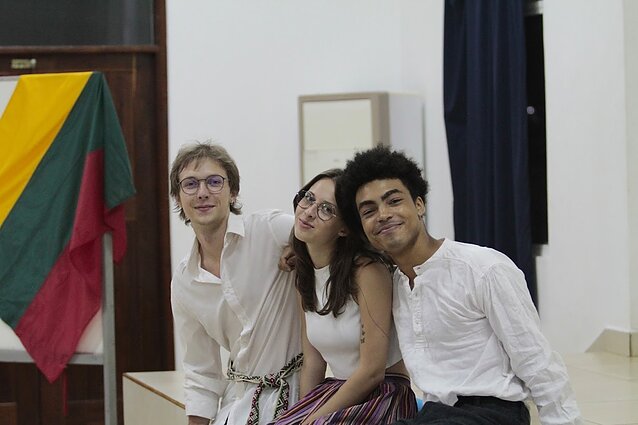
During his gap year, he volunteered in South Africa, working with human rights-related initiatives. He first spent a month studying South African history remotely before joining an arts centre, where he helped organise events and even taught Lithuanian folk dances to children.
“That counts as human rights too – the right to leisure and joy,” he says.
A foreigner in Africa and Lithuania
His time in South Africa gave him another chance to explore Africa. But as Nojus explains, his experiences in Tanzania and South Africa were very different.
“In South Africa, people saw me as African. The population is so mixed there that I looked like a local. I felt really comfortable. They’d speak to me in local languages, and I’d say, ‘Let’s speak English.’ It felt like, finally – they think I’m one of them.”
“In Tanzania, I was called ‘cappuccino’ because I was light-skinned,” he laughs. “They’d hear my accent and know I wasn’t from there. No one rejected me outright, but I had to accept that I didn’t grow up in Africa – I didn’t have that foundation – so I couldn’t call myself African. Even though I’m mixed-race, culturally, I’m European. But what was lovely in Tanzania was how happy people were to hear that I had African roots.”
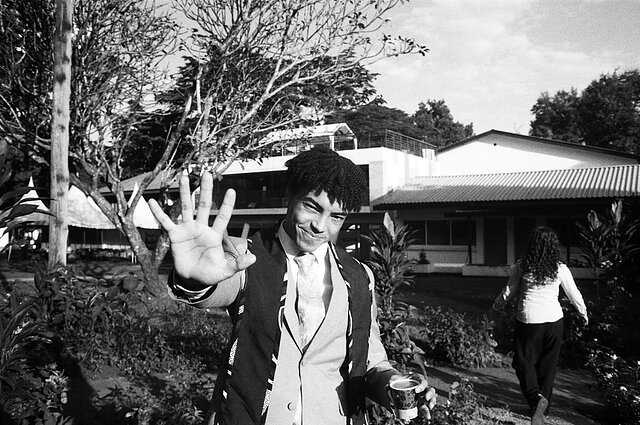
Returning to Lithuania from Africa, Nojus says he’s increasingly seen as a foreigner here too. When he was younger, people recognised he was from a mixed family. Now, as an adult, they often speak to him in English.
“I go to a shop and hear: ‘Hello.’ Or once in Kaunas, we went to a restaurant and the waiter said to my friends, ‘Do you need Lithuanian menus and one in English?’ I said, ‘No, I’ll take a Lithuanian one too.’ It doesn’t offend me, but it does sting a little, just for a moment.”
“I understand why it happens. And it’s a good thing – there are lots of foreigners coming to Lithuania, so it’s great that people know English. But I’d just spent three months in Africa, speaking no Lithuanian, and now that I’m back, I really want to speak my language,” he says.
After his return, he also noticed the curious stares he’d once stopped noticing.
“Coming back from Tanzania, I see an African person and think, ‘Oh, cool.’ But then I realised – people look at me like that too, when I’m on the bus,” he laughs.
African time and a slower pace of life
Nojus says his time in Africa gave him a sense of peace and a deeper connection with himself, his family and the world.
“I’m Lithuanian. I grew up here, I speak Lithuanian. But my father is from Benin – he’s part of me, and I’m part of him. I want to be close to him. I’m half-Lithuanian, half-African – so why can’t I be both?” he smiles.
Living in Africa made Nojus aware of some sharp contrasts between the two cultures – including their sense of time.
“For example, we agree to meet at five. I arrive at five, maybe even a bit early – but people there [in Africa] only start getting ready at five. Buses in Tanzania leave only when full. I eventually figured out they usually leave ten minutes later than scheduled. In Lithuania, times are exact – you’ve got five thirty-three or five thirty-seven. I like that – it’s very clear.”
He also noticed that while life in Africa is slower, people are more connected as a community.
“In Lithuania, people are more individualistic, I think. There’s nothing wrong with that, but it’s more of a European mindset. In Africa, it’s all about community,” he adds.
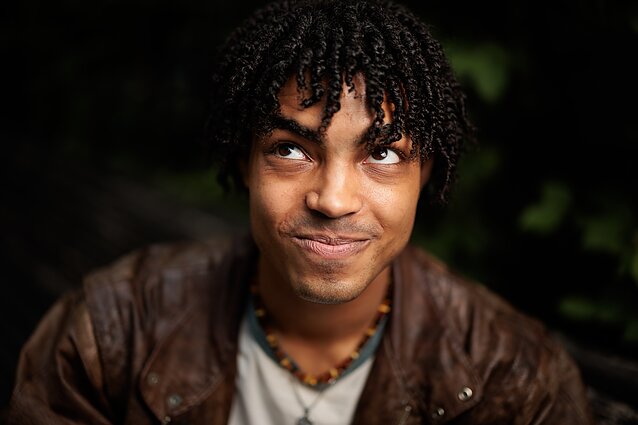
'Lithuania will always be with me'
Asked what keeps him connected to Lithuania, Nojus mentions the food – and especially the language. While in South Africa, he missed speaking Lithuanian more than anything.
“I love Lithuanian. I always try to use proper accents in writing – I think it’s beautiful. I took some Harry Potter books with me, so I could read in Lithuanian. There was always English literature around, so reading in Lithuanian felt like a break for my brain, like a gift at the end of the day. My language,” he says.
Nojus is Lithuania’s biggest advocate abroad – he tells everyone about it and proudly shares its culture. Still, this August, he is moving to the United States to study history and education in Oregon. He doesn’t plan to stay in America long term, and he’s already thinking about spending more time in Africa.
“I’ve spent most of my life in Lithuania. And that’s fine – but now that I’ve had the chance to explore, I want to keep going. I speak some French, but I’d like to get better so I can speak with my dad. I’m not sure I want to live in Benin, but somewhere in Africa.”
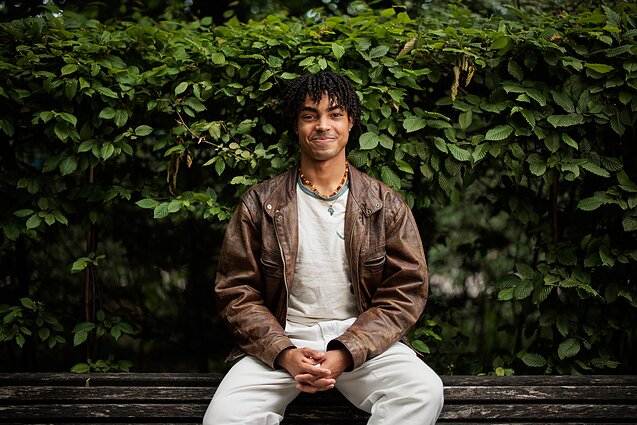
“At the same time, I want my children to speak Lithuanian. I’ll definitely come back one day. But after university, I still see myself spending more time in Africa – because it’s where I can truly be both Lithuanian and African. Lithuania will always be with me. That’s the plan – though life is life, and who knows? Maybe I’ll end up in Latvia,” he laughs.
As he waits to begin his studies in the US, Nojus has already reached out to the Lithuanian community in Portland and hopes to get involved. Even abroad, he says, he wants to stay connected to his roots.
“I’d love to volunteer at a Lithuanian Saturday school – it would be a community, it would be the Lithuanian language,” he says with a smile.

Newsletter
Every Friday morning.