



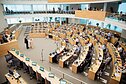





Lithuania's parliament has opened debate on legislation that would allow the country to impose national-level economic sanctions on Russia and Belarus should the European Union fail to extend its bloc-wide measures.
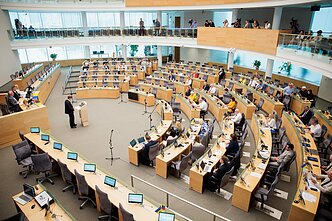
Lawmakers held the first reading of proposed amendments to the Law on Restrictive Measures Due to Military Aggression Against Ukraine on Monday. The draft passed comfortably, with 123 votes in favour, two against and one abstention, reported BNS.
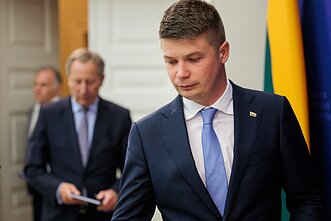
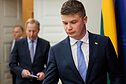
The legislation was introduced by Foreign Minister Kęstutis Budrys, who warned that divisions within the EU over sanctioning Moscow and Minsk risk weakening the bloc’s response to Russia’s ongoing war in Ukraine.
"The situation in the European Union began to change in the second half of January when it became clear that we might not be as united as we'd like in extending the sanctions already in place," he told lawmakers. "That led us to the conclusion that we need to look for alternative ways to maintain an effective sanctions policy".
Hungary has repeatedly opposed new or extended EU sanctions on Russia, creating challenges for the bloc, which requires unanimity for such decisions.

Under the proposed law, the Lithuanian government would be granted authority to impose two types of national sanctions: asset freezes and sectoral economic restrictions.
In both cases, lists of sanctioned individuals and entities would be drawn up by the Cabinet of Ministers.
Budrys told BNS that Lithuania is also considering coordinated fallback action with 26 EU member states should the EU fail to agree on sanctions – referred to as Plan B – while Plan C would involve Lithuania introducing national-level measures.
Budrys underlined that, despite scepticism, sanctions against Russia and Belarus remain effective. According to him, G7 countries have jointly imposed around $400 billion worth of restrictions.
Vilnius is also pushing for coordinated action among EU countries that share borders with Russia or Belarus, urging them to impose national sanctions if the bloc fails to extend existing EU-wide measures. The aim is to block goods from Russia and Belarus from entering the EU by land routes and to raise the cost of trade for the two countries.
Budrys stressed on Monday that Latvia, Estonia and Poland already have similar legal tools in place and can use them if needed.
Since Russia’s full-scale invasion of Ukraine on February 24, 2022, the EU has adopted 17 sanctions packages targeting Russian individuals, companies, and economic sectors. However, growing friction among member states has complicated further action.
Lithuania has already imposed several unilateral sanctions, including entry bans, restrictions on issuing residence permits, and enhanced security screening for travellers from Russia and Belarus. Citizens of the two countries are barred from importing Ukrainian hryvnias into or out of Lithuania, and the import of agricultural products and animal feed originating from Russia or Belarus is also prohibited.
In addition, Russian nationals without residence permits are prohibited from purchasing real estate in Lithuania.

Newsletter
Every Friday morning.