









The number of Lithuanians living in absolute poverty has grown, with nearly 170,000 people now falling below the poverty line, new statistics show. That places Lithuania among the worst in the European Union for poverty levels, ranking third from the bottom after Bulgaria and Latvia.
According to official data, approximately 6% of the population – an increase of 60,000 people over the past year – now live in absolute poverty. The threshold is defined as monthly income below 500 euros for an individual, or 1,000 euros for a family of four. Without government benefits, that number would be even higher.
“Poverty remains high despite growing wages and rising disposable income,” said Inga Daunaravičienė, head of a department at the State Data Agency. She noted that inflation and social benefits significantly impact the calculation of poverty thresholds.
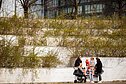
More than 600,000 people – roughly one in five Lithuanians – live just above the poverty line, many of them pensioners, single parents, unemployed individuals and families with children. The issue is especially visible in rural areas, where opportunities are more limited than in urban centres.

In Vilnius, elderly vendors can be seen selling homegrown flowers and vegetables in the spring and handmade goods in the autumn. Many say they are simply trying to survive.
“Everything is expensive,” one woman told LRT TV. “This is just a way to make a bit of money.”
“Younger people have options – we can work, we can study,” said another resident. “But pensioners are really struggling. They get by however they can.”
Non-governmental organisations working to reduce poverty report that nearly 10% of Lithuanians cannot afford basic food. Aistė Adomavičienė, head of the Lithuanian Network of Organisations Against Poverty, said the country underinvests in social protection compared to EU averages.
“The pie is growing, but only crumbs fall to those living in difficult conditions,” she said. “We allocate just two-thirds of what other EU countries spend on social protection.”
Jekaterina Navickė, an adviser to the social security minister, said the numbers confirm what has long been known.

“Poverty doesn’t solve itself, even during economic growth,” she said, calling the issue deeply complex and expensive to address – especially once it becomes entrenched.
In response, the Ministry of Social Security and Labour is drafting reforms, including increasing the individual pension component from the state reserve, reviewing the indexing of disability benefits, and adjusting unemployment support for older workers nearing retirement.
Economist Aleksandras Izgorodinas of Citadele Bank noted that while Lithuania’s economy is among the fastest-growing in Europe, its model is still based on cheap labour exports rather than innovation.

“We’re still selling low-cost labour to Germany and Scandinavia,” he said, urging companies to share profits more fairly. “Income growth is highly uneven.”
However, Izgorodinas cautioned against expanding unemployment benefits, suggesting instead that older people be better supported in returning to the workforce. Still, he welcomed efforts to raise pensions, emphasising the need to ensure long-term funding without increasing national debt.
As the country debates military spending hikes amid regional tensions, Adomavičienė reminded policymakers that social security is also a form of national defence.
“People in vulnerable situations are easier to manipulate and exploit,” she said. “Protecting them is part of protecting the country.”

Newsletter
Every Friday morning.