








A frozen conflict in Ukraine would only benefit Vladimir Putin, former Polish President Aleksander Kwaśniewski tells LRT in an exclusive interview.
However, he acknowledges that, three years into the large-scale invasion, both Ukraine and its European supporters are tired, which often results in public stings between Warsaw and Kyiv.
“Both sides are tired,” says Kwaśniewski, who was Poland’s president between 1995 and 2005. “When I see European politicians talking to Zelensky, I tell them: remember not to demand too much from him, you are talking to a man who has been at war for three years […]. Just as the Ukrainians need to show greater awareness of this vast amount of aid that the world is providing and, to put it bluntly, gratitude, we also need to show greater sensitivity in understanding the distress, the tragedy in which the Ukrainians, through no fault of their own, have been living for almost three years.”
Kwaśniewski spoke on LRT TV programme Topic of the Day.
Polish Prime Minister Donald Tusk recently said that Russia’s war in Ukraine is entering a decisive phase and warned that we could face a third world war. Would you agree?
I agree that this war is entering a decisive phase. I hope it will not be the beginning of World War Three, but let me be clear: despite the strong guarantees we have, Poland and Lithuania in NATO […], we have less security today than 10 or 20 years ago. This is something we need to be aware of.
We find ourselves in an extremely difficult, challenging moment, although I do not want to be scaremongering. I don’t think we are on the threshold of World War Three yet.

There is talk of negotiations between Russia and Ukraine. A frozen conflict is not out of the question. How would such an outcome change the situation in our region?
I think that of all the solutions being discussed today, freezing the conflict is the worst one. Of course, it may seem that such an option is better than an ongoing war, because war means that people die. However, a frozen conflict is not peace, it is just a frozen war, which in my opinion will work in Putin’s favour – it gives him time to regroup his army, to produce more ammunition, and for Ukraine this is terrible news, because Ukraine will have neither reclaimed land nor be able to think about its future, it will never know when this war will be unfrozen.
I don’t think this will help Ukraine’s negotiations with the European Union either.
It would also spell uncertainty for us, we would not know at what point Putin would return to hostilities. It is important to remember that the main problem today is not Ukraine, or what Ukraine wants or dreams of, it is Putin and his aggressive criminal policy. He wants to have all of Ukraine in his hands – not half, not a quarter, but all of Ukraine – and he will do it in different ways. We must be aware of this. We must not be naïve, we must know that this is the goal of Putin and this imperial Russia.
In your opinion, has Western Europe, after almost three years of war, understood what you say here?
I think they have largely understood. In my opinion, Putin did not expect Europe to stand up so unequivocally on the side of Ukraine, to give such far-reaching financial, military and humanitarian aid. Millions of Ukrainian refugees have been taken in by Lithuania and Poland, as well as by other Western countries. So here we have shown great solidarity.
The Ukrainians, on the other hand, rightly say that we took many decisions too late, because that is what democracy is all about, you have to grow up to it, you have to ask the people. Tanks and aircraft should have been handed over earlier, as well as permission to attack targets on Russian territory so that Ukrainians could defend themselves more effectively against an aggressor.

It is very important that for the majority of Europeans and the majority of political forces, it is clear who is the aggressor and who is the victim. Who started the war – Putin – and who is defending against it – Ukraine and Zelensky. Who is destroying the infrastructure, civilian facilities, kidnapping children – Putin and Russia – and who is trying with all their might to counter this – Ukraine.
It is very important for us to be aware of this, because it is this awareness that will tell us to continue helping Ukraine, regardless of which way the negotiations or any political arrangements go.
Poland has been one of Ukraine’s main allies since the first days of the war. Today, however, we hear critical statements from both sides in public. Are these relations breaking down?
No. I think this is typical fatigue. This war has been going on for nearly three years and, naturally, there are questions: how much longer will it go on, how much more will it cost?
There is also a bit of weariness with the refugee problem. Some also feel that despite the far-reaching aid, the gratitude expressed by the Ukrainians is not enough. And so on.
This is normal part of life. Both sides are tired. Anyway, when I see European politicians talking to Zelensky, I tell them: remember not to demand too much from him, you are talking to a man who has been at war for three years, who does not know if he will live to see another day, who is forced to send people to the front every day, not knowing what will happen to them, they may not come back or they may come back maimed.
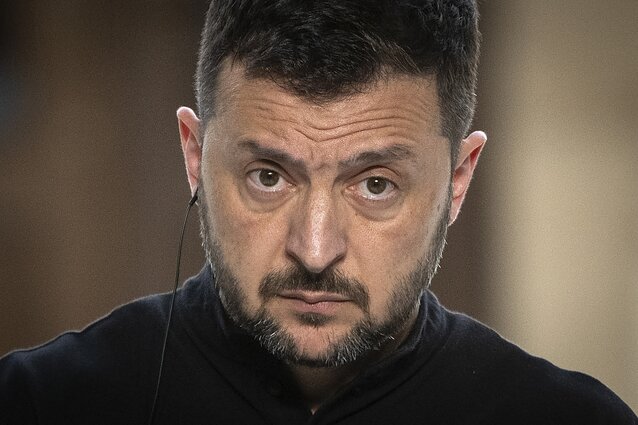
Just as the Ukrainians need to show greater awareness of this vast amount of aid that the world is providing and, to put it bluntly, gratitude, we also need to show greater sensitivity in understanding the distress, the tragedy in which the Ukrainians, through no fault of their own, have been living for almost three years. They have been attacked, they are defending themselves.
We must have respect for the Ukrainians. I remember when the war started, most military experts and politicians said: this war will last three days, a week, Ukraine will not defend itself. Yet they have been defending themselves for nearly three years: broken families, injured people who have returned from the front, people killed, civilian facilities destroyed, infrastructure destroyed, children kidnapped.
Let’s understand the tragedy we are dealing with and show far-reaching readiness to help, but also sensibility towards some, if you will, “clumsy” statements from the Ukrainian side.
Donald Trump has won the US presidential election and there’s much speculation about him being more sympathetic to Putin. What does Trump’s presidency mean for our region?
The short answer: we’ll see. As I talk to people who worked with Trump in the past – John Bolton, General McMaster – they all stress that Trump is unpredictable. So, to predict what an unpredictable man will do is beyond me.
Let’s hope he doesn’t do terrible stupid things, doesn’t give away Ukraine, doesn’t sell out, doesn’t challenge this great effort that Ukrainians have made defending themselves and us, defending democratic values.
Perhaps he has some idea of how to force Putin into talks. Although personally I doubt it. I think Putin is determined to drag out this war in various forms – it may be hybrid, it may be frozen for a while, but he wants to end this war so that Ukraine is in his sphere of influence. Making an agreement or a deal with such a man does not make much sense. We will see, there is not much time left, the inauguration is on January 20, and then we will judge the next actions of Trump and his administration.

If Europe, as Trump wants, is willing to invest more in its own security and defence, what role will Poland and Lithuania play?
What is important is that we are already investing. Poland spends close to 5 percent of its GDP, Lithuania more than 3 percent. Which means that we are fulfilling our alliance commitments.
We also need to force all our friends in NATO to do the same. Inevitably, there comes a point at which Europe will have to shoulder security issues to a greater extent. This is not just because Trump won the election. This trend has emerged under Obama and it will continue. Not just because presidents may be more or less inclined to support NATO, but because the society in the United States is changing.
The American core, people from European migrant families whose roots were in Europe, are fewer and fewer. More and more Americans have Hispanic, Asian background, so explaining that trans-Atlantic ties, NATO are the most important thing for America will be increasingly difficult. They think: why not the Pacifica, not South America?
To this changing American society we need to show that we care deeply about America, about the alliance, we care that America understands Europe, that we work well together. But we have to shoulder a significant part of the burden for our security.
We have not had a Polish ambassador in Vilnius since July. How do you see this situation and will it affect our relations?
It should not, it is not Lithuania’s fault that there is no ambassador here. It is not because of bad Polish-Lithuanian relations, it is because there is a dispute between the government and the president in Poland. It is a so-called cohabitation [President Andrzej Duda is allied with the opposition PiS party], which does not look good.
The president has taken offence at the government and is not signing any appointments that he should be signing. The good news is that the president’s term ends in August and then everything should return to normal.
I have no doubt that, especially in view of Putin’s policy, good, close, pragmatic Polish-Lithuanian cooperation is essential.

Newsletter
Every Friday morning.