






Different sports came to Lithuania in different ways and the same is true of the words Lithuanians adopted to name them.
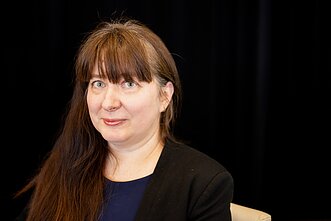
Vilma Zubaitienė, associate professor at Vilnius University’s Faculty of Philology, says that some sports have had several names over the years: initially called by their foreign – usually English – name, but once they became important enough, Lithuanians came up with their own term.
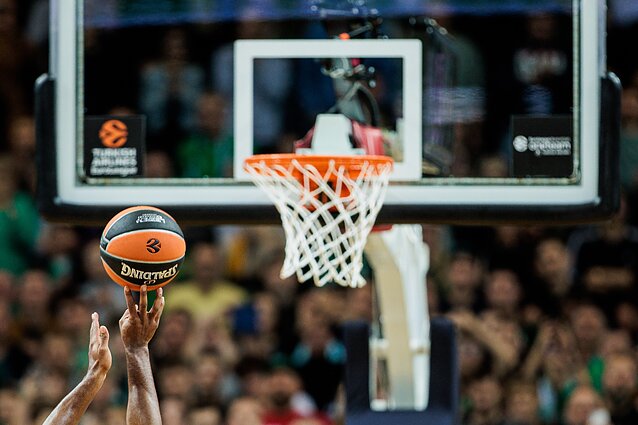
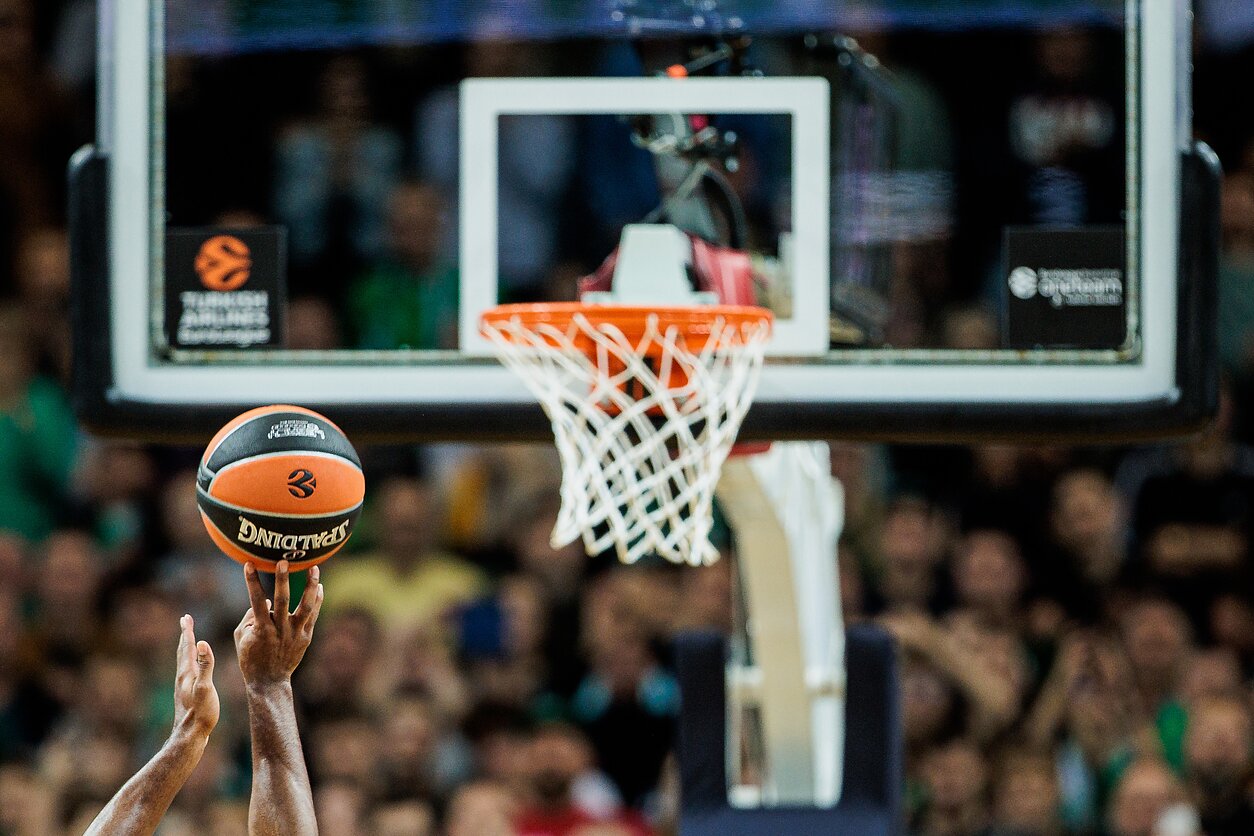
Basketball is a case in point. “As far as I know, they initially started using an adapted loanword in Lithuania – basketbolas – and only later would look for an equivalent,” says Zubaitienė.
“If the loanword is not clear enough for people, or if we consider a sport to be a national treasure, we can look for the Lithuanian equivalent. And so it came – we have ‘krepšinis’. In Latvia, they kept ‘basketbols’, while the Estonians have the word ‘korvpall’, where ‘korv’ means basket and ‘pall’ means ball,” says Zubaitienė.
Krepšinis got its name from the main attribute of the game (besides the ball) – ‘krepšys’ or basket.
A similar logic applies to volleyball – it requires a net, so Lithuanians call it ‘tinklinis’, deriving from ‘tinklas’ (net). In handball, apparently, one needs little else than a ball and one’s hands, hence the Lithuanian term ‘rankinis’ derives from ‘ranka’ (hand).
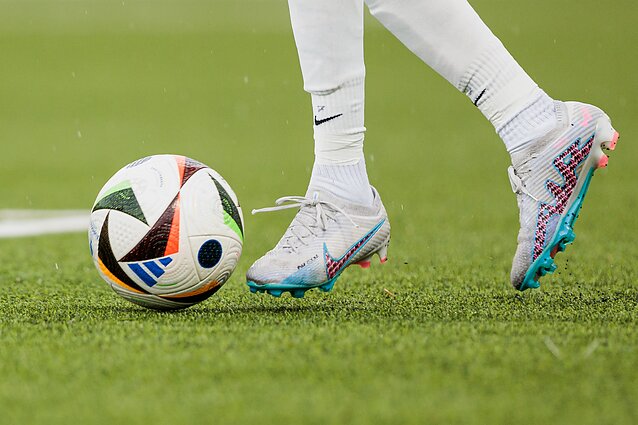
But this does not extend to football. “Even though there were proposals to call it ‘kojinis’ (from ‘koja’, the Lithuanian word for foot or leg), we kept the loanword ‘futbolas’,” says Zubaitienė. The players were initially called ‘futbolistai’, but eventually Lithuanians decided to use a more natural-sounding suffix and came up with ‘futbolininkai’.
Steponas Darius, the American-Lithuanian pilot who is credited with introducing basketball to Lithuania in the 1920s, published a book called “Basketbolo Žaidimas” (The Game of Basketball) but included the term ‘krepšelis’ – little basket – between brackets.
In 1936, the first issue of the magazine Fizinis Auklėjimas (Physical Education) proposed an entire glossary for football and basketball terms. It included the proposal to call basketball ‘krepšio žaidimas’ (the game of basket) and a whole slew of football terms: ‘baudinys’ (penalty), ‘futbolininkas’ (football player), ‘įvartis’ (goal). Not all of them took root, notes Zubaitienė.
Overall, the researcher says, Lithuanian sports terminology can be quite inconsistent – some sports are called by their original names, others get native words.
If a sport’s name refers to a straightforward activity it entails – running, rowing, shooting – they had ready equivalents in the Lithuanian language (bėgimas, irklavimas, šaudymas). In cases where the word’s origins are less clear – like tennis or badminton (which is named after a town) – Lithuanians may have simply kept it: tenisas, badmintonas.
“The Language Commission was considering how to adapt new terms, such as surfing, which is now called ‘banglenčių sportas’ (the sport of surfboards), whereas it used to be ‘serfingas’. With breakdancing, which has become an Olympic event, the Germans, for example, use ‘breakdance’ and we kept the shorter term (breikas),” says Zubaitienė.
Skateboarding, meanwhile, sounds similar to surfing – ‘riedlenčių sportas’ (the sport of skateboards). The name for skateboard, ‘riedlentė’, literally means a rolling board, while surfboard, ‘banglentė’, is a wave board.
An interesting pair are the Lithuanian terms for triathlon and pentathlon. The former is kept international, ‘triatlonas’, while the latter has warranted a native neologism, ‘penkiakovė’, literally five-fight.
Zubaitienė says that linguists on the Language Commission are often asked for advice on how to adapt sports terminology.
“When the [Lithuanian] Taekwondo Federation approached us about how to adapt the term, we decided to keep the original word, only spelled according to Lithuanian phonetics (tekvondo). It’s similar to breakdance (breikas), we kept the shorter, cleaner term that is easy to understand. We also have ‘riedlentė’ (for skateboard), which has been adapted into Lithuanian by analogy with a surfboard,” explains Zubaitienė.

Newsletter
Every Friday morning.