












Lithuania’s ministries of defence and finance are developing a special platform where citizens will be able to donate for the country’s defence needs. The measure is meant to help Lithuania meet its military spending targets without excessive tax raises, but a poll shows that most Lithuanians do not intend to give money voluntarily.
The poll, conducted by Vilmorus for BNS, only about one in five, 19.2 percent, said they plan to use the platform to donate to the armed forces, while 60.5 percent said they will not. The remaining 20.3 percent say they are undecided.
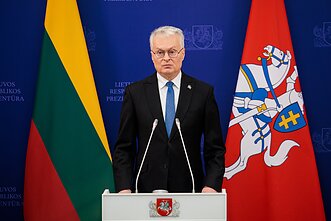
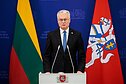
The defence minster says that despite the higher proportion of those who will not donate, the poll gives him a positive impression.
“Half a million Lithuanians would be ready to make a voluntary donation to national defence. There is a significant potential contribution to national defence,” Laurynas Kasčiūnas told BNS. “Do I expect this to make a big difference for [defence] funding? [...] I’m not sure, it’s hard to say.”

Planned information campaign
Commenting on the poll results, Deividas Šlekys, an associate professor at Vilnius University’s Institute of International Relations and Political Science, says relatively few people are aware of the planned donation platform.
“But of course we can also take a broader look at whether citizens would be willing to give extra money out of their own pockets on top of the taxes they pay. The question is how we will interpret this data,” the political scientist and military expert told BNS.
He says that probably more people will agree to donate if funds are raised for specific acquisitions rather than for the military in general.
Defence Minister Kasčiūnas shares his view.
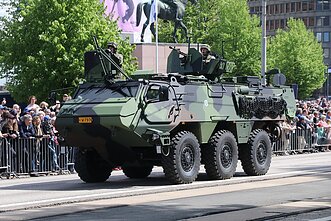
“People seem to need a clear link between their investment, their support and the capability that will be created – air defence, drones or anti-drones, infantry fighting vehicles,” he said.

“We will be able to be very clear about what they can contribute to, for example, the acquisition of Piorun short-range systems. People’s money would go to partially pay for the contract. More of their money could go towards strengthening the modern soldier concept. We have many options, but we cannot plan now because we do not know how much money will be available. But we will certainly set a direction on what we will invest into,” the minister said.
According to Kasčiūnas, his ministry plans to launch an ad campaign to promote the donation platform, which could be done in October via social media and websites.
According to the poll, people under 39 with a university degree and higher income, who work as professionals, clerks, service workers or technical staff are more likely to say they will donate to the military.
Those least likely to donate include people over 50, those with lower education, lower earners, pensioners and the unemployed, as well as residents of villages and smaller towns.
The Vilmorus poll included 1,000 respondents aged over 18 in 29 towns and 45 villages. It was carried out between July 11–21.

Newsletter
Every Friday morning.