








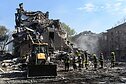




Esther Shalev-Gerz, a Litvak, has been working and living in Paris for many years. She left Lithuania at the age of eight and has no memories of her homeland. Her parents did not tell her anything about Lithuania either, perhaps because the country reminded them of pain.
“My home is where my chair is,” Esther says, adding that she can feel at home anywhere. During her 75 years of life, she has lived and worked in Israel, Paris, London, the US, and Canada.
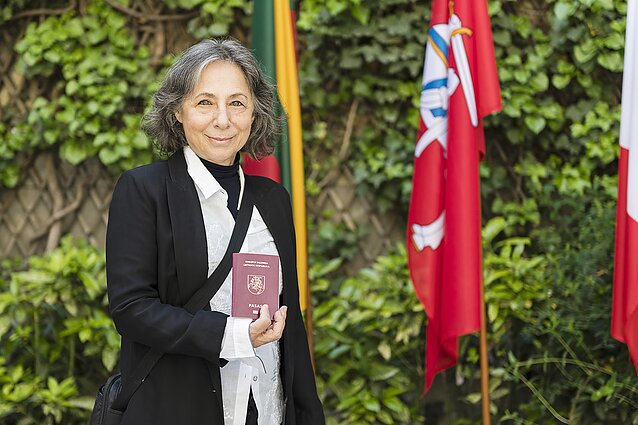
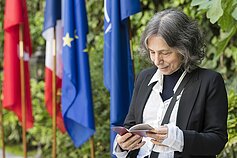
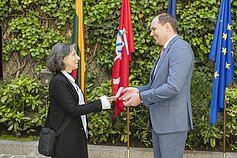
However, when a few years ago, at a ceremony at the Lithuanian Embassy in Paris, Esther was presented with a Lithuanian passport and restored her citizenship, she was relieved to finally be able to “place” herself somewhere again.
“My body remembers everything,” the woman says, recalling the moment she first visited Vilnius 15 years ago. Although she does not have any childhood memories of her hometown, the smile never left her face throughout her stay.
“The first time I visited Vilnius and found the house where we lived on Pylimo Street, I just started smiling, although I didn’t remember anything, and I didn’t understand why. But my body felt it,” she says.
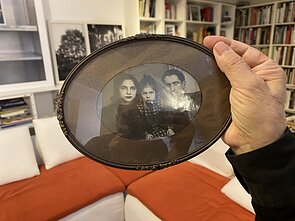
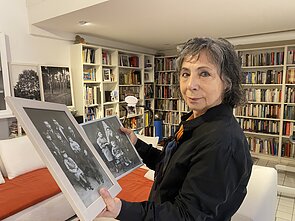
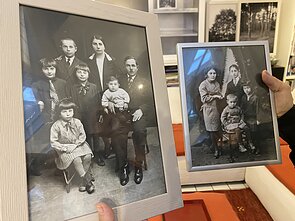
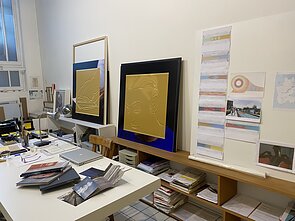
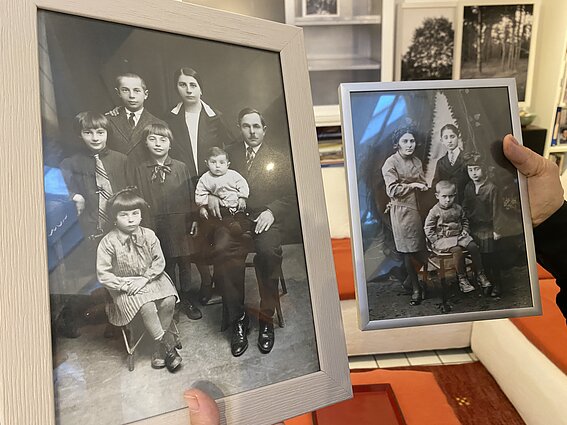
We meet Esther in Paris, in her bright studio. On a shelf right here are a few black-and-white photographs – all that Esther has left of her life in Lithuania.
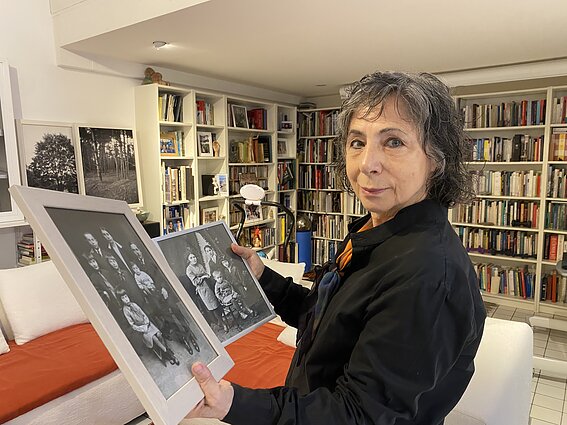
Esther’s mother comes from Alytus, and her father is from Ignalina. The family settled in Vilnius when their daughter was born.
“I lived in Lithuania until I was eight. People tell me that I really should remember something, but I don't remember anything. It’s like a breaking point – everything that was there before I was eight is gone,” she says.
Her parents did not tell her anything about their life in Lithuania either. “My mother didn’t tell me anything, only that she loved her brother very much,” she recalls.
“My father also spoke very little. I only know that when he was running away, he was stopped by the Soviets and became a soldier in the Russian army. That is how he survived. He used to say that war is the most unpredictable place and that the fact that he survived is a miracle,” Esther adds.
She also never found out what happened to her grandparents, aunts, uncles, and cousins. The woman only knows that they were probably shot in the forest near Alytus.
“If I had to choose one thing in my life that I could figure out, it would be this. I’d like to know where they are, what happened to them,” Esther shares.
Empty room
When Esther’s father found out that his brother survived the Holocaust and settled in Israel, the family decided to leave Lithuania.
“He thought he had lost his whole family. So as soon as he found out, he told my mother: We’re moving to Jerusalem. Mum wasn’t very happy, she said: The desert, no culture, only Jews, I’m not going. But they moved there,” Esther laughs.
If she does not remember Lithuania at all, her memories of life in Israel are vivid.
“I arrived and there was the whole world. Yes, they’re all Jewish but they come from all over the world – different countries, different cultures, eating different food, singing different songs. I remember every detail of my life in Israel. It gave me a taste of how big the world really is,” she says.
But growing up, she became increasingly aware of the emptiness she inherited from her parents.
“I realised that I inherited an empty room from my mother – I had no grandparents, no uncles, no ancestors, and no traditions that travelled with us. Gradually, I realised that I could work with it as an artist, to furnish that empty room, to fill it with my own story, my own projects. But it is never full,” Esther explains.
It was in Israel that she felt the urge to create and express herself in this way. The young woman graduated from the prestigious Bezalel Academy of Art and Design in Jerusalem.
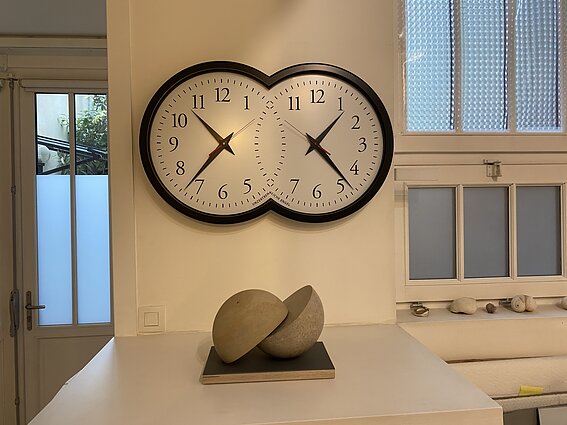
Time and space are frequent motifs in Esther’s work. The artist herself describes it as an “endless stream of memory”. She points to one of her pieces – a clock with time running in two opposite directions. She hopes that a similar clock could one day be displayed in Vilnius.
First visit and passport
Esther first returned to Lithuania in 2008 after receiving an invitation to teach at the Vilnius Academy of Arts.
“I said: I’ll come, but instead of paying me, help me find my mother’s address. I wanted to go and visit her house in Alytus, where she grew up,” the woman says.
Although two researchers were looking for the address, it was not easy to find and only showed up in police archives.
“It turned out that my grandfather, my mother’s father, was arrested for drunkenly leading horses. That was the beginning of the pogrom of 1940. He resisted arrest by throwing his shoes at a policeman and was fined heavily for that,” Esther laughs.
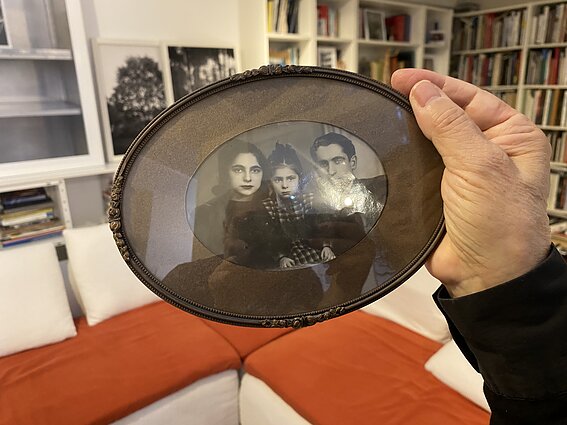
“When I received this information by e-mail, I sat there thinking how amazing this is – I had a grandfather who was a rebel like me,” she adds.
Eventually, Esther was only able to find the street and not the exact house where her mother grew up. Roaming around Alytus and Vilnius, the artist capture the moments on an old camera and presented them in the exhibition StillFilm a few years later.
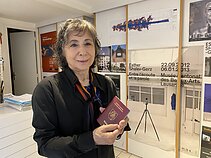
Today, Esther proudly shows her Lithuanian passport. “Issued on February 27, 2020,” she smiles.
She was offered to restore her Lithuanian citizenship when she met representatives of the Lithuanian Embassy in France.
“They said: You were born in Lithuania, you are an artist, a Jew, and a woman. They quickly came to my studio and offered to present me with my passport in a ceremony,” she recalls.
The ceremony was uplifting but strange because it took place during the Covid-19 pandemic, Esther says.
“And in the void of Covid, my identity suddenly changed. Suddenly, I felt good, I felt that I finally belonged somewhere,” she shares.
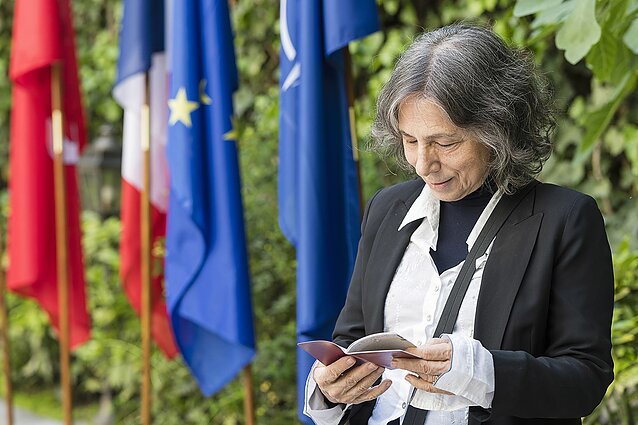
Turning the pages of her passport, Esther quips: “You see how many stamps there are – it’s not just an attribute, I actually use this passport.”
According to the woman, she could have also applied for French citizenship, but she never felt the need to do so, as her Israeli passport was enough.
“I always had problems when I was invited to exhibitions. They wanted to introduce me, where I was from, and I would say that I was ‘based in Paris’. But now I can finally relax and say straight away – I’m Lithuanian, from Lithuania,” Esther smiles.

Newsletter
Every Friday morning.