






NATO's new defence plans for the Baltic countries will be "more detailed and concrete" than the current ones, which were activated following Russia’s invasion of Ukraine, Secretary General Jens Stoltenberg said on Thursday.
"NATO has plans in place to defend every inch of allied territory," he told Lithuanian journalists at an online news conference. "We are updating plans so they can be more detailed and concrete and reflect on the new security reality."
Stoltenberg said NATO had Baltic defence before, but the updated ones reflect “a more dangerous and demanding security situation” following Russia’s full-scale invasion of Ukraine.
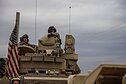
NATO has “implemented the biggest reinforcement of our collective defence since the end of the Cold War”. According to Stoltenberg, NATO has reinforced its ground forces in Lithuania and elsewhere, as well as deployed additional air and maritime assets to the Baltic Sea region.
But the secretary general did not speak about the deployment of new capabilities in the Baltic Sea region, something that countries in the region have consistently sought.
“We activated our defence plans [...] on the morning of the invasion,” Stoltenberg said. “We gave our Supreme Allied Commander, General Cavolli, the authority to move additional forces where he deems necessary.”

Stoltenberg plans to take part in a military exercise in Lithuania in June, where NATO will test its ability to redeploy additional forces to the Baltics and Poland. For the first time, elements of the German brigade assigned to Lithuania will practise deploying to the country and merging with local forces.
NATO forces are also training to ensure the defence of the Suwałki Corridor, a thin stretch of land connecting the Baltic states with Poland and flanked by Belarus and Russia’s Kaliningrad.
Now that Finland has joined the alliance and Sweden is following suit, “it will be much easier to act, reinforce, protect and secure" the Baltic Sea region, Stoltenberg said.
“The main task of NATO is not to fight a conflict, but to prevent a conflict [and] we have done that successfully for almost 75 years,” he added.
Stoltenberg said he expected NATO member countries to agree on new defence plans before the summit in Vilnius scheduled for July 11-12.
The plans will remain classified so as not to reveal any operational details, but they will define both the role of the forces currently deployed on the eastern flank and the arrival of reinforcements from the West if needed, according to the NATO chief.
Once the plans are approved, targets will be set for individual member countries for the development of capabilities to meet their commitments.
Stoltenberg also reiterated his condemnation of Russia's plans to deploy tactical nuclear weapons in Belarus, calling Moscow's nuclear rhetoric "dangerous and irresponsible".
However, the secretary general underlined that the situation did not call for a specific NATO nuclear response.
"So far we haven't seen any changes in Russia's nuclear posture that warrants any changes in NATO's nuclear posture," he said.

Speaking about NATO's Vilnius summit in July, Stoltenberg said he expected the allies to agree on a stronger commitment to two percent of GDP on defence spending and further support for Ukraine.
"I expect, of course, that they will reiterate that Ukraine will become a member in the alliance," he said.
In Stoltenberg's words, NATO has to agree on practical assistance for Ukraine, including a long-term plan to help develop the country’s military and bring it up to NATO standards.
What is key now is for Ukraine to win the war, which is why NATO needs to continue to provide it with military support, according to the secretary general.
"Unless Ukraine prevails as a sovereign independent nation in Europe, there is no membership issue to discuss," he said.

Newsletter
Every Friday morning.