










Amid tensions over Kaliningrad transit, Russian authorities have begun closing down Lithuanian cultural institutions in the exclave on the Baltic coast.
The children's folklore ensemble Malūnėlis, which has been active in Kaliningrad for 10 years, will no longer be able to perform after it was banned from representing the Kaliningrad region at the Russian Folk Festival.
"They were banned [...] because they were Lithuanians – the national hatred manifested itself in such a way,” Sigitas Šamborskis, the chairman of the Lithuanian community of Kaliningrad, told LRT TV.
"It coincided with the transit [tensions], and the hysteria was extraordinary – the team broke up, the teacher left," he added.
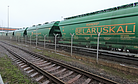
In June, Lithuania began blocking the transit of sanctioned goods via its territory. This sparked a standoff with Moscow before the European Commission instructed Vilnius to allow rail transit to continue uninterrupted.
Read more: Lithuania and Kaliningrad – updates

According to Šamborskis, it is very likely that another dozen Lithuanian collectives will meet a similar fate. The Lithuanian Language Teachers' Association, which included 11 teachers responsible for improving the Lithuanian language skills of some 650 people in Kaliningrad, was also closed down.
"The Lithuanian Language Association has been de-registered by a court decision, and everything that has been created over 30 years is being destroyed at the behest of the special services," Šamborskis said.
The association had been active since 1995.
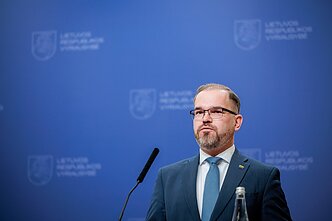
"The political situation in the Kaliningrad region has for many years been blocking Lithuanian-language activities in every possible way," said Virginija Rinkevičienė, a representative of the Lithuanian Ministry of Education, Science and Sports.

"During these few years, a number of schools have been closed down. In Kaliningrad, schools that used to have Lithuanian language faculties have simply refused to continue providing the service," she added.
In spring, there were 13 Lithuanian schools in Kaliningrad that were funded through the Lithuanian Language Teachers' Association.
In Sovetsk last month, a plaque dedicated to Vilhelmas Storosta-Vydūnas, a writer and philosopher who lived and worked there, was taken down. A bas-relief of Martynas Mažvydas was also covered by a plastic sheet in Neman, although the sheet was later removed.
"Until the regime changes, it is impossible to talk about dialogue. Even the posts of culture attaché and heritage attaché are vacant because Russia is not letting them in," Culture Minister Simonas Kairys told LRT TV.

Newsletter
Every Friday morning.