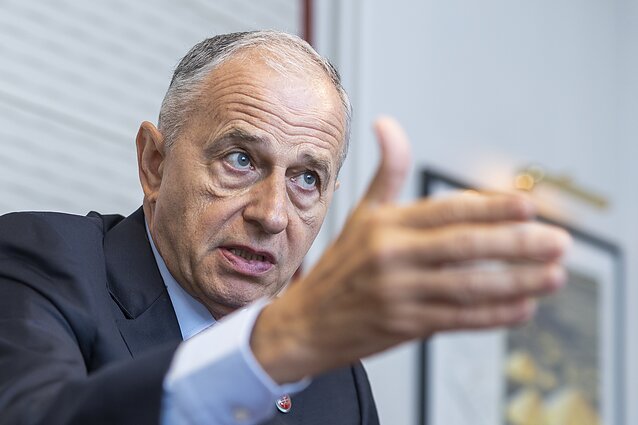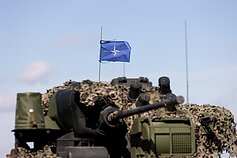








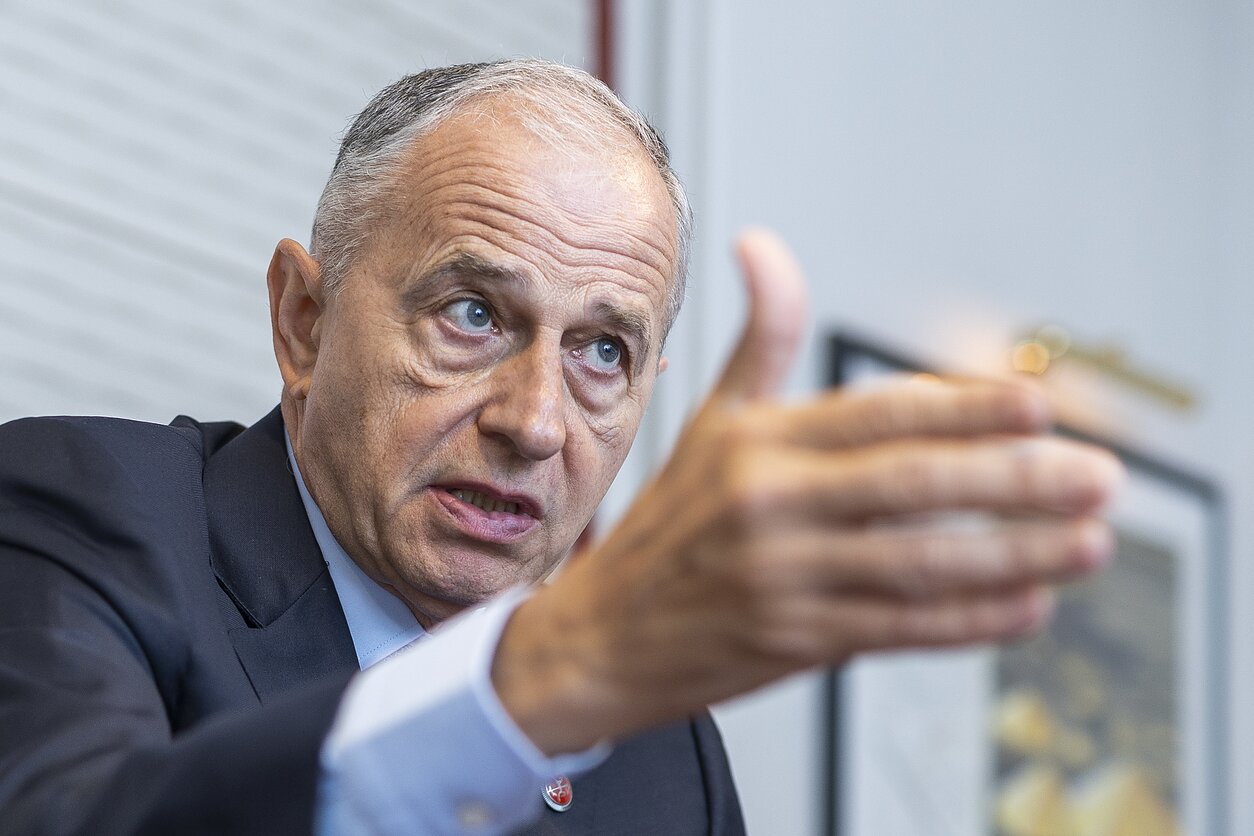
NATO’s mission is to help Ukraine win the war against Russia, says Deputy Secretary General Mircea Geoană, as Moscow’s invasion continues for the fourth month.
“Our mission is to help Ukraine win this war because they can win this war, and also to create the conditions that such [Russian] gestures are condemned internationally,” Geoană told BNS in an interview in Vilnius on Sunday.
“It is up to President [Volodymyr] Zelensky and his government to decide what victory means, and we are here to help him and his government to have the strongest possible negotiation position when the time for diplomacy comes. Because the time for diplomacy and political solution should come,” he added.
The alliance has been helping Ukraine to modernise its armed forces since Russia’s annexation of Crimea in 2014, according to the official.
“Nobody takes away from the huge bravery and heroism and sacrifice of the Ukrainian army and people, but we say that we play a role and we will play a role to continue to help Ukraine in many ways,” he said.
Geoană expects NATO leaders to decide at their Madrid summit in June to boost the alliance’s presence on the eastern flank.
He did not disclose what capabilities would be deployed, but said that it should be a “robust, flexible and sustainable” and “multi-domain” presence.
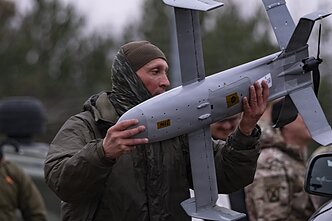
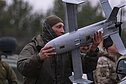
The NATO deputy secretary general applauded Lithuanians for raising over 5 million euros to buy a Bayraktar drone for Ukraine.
“This is the amazing show of solidarity from Lithuanian people, not only the government or the parliament, or businesses,” he said.

The upcoming NATO summit in Madrid is an event everyone in the region is looking forward to because NATO’s eastern members expect some decisions to bolster the eastern flank in the wake of Russia’s invasion in Ukraine. For starters, can you please tell me what do NATO member-states actually agree on?
In Madrid, our leaders will decide on the long-term adaptation of our posture. This does not take place in a vacuum. We have had battle groups in the three Baltic states and Poland since 2017. We have decided to form new four battle groups in the southeastern part of the alliance. For the first time ever, we activated NATO’s Response Force, GRPs are activated, 40,000 troops under NATO’s command on the eastern flank, 100,000 US troops in Europe, hundreds of jets and ships and everything else. But what we are now working upon and the process of this decision on the exact shape and contour of the presence will be taken by our leaders. It’s clear that we will have a more robust presence; it is clear that we will have, let’s say, forces from multiple domains present.
You mean land, sea, and air, right?
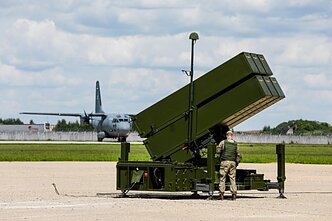
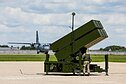
Yes, but also cyber and space. We will have a new generation of aerial missile defence architecture, which is very important, and we will have, of course, hundreds of NATO jets patrolling the skies of the eastern flank.
We understand the interest of quantity but we also want to stress the issue of quality of what we do. So, we anticipate very important decisions of our leaders in Madrid.
Speaking of quantity, the Baltics and Poland are asking NATO to increase these multinational EFP battalions to brigade-sized units, which means that allies will have to increase their presence with boots on the ground by several times. Will leaders agree on such a step?
It is up to the leaders to agree. [...] This is not happening just because of Russia’s war against Ukraine, but also because our leaders have adopted the new generation of military planning for NATO which is called the deterrence and defence for the Euro-Atlantic area. We are replacing the GRPs, which are the national plans, with a regional family of plans. We are cooperating not only in territorial defence, but also in new technologies, as I mentioned, cyber and space. So this is something that will be decided by our leaders. But also a meeting of defence ministers of NATO will take place on June 15-16. Normally, that will be the point when political-military decision will be reached and it will be up to the leaders to sanction the decision.
Here in Vilnius, officials express some concern regarding several NATO countries’ approach to Russia after the invasion, saying that they want to bring relations with Russia back to business as usual, meaning they do not want very drastic or significant changes regarding NATO’s posture in the eastern flank. Moreover, the Lithuanian foreign minister told reporters on Friday that he did not see any clear pledges from NATO to increase the presence. How do you react to that?
We see absolutely no one in the alliance proposing a return to business as usual with Russia. What Russia has done, it has shaken profoundly the security architecture in Europe. We are helping Ukraine. I’ve seen [...] the great news that Lithuanian citizens crowdfunded for a special drone for Ukraine. This is the amazing show of solidarity from Lithuanian people, not only the government or the parliament, or businesses.
And again we anticipate a robust, flexible and sustainable presence in the eastern flank. This is something that is in the process of negotiations and we are confident that our leaders will reach the best decision in being robust, multi-domain, flexible and also sustainable for the future. I have full confidence that our leaders will make the right decisions.
Will Russia be named a threat to the alliance in the NATO summit?
Again, we are negotiating, as we speak, the new strategic concept. One thing is clear: the last concept of 2010 described Russia as a strategic partner, which is [now] totally inadequate because of Russia’s actions. It is clear that Russia is the most significant threat to European peace and security. Of course, terrorism is a significant threat as well. [...] I cannot judge what the language will look like, because that will be the result of negotiations, but I know there will be robust, unequivocal language about Russia.

What about the NATO-Russia Founding Act? Some countries, including the Baltics, want to scrap the agreement, because it is now obsolete, according to them.
Russia basically voided of any content of this founding act. They took decisions, they took obligations there not to aggress neighbours, which they are doing, and to have regular consultations with NATO, which they don’t. So I think that, in fact, this founding act is basically not functioning because of Russia. How you describe this is a matter of nuances, but fundamentally, Russia has moved out from the arrangement with us, so now we have no restrictions to have robust posture in the eastern flank and to ensure that every square inch of NATO territory is protected by Article 5 and our allies.
This is what I mean: the founding act prohibits NATO to station significant forces on the east flank.
We don’t see us bound by anything there, just because Russia basically left [the agreement] by voiding from their side the very content of that document.

Will NATO invite Sweden and Finland to join the alliance in the Madrid summit?
We welcome decisions by these very important partners. I would say probably the closest partners to NATO. We have 37 partners all around the world. Sweden and Finland have been very close to NATO for years. [...] Of course, it is an alliance that works by consensus and security interests of NATO allies will be taken into account.
We know that there are discussions underway between the interested parties and we are confident that the accession procedure will be started. We will have two very valuable allies and, by the way, helping also the security in the Baltic sea region, but also adding to multiple dimensions of NATO – from cyber, from resilience, from technology.

Is NATO planning to broker an agreement between Sweden and Finland on the one hand and Turkey on the other, in order to solve these disagreements, because at the moment we see bilateral talks between these countries?
It is good that talks are taking place directly between interested parties. Secretary General [Jens] Stoltenberg offered his offices for that and if there is a need for him and us to step in, of course, we will do it. But we are confident that this discussion will address the concerns of one ally and they will together find consensus for having these two highly appreciated new allies in our alliance.
NATO didn’t step into the conflict in Ukraine directly; only individual members provided military, humanitarian and every other aid to Ukraine. But does NATO have a goal in this conflict?
We have been assisting Ukraine in the transformation of the armed forces since the illegal annexation of Crimea. And NATO plays a role in making sure that the Ukrainian [military] is becoming a partner more compatible with NATO’s standards. Nobody takes away from the huge bravery and heroism and sacrifice of the Ukrainian army and people, but we say that we play a role and we will play a role to continue to help Ukraine in many ways.

Allies decided to use other mechanism like a Rammstein process to help and coordinate, because NATO is an organisation that has its main obligation to protect and defend one billion people from 30 nations, including to avoid a risk of escalation of a war between us and Russia. So, what we know is that the open door policy of NATO is here to stay; it is a fundamental international law from the UN charter to the Helsinki Final Act and the Washington treaty of NATO and the anticipated arrival of Sweden and Finland would strengthen the idea that open door policy is here for us to stay.
So, what do we want – we want an independent, sovereign, democratic, prosperous and European democratic Ukrainian nation.
Does NATO want to see Russia weakened in this conflict?
What we want to make sure is that we are giving the clear indication that aggression in Europe and in the world against a weaker neighbour is unacceptable. Our mission is to help Ukraine win this war, because they can win this war, and also to create the conditions that such [Russian] gestures are condemned internationally [...].
It is up to President [Volodymyr] Zelensky and his government to decide what victory means, and we are here to help him and his government to have the strongest possible negotiation position when the time for diplomacy comes. Because the time for diplomacy and political solution should come.

Newsletter
Every Friday morning.