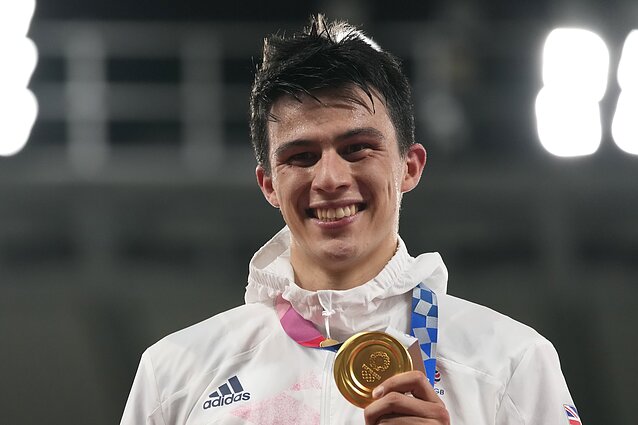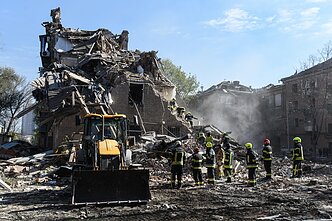
















Pentathlon, which has brought five Olympic medals to Lithuania, is going through a difficult period. Following the horse abuse scandal in Tokyo, the International Olympic Committee (IOC) is looking to drop equestrianism. In an exclusive interview with LRT.lt, Tokyo Olympic champion Joseph Choong from Great Britain says the decision has been poorly thought out and politicised.
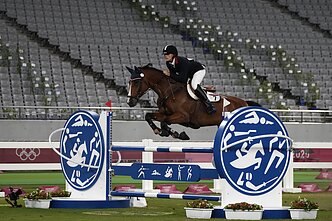
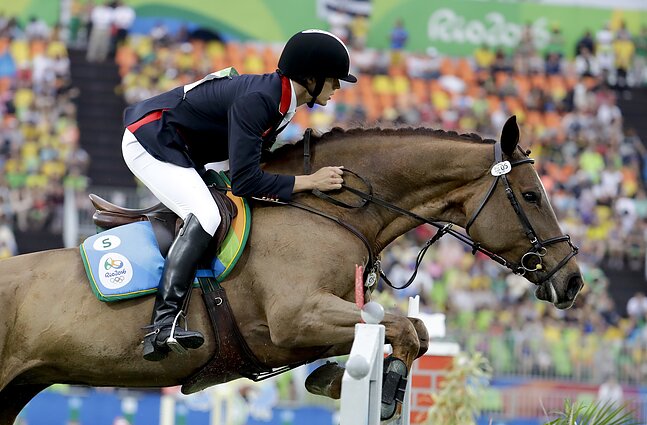
The Tokyo Olympics was the scene of a scandal in the women's pentathlon event, when one of the main contenders for the gold medal, Annika Schleu of Germany, failed to control her horse and hit it several times with a baton. Later, it turned out that the now-suspended trainer had also hit the horse.
In the wake of the scandal, the International Pentathlon Union (UIPM) announced that equestrianism will be dropped from the sport after the 2024 Summer Games in Paris. This has caused great outrage in the pentathlon community, especially among athletes.
Although equestrianism has long been the most controversial part of pentathlon, many have opposed its removal.
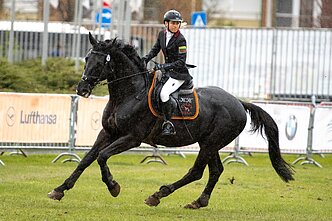
Meanwhile, equestrianism has been a stumbling block for more than one top-level pentathlete, when an unfamiliar horse – as athletes cannot use their own horses – had dashed their hopes of winning a medal.
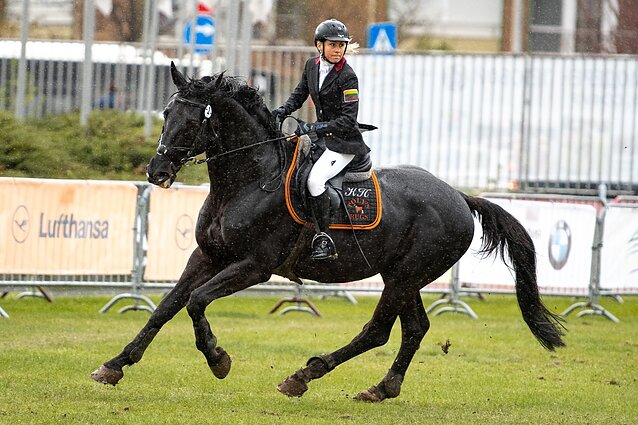
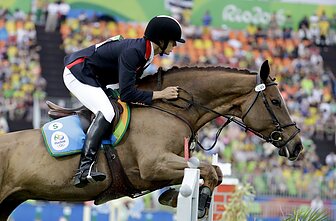
This was also the case for Lithuania's 2012 Olympic champion, Laura Asadauskaitė-Zadneprovskienė, at the 2016 Rio Games. Her horse refused to jump the obstacle twice and she failed to finish the event, losing her chance to claim another gold medal. Horses have also proved to be a problem for Justinas Kinderis at both the Rio and Tokyo Games.
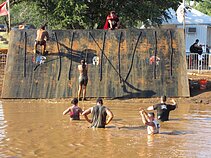
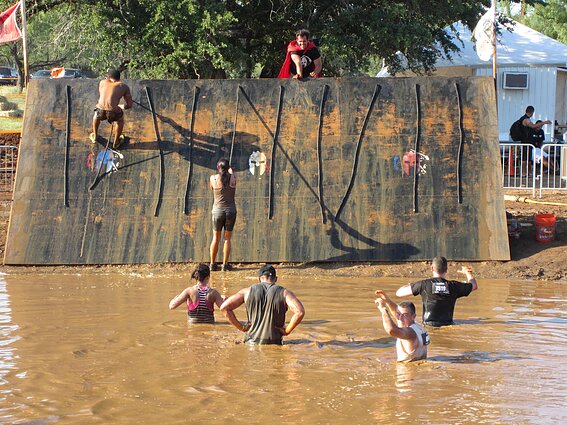
Although the UIPM said they have to exclude horses for pentathlon to remain in the Olympics, Choong said this was not true, claiming that the move to replace it with obstacle course race may be politicised and the result of a conflict of interest.
Are you against the new event which is an obstacle course or the biggest problem for you is the removal of the riding event? What is the main goal now?
The main goal is to make sure we have leadership who respect the view of athletes and do what is best for the sport. I think when you look in detail at the reasons they gave for removing the horse riding they don’t stand up to close inspection.
I think the reason they have given is a misconception, I think it is all a political move because of links they have had with obstacle course racing since 2017. Having spoken or having heard about conversations with several different IOC members, they all said that no one in IOC told the UIPM that they need to remove riding. So I think it’s been UIPM’s decision and they have been [moving toward it] for many years.

The governing body of pentathlon says there is no place for pentathlon with a riding event in the Olympics. But the IOC never officially confirmed this in public. So my question is – who is lying?
I think there has obviously been an informal conversation at some point, I think most likely between an IOC member and just one of the executive board [members], most probably, Klaus Schormann, where they said that the riding was a problem for pentathlon and it would be difficult to sort out. This is how I imagine it went. And Schormann has interpreted that we need to void riding – it’s the only way.
Because I’ve listened to conversations with many different IOC members and they all said the same thing – there is no instruction to remove it. It’s all been how this conversation between IOC and UIPM was interpreted.
You mentioned the links between UIPM and obstacle course racing. What are they?
I think it was about 2016 or 2017 when Robert Stull joined the UIPM executive board and at the same time UIPM proposed the mixed relay format to the IOC in which obstacle course racing was a part of this proposal.
Obviously, the IOC rejected the plans for mixed relay in part because of the obstacle course racing idea. I think Stull was like the figurehead of this idea, because up until November he was listed on a world obstacle federation website as being on the board. So he’s a board member on both federations which is obviously a big conflict of interest. I think that’s where the link began.
In a letter by Pentathlon United you say that UIPM ignores athletes' wishes and there is lack of transparency. But there is an Athletes Committee with the big names of James Cooke, Natalya Coyle or Sophie Hernandez who are in favour of these changes. How does this lack of transparency occur?
The easiest way to answer is that there was a working group put together by Schormann and it was created to decide on the new discipline. The first thing all the members of this group had to do was sign a non-disclosure agreement, which completely prevented the Athlete Committee from speaking to the athletes about what was going on. So the athletes weren’t able to have any input into the discussion.
Everything was done behind closed doors?
Yes. And also, if you look at the statements from some of the athletes committee members about the fifth discipline decision, it says something like, “after months of consulting with an athlete focus group, we decided that the best solution to the fifth discipline was the obstacle course racing”.
And when I spoke to the members of the athlete focus group, I think 26 athletes were in this group, they said that there was only one meeting and the conclusion was not obstacle course racing. So these views were misrepresented. And it is just very difficult for athletes to get their opinions across.
At the World Cup last week in Budapest, they had their final meeting to choose the fifth discipline and they invited all the international federations from the shortlist of sports to make a presentation on why their sport would be a good fit for the pentathlon. But, I think, out of everyone invited the only presentation was the obstacle course racing.
If the case is that modern pentathlon can’t be at the Olympics with riding, is it really better to have riding but not have a place in the Olympics? Or would you agree to give up riding?
If I imagine myself seven years ago before I went to the Olympics, my dream was competing in the Olympic Games, hopefully to win a medal. I think the most important thing is that young people now can still have these dreams to be at the Olympics.
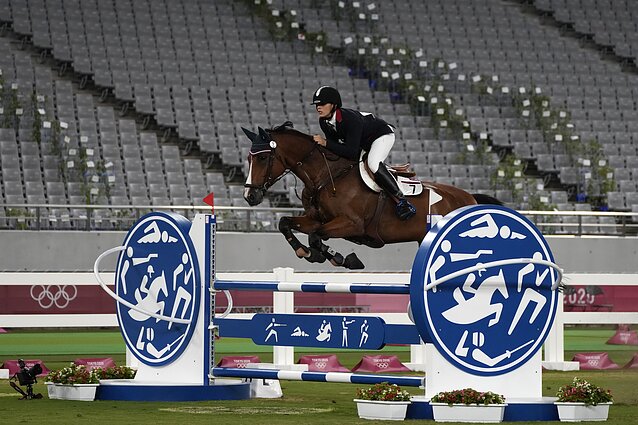
I think the most important thing is staying at the Olympic Games, if there was a choice. However I don’t believe there are two separate realities. I think we can keep riding and can stay in the Olympic Games at the same time.
Riding is the most controversial event in the pentathlon programme because you don’t know the horses, there is always a big chance of coincidences and, in Tokyo, there was this scandal with Annika Schleu. Why are so many athletes still in favour of horse riding? Maybe pentathlon could be much fairer without it?
I think there is the feeling among all athletes that riding has been very badly mismanaged over the last 20 years. I’ve been speaking with many athletes [...] and the format of horse riding has not changed, the rules have not changed for 20 years. Obviously, since then, the standards of animal welfare and athlete welfare have moved on so much. Our sport should have adapted with these changes to stay safe and to stay relevant and important as part of the pentathlon.
At the moment, the fact that only 18 athletes have the opportunity to ride means it is not important enough for the pentathlon. So, if you are a young athlete and you want to do well, you will focus on the first four sports before you start thinking about riding.
So the senior athletes and a lot of the younger ones think that riding [...] is just not worth the time spent training, which is one of the biggest issues we have and it is one of the reasons why we have these incidents like we did in Tokyo.
But on the other hand, riding is very important at the top level because everything can be deleted with a bad ride.
In general when you are a young athlete you are probably not very good at riding, but as you start to make finals more consistently, that’s when the standard of riding goes up. It just means that a lot of people can qualify for the final and not be good at riding. So it just increases the risk of there being an incident in any competition.
What are your proposals to make riding better and fairer?
I think the format needs to encourage as many people as possible to ride. I know that logistically that’s very difficult and I think there are certain solutions to changing the format of the competition season.
I also think that, in terms of accessibility of riding – so that as many athletes as possible can train and compete in the riding event – we need to make the courses easier for horses so that more horses around the world are capable of doing the course. But, at the same time, making it more difficult for the riders.
For example, making jumps a lot smaller, say 90 centimetres, but making the course much more technical, so the athlete has to be very balanced and in control of the horse to steer it correctly. But, at the same time, it is not so difficult for the horse.
The Guardian called the situation in the pentathlon community a “civil war” – do you agree with this evaluation?
I’m not sure. It is quite a serious topic around the world, especially this time. I think there is a big rift between the athletes and the federation.
Obviously, the federation have their reasons whether they are right or wrong for wanting to remove riding. But athletes are the most important part of the sport. Without athletes there is no sport. And when there is such a big majority of athletes that want to keep riding, I think the federation needs to listen and there needs to be some sort of negotiations to come to an agreement.
I don’t understand how the federation thinks it can have a successful sport in the future when nearly 100 percent of the athletes do not agree with what they are trying to do.
UIPM already approved the new event – the obstacle course. What tools do you and your colleagues still have in order to save riding?
They don’t have it officially approved, it needs to be voted on at congress in November. We have written to the IOC, [presenting] all our findings and investigations about the problems of the UIPM management.
I think the best course of action for us now would be for the IOC to do an independent investigation into the process that the UIPM used and look at the bad governance.
Just the easiest one to point out is that Schormann has been in the same position for 28 years. By all standards of good governance, that is a really big red flag. We would like the IOC to look into it in more depth and find what other problems there are.
In one of your last interviews you said that, without riding, you are going to quit sports after Paris.
Yes, I think so. It is quite likely that I would stop anyway, I’ve been to three Olympics, and I’ve got an Olympic gold medal, hopefully two after Paris. But I think, for me, that would be enough anyway. But, if riding was removed, that would mean I’m 100 percent finished.
And will there be many more athletes like you?
Just speaking to a lot of friends that I have from other countries, I think we all have very similar opinions – we will all just stop after Paris if it changes.
And at the same time I’m not sure how many athletes will enter this sport, especially from obstacle course racing.
I did an interview with obstacle course racing [organisation] yesterday and they say that the majority of the participants are middle-aged men who just want to do it as a hobby or something for fun.
And there isn’t a very big competitive side of the sport. In terms of pathway, lots of people who do pentathlon started off from horse riding. But in the future, not very many are going to come from obstacle course racing. I think this is very worrying for the sport.

Newsletter
Every Friday morning.