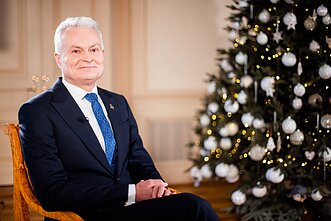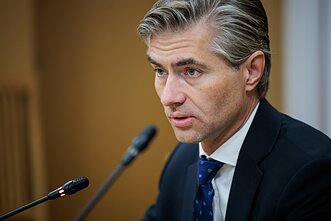














Lithuanian President Gitanas Nausėda said the state of emergency imposed along the border with Belarus due to the migrant crisis should be lifted.
"I think in a situation like the one we have now, it would certainly make sense to consider lifting the state of emergency, because it is a really strong instrument that we have to use in certain exceptional circumstances," the president told the Žinių Radijas radio station on Tuesday morning.
Nausėda said "the migrant problem is solved for now", adding that the state of emergency could be re-imposed if the situation escalated again.
"We could lift that situation and start working on amending the Constitution, because the issue of direct mayoral elections is in limbo, [... [ and it must be resolved as soon as possible," he said.
The Constitutional Court ruled last April that mayors cannot be elected by direct popular vote unless the Constitution is amended. The ruling will take effect on May 3, 2023, at the end of the term of office of the currently elected mayors.

The respective draft constitutional amendment on direct mayoral elections passed the second reading in the parliament in October 2021, but the process has stalled, because the Constitution cannot be amended during a state of emergency or martial law.
Politicians want to pass the constitutional amendment as soon as possible, so that they can amend the related laws and prepare for the next municipal elections.
A constitutional amendment must be voted on twice by the Seimas, with an interval of at least three months between the votes, and requires a two-thirds majority, or 94 votes, to be adopted.
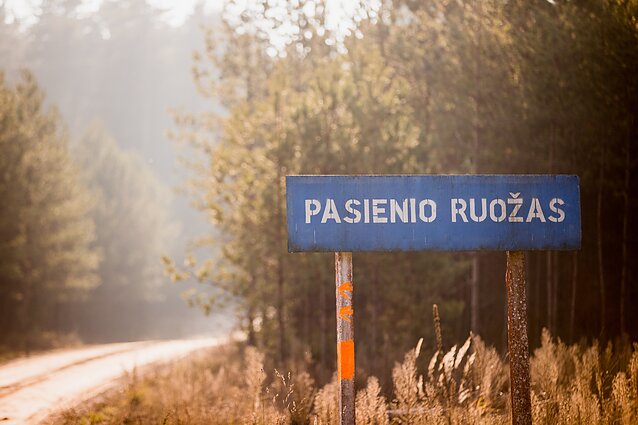
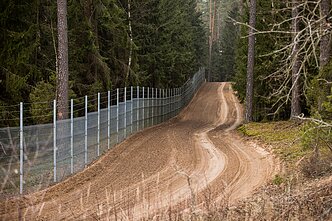
The state of emergency on the border of Belarus was declared on November 10, 2021 in response to the migrant crisis and then extended to January 14.
More than 4,200 irregular migrants have crossed into Lithuania from Belarus so far this year. Lithuania and Western countries accuse the Minsk regime of orchestrating the unprecedented migration influx, calling it "hybrid aggression".
Read more: Migration crisis in Baltics and Poland

Newsletter
Every Friday morning.