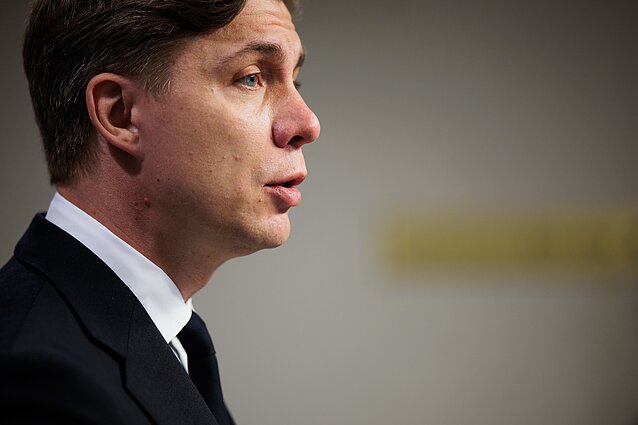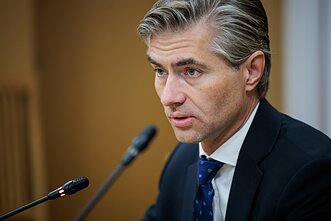














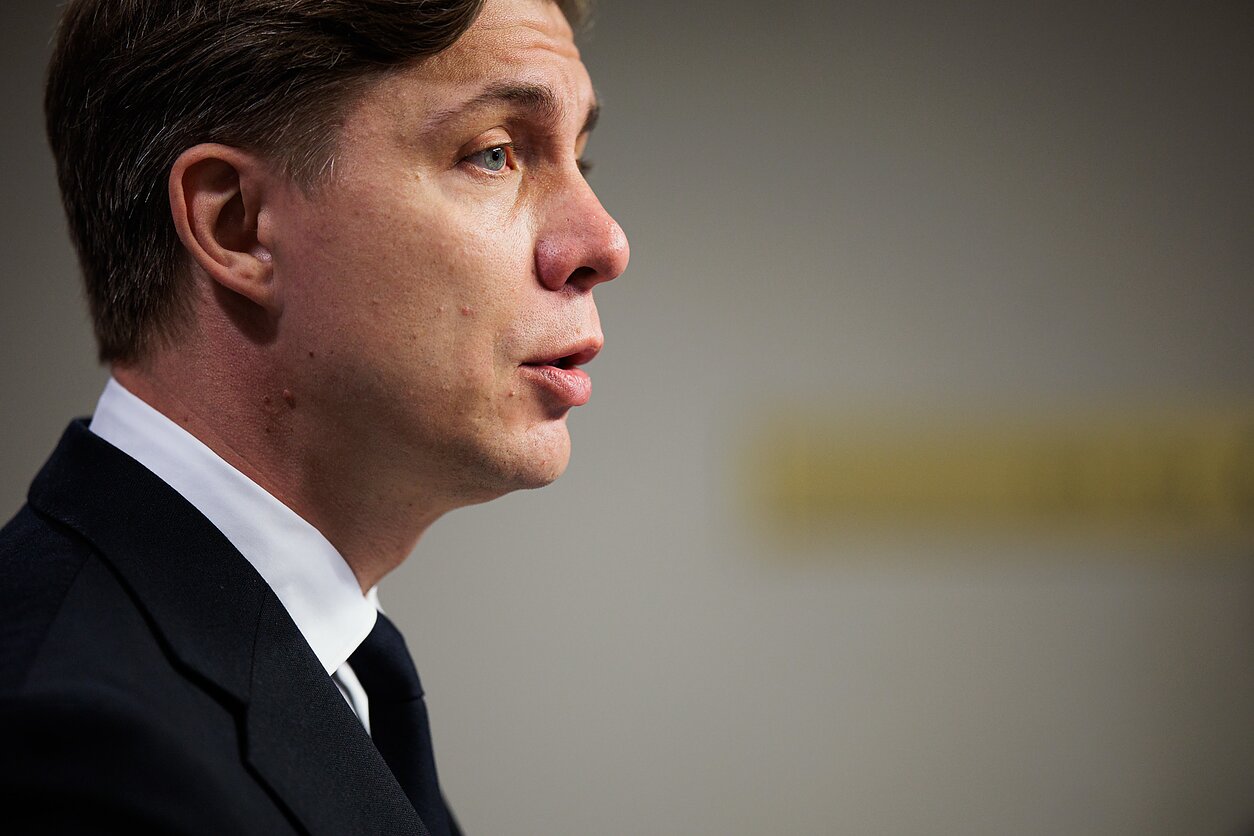
Lithuanian Prime Minister Mindaugas Sinkevičius said the new government has no plans to raise taxes on businesses or households, despite removing a previous commitment from its program not to introduce new taxes during its term.
Speaking after his first meeting with representatives of the Lithuanian Confederation of Industrialists following the approval of the new cabinet, Sinkevičius said the government’s intentions had not changed.
“I cannot carve such a promise in stone, but there are no hidden intentions or plans to increase taxes,” the prime minister said.
Instead, Sinkevičius said the government intends to finance its social policy commitments through economic growth, moving funds and reallocating spending rather than by introducing new taxes.

“We will look for internal reserves to meet our social goals. That means some sectors will have to operate with less funding than before because priorities will be reviewed,” he said, without specifying which areas could face spending cuts.
The new government’s program includes a range of social commitments, including financial incentives aimed at boosting the birth rate, changes to child benefits to help families maintain their income after the birth of a child, free meals for primary school pupils, higher funding for extracurricular education, increased pensions and measures to reduce poverty.
Business leaders welcomed the prime minister’s assurances but said they remained cautious about the policies of the centre-left government.
“Of course, a left-wing government is a left-wing government, so those concerns exist,” said Vidmantas Janulevičius, president of the Lithuanian Confederation of Industrialists. He said the business community had been reassured that social policy would not come at the expense of businesses.

Janulevičius said the confederation’s long-term goal is for Lithuania to surpass Finland in gross domestic product per capita by 2035, arguing that achieving this would require greater investment in manufacturing and a stable tax environment.
Opposition lawmaker Raimondas Kuodis of the conservative Homeland Union-Lithuanian Christian Democrats questioned how the government would finance its promises, saying ministers had yet to provide clear answers.
“They don’t appear to know themselves, […] neither the finance minister nor the other social democratic luminaries,” he told LRT TV. “A triumph of the hope.”
Economist Eglė Stonkutė of Vytautas Magnus University said Lithuania already faces pressure to keep its budget deficit within European Union limits, despite temporary flexibility for higher defence spending.
She warned that the government would eventually need to address a growing fiscal gap, particularly after current defence-related exemptions expire, and said higher corporate taxes could become one option if policymakers seek additional revenue without alienating their voter base.
“The main two taxes generating most revenue are the value-added tax and the income tax,” she said. “The social democrats will probably be reluctant to touch them.”
Lithuania recently fell 13 places in a global competitiveness ranking, adding to concerns among businesses over the country’s investment climate.

Newsletter
Every Friday morning.