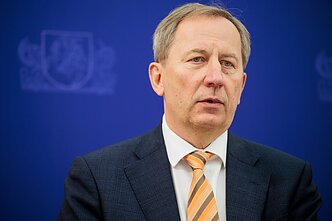



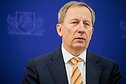






Russia's military build-up at the Ukrainian border is an attack against the West, Lithuanian Foreign Minister Gabrielius Landsbergis said on Monday.
“This isn't an attack on one country or another; this isn't an attack on Ukraine; this is an attack on all of us, on the West, on our values, beliefs [and] promises we have made to our friends and partners who are seeking a European path,” he told a news conference after EU foreign ministers' video conference.
According to Landsbergis, Russia is not showing “any indication that it wants to de-escalate the situation”.
Kyiv has in recent weeks accused Russia of massing thousands of troops along Ukraine's eastern border and in the annexed Crimean peninsula. Reports of the military build-up have emerged amid an escalation of bloody clashes between Ukraine's forces and Russia-backed separatists.
Moscow says it has sent troops to its western border for exercises in response to NATO's “threatening” actions.
Landsbergis said there were “no statements anymore that both sides must de-escalate the situation” at Monday's meeting of EU foreign ministers.

“It was clearly stated who is responsible for the situation at the Ukrainian border. This is Russia's responsibility; it chose sabre-rattling and has massed its army,” he said.
Lithuania's top diplomat said he raised the issue of sectoral sanctions against Russia if it attacked Ukraine.
“Sanctions, especially in the case of Ukraine, must be considered not only when the red lines have already been crossed, in other words, if an attack on Ukraine has started physically,” he said. “Europe can send a very clear signal today that we are ready to talk about sectoral sanctions if these red lines are crossed.”
The minister told reporters that he could not say if Europe was united on this issue, noting that possible sanctions against individuals were being considered, too.
“Perhaps there’s a person who's filling up tanks with fuel and perhaps they could be included in the list of individual sanctions, but that would definitely not solve the problem. The signal must be clear, strong and fast,” he said.
‘State-sponsored terrorism’
The Czech Republic's decision to expel 18 Russian diplomats over alleged links to Russian security services and an ammunition depot explosion shows that Moscow is acting aggressively not only at the border with Ukraine, but also in EU countries, according to the Lithuanian foreign minister.
“Russia is once again showing that it is a state that supports terrorism, terrorist acts,” he said.
The issue of how countries could reduce the number of spies working under diplomatic cover was raised during Monday's meeting, according to Landsbergis.

EU foreign ministers also discussed the health of Alexei Navalny after doctors warned over the weekend that the Kremlin critic, who began a hunger strike in a penal colony on March 31, could die “any minute”.
The Lithuanian minister said Navalny “is in poor health; he has no access to a medical professional he trusts”.
“We must demand that he be allowed to see the doctor he is asking for, so that his state of health can be assessed objectively,” he said.
If this is not done, the EU could propose that Navalny be allowed to “choose a European capital he could go to for treatment”, according to the minister.
Russia's penitentiary service said on Monday that it was transferring the Kremlin critic to a prison hospital.

Newsletter
Every Friday morning.