






While future historians will likely remember 2020 as the corona year, there have been other events worthy of mention. LRT English looks back at the key things that happened in Lithuania over the last year.
Water pollution scandal
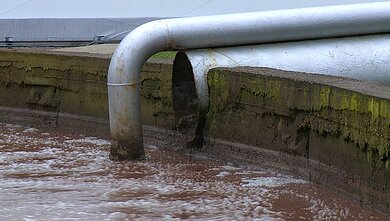
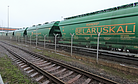
The year had barely begun when the first big scandal of 2020 hit the news – prosecutors alleged that a cardboard plant owned by Grigeo Klaipėda had been releasing untreated wastewater into the Curonian Lagoon for years. Lithuania’s environment minister later commented that the company had been doing it purposefully since 2012 and done damage to the environment to the tune of 60 million euros.
The scandal – which resulted in several of the company’s big clients, including IKEA, ending contracts – threw spotlight on inadequacies in the country’s environmental protection and even occasioned a new package of regulations aimed at fixing the “rotten system”.

Putin in Jerusalem
Celebrating the 75th anniversary of the liberation of the Auschwitz-Birkenau death camp should be fairly uncontroversial. Lithuanian President Gitanas Nausėda was supposed to take part in the event in Jerusalem, but cancelled last minute – after Russian President Vladimir Putin was given a speaking spot.
Nausėda was thus backing his Polish counterpart Andrzej Duda who also cancelled his visit in protest of Putin being given a platform to expound his particular take on the history of World War Two. The Russian president had accused Poland of playing a role in starting the war – and tried to exonerate the Molotov-Ribbentrop Pact, a 1939 Nazi-Soviet deal to partition Central and Eastern Europe.
Instead, the Polish and Lithuanian presidents paid tribute to Holocaust victims at Auschwitz itself.

The C-word
Having started as a distant health crisis somewhere in China, the coronavirus pandemic reached Lithuania at the end of February when the first woman was diagnosed with the virus after returning from northern Italy.
About two weeks later, on March 16, the country was put under the first nationwide quarantine that would last for three months. With relatively few infections and coronavirus deaths, Lithuania was praised for reining in the first wave of the pandemic relatively successfully.
That is a distant memory now. The second wave in autumn hit the country unprepared and in the middle of an election campaign, which, according to some, was what prevented the government from introducing earlier and more resolute restrictions.
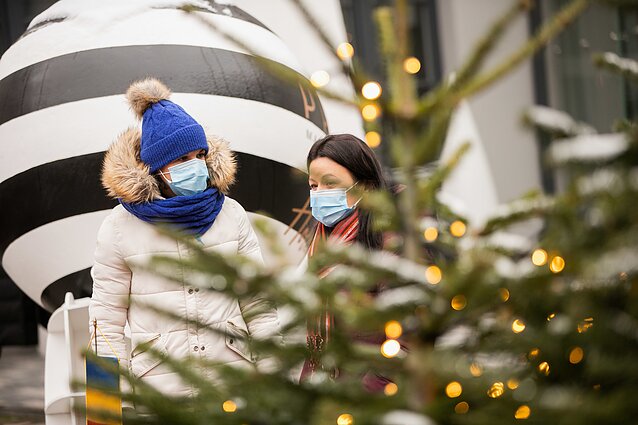
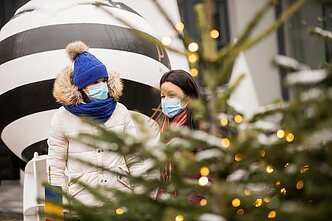
The outgoing government finally put the country under the second quarantine in November, followed by an even stricter lockdown imposed by their successors in their very first week in office. Lithuania is still reporting about 3,000 new cases daily, the highest rate in Europe, and the country’s healthcare system is stretched to the limit.
Baltic travel bubble and open-air cafe
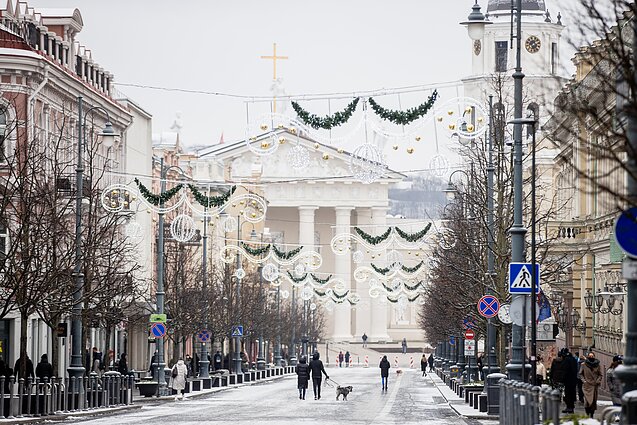
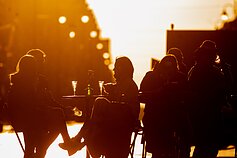
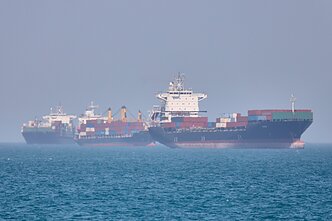
But during the calm period between the two waves of the pandemic, Lithuania, Latvia and Estonia made international headlines as the ‘Baltic bubble’ by opening up their borders to each other’s travellers, among the first in Europe. Meanwhile Vilnius was lauded for its efforts to help local businesses recover after the closures, by offering its streets and squares to open-air bars and cafes.

Eurovision On Fire
The year 2020 was also when Lithuania was supposed to finally win Eurovision – most of the country was convinced after The Roop won the national selection with On Fire. With its catchy tune and even catchier choreography, the song, Lithuanians thought, had the winning formula – and bookmakers did not disagree. But then the Eurovision Song Contest got cancelled.
Still, The Roop went on to shine in one of Eurovision’s substitute concerts, winning the hearts of German televoters in Hamburg.

Politics on the beach
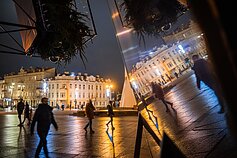
One of the more peculiar political controversies of 2020 centred around sand. The mayor of Vilnius decided to turn one of the city’s central squares into an improvised beach, complete with sand, chaises longues and live video feed from the actual seaside.
However, some members of the Lithuanian parliament found the beach objectionable. They argued that the square – which is adjacent to the former headquarters of the KGB and to the site where leaders of a 19th century national uprising were executed – was a place for decorous solemnity and not light-hearted fun. They then passed a law, saying no more frivolity on the square.

BLM in Vilnius
Nor did Lithuanians stay away from international politics. When the Black Lives Matter protests swept across US cities, Lithuanians, mostly young, organised a support rally in Vilnius. It occasioned a not insignificant debate about the generation gap, antifa, police, if not so much about racism.
Zhyve Belarus
Few expected that the presidential election in Belarus – in which the long-time ruler Alexander Lukashenko looked to simply declare victory, again – would trigger mass protests that are now in their fifth month.
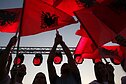
Lithuania immediately threw its weight behind the anti-Lukashenko protesters, offered refuge to his electoral rival Svetlana Tikhanovskaya and the hundreds of Belarusians forced to flee their country to escape persecution. On the anniversary of the Baltic Way, around 50,000 people formed a human chain from Vilnius to the Belarusian border in show of solidarity with the protesters.

French charm offensive
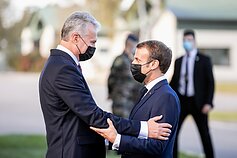
No other state visit in 2020 caught the country’s fancy more completely than the arrival of Emmanuel Macron in late September. Lithuanians followed every move of the French president and his wife’s two-day visit which included a speech at Vilnius University and a rather staged Q&A with students.
Lithuanians were most curious to know how friendly Macron wanted to be with Russia and whether he still thought NATO was brain-dead. Though not always seeing eye to eye with France, the country had probably not been so excited about a French visit since Napoleon.

New elections, new government
In October, Lithuanians hit the polls to elect a new parliament. The vote was an upset for the incumbents Farmers and Greens and delivered a decisive victory to the conservatives. After negotiating a well-expected coalition agreement with two liberal parties, Prime Minister Ingrida Šimonytė took the helm of the new government.

Astravyets goes online
For years, Lithuania has been battling Belarus’ plans to open a nuclear power plant by its border. Despite protests from Vilnius, the Astravyets NPP finally launched in November, suffering an unreported incident just days later, as if to confirm Lithuania’s safety concerns.
On the other front, Lithuania continues to negotiate with its Baltic neighbours to ban Belarusian nuclear electricity from their markets. More than a safety hazard, Vilnius argues, the plant may also jeopardise the Baltic states’ plans to connect their grids to Western Europe by 2025.


Newsletter
Every Friday morning.