Radio documentaryDaugiau

Radio documentary. Where the Woods are Green. The Magic of One Song in the Song Festival
The afternoon of July 4th, 2024 in Vilnius' Vingis Park. It’s drizzling. School and university choirs are rehearsing on a stage. In a tent nearby, a choir singer lifts her green T-shirt so that an American scientist can attach a heartrate monitor to her chest. Three dozen more choir singers will soon carry similar small white sensors, connected by wires and worn under their clothes, onto the stage. Today and tomorrow during rehearsals, and finally during the concluding concert, a group of scientists from various countries will observe how the heart rate of the festival participants changes as they sing “Kur giria žaliuoja” (“Where the Woods Are Green”).
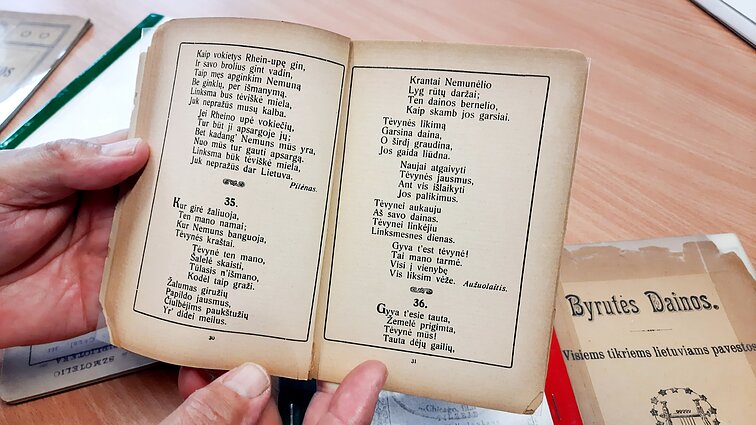
It’s an unusual test but just one of many attempts to explain the magic of the song that this year gave its name to the Lithuanian Song Festival: “May the Green Forest Grow”. The festival tradition itself is included in the UNESCO intangible heritage list, and is marking a centenary in Lithuania. Over the last four decades, this song has become a sort of festival staple. Many choristers agree that singing it gives them shivers each time, while audiences often breakdown in tears. For many choirs, it is a song they are singing while touring abroad as part of a patriotic ritual, and there is also a tradition to perform it as a musical “Thank you”. But a closer look at the phenomenon reveals even more surprising facts involving a mixed-up authorship, overcoming Soviet censorship and the power of music in difficult times.
Author and sound designer: Vaida Pilibaitytė.
Editor: Vita Ličytė.
Archives assistant: Jonas Korys.
English translation: Vaida Pilibaitytė, Justinas Šuliokas.
English subtitles: Laurynas Milašauskas.
Cover photo by Vaida Pilibaitytė.
Radio documentary
Kitos nuorodos: