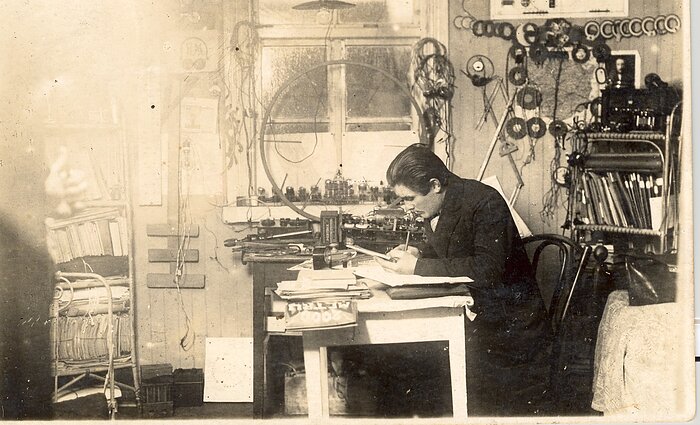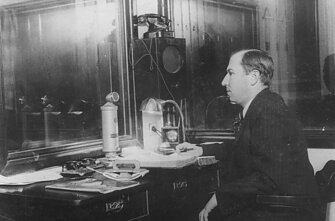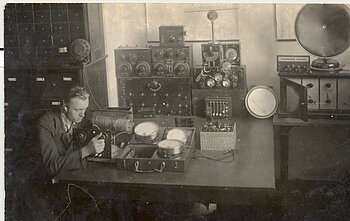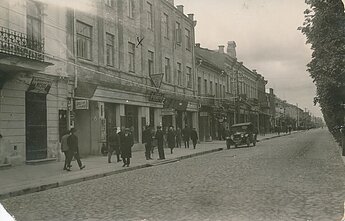







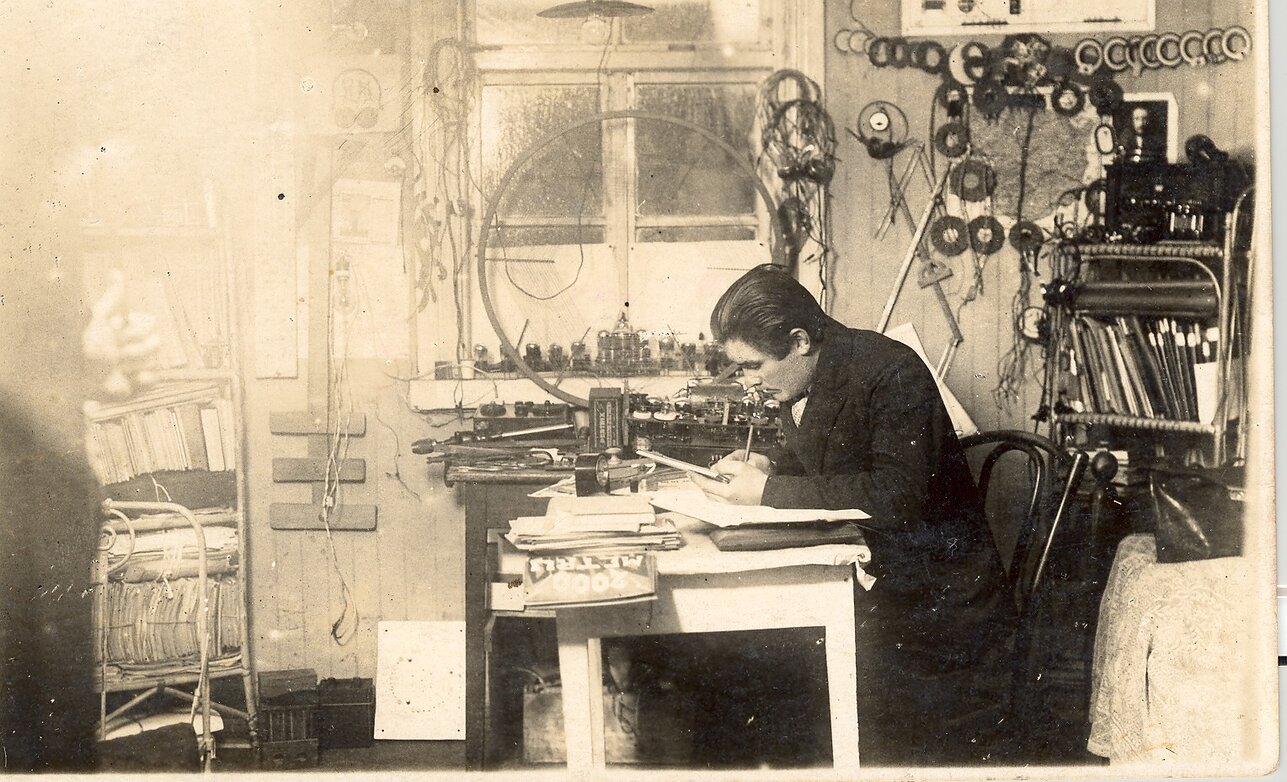
With the first radio broadcast in 1926, Lithuania stepped into the technological age. Here’s how the history of radio in the Baltic country, as well as elsewhere in Europe, played out.
“People imagined that radio should also educate the nation in a patriotic spirit – that this was its mission. Officers, priests and teachers were especially vocal in expressing that view,” says historian Titas Krutulys.
The use of radio for civilian purposes began across Europe at roughly the same time. Radio communication technology had been adapted during the First World War, and in many countries, radio was associated with the military.
Only in the interwar period did country after country begin adapting the technology for mass communication.
The first radio broadcasts in the United States began in 1916, in the United Kingdom in 1922, in France a year earlier and in Germany in 1923.
Lithuania found itself alongside the Scandinavian countries in adopting the technology in 1926. Ireland and the Balkan states followed later, while Albania and Andorra were among the last to hear their first broadcasts.
When broadcasts began, they did not immediately become part of everyday life. According to Krutulys, radio’s influence during the interwar period remained fairly limited, and programme variety developed gradually.
“If we look at the average number of broadcast hours per day, we can see that Lithuania’s radio schedule grew little by little – from just a few hours on working days. On the eve of the Second World War, we already had a situation where the radio was broadcasting seven to eight hours a day,” the historian explains.
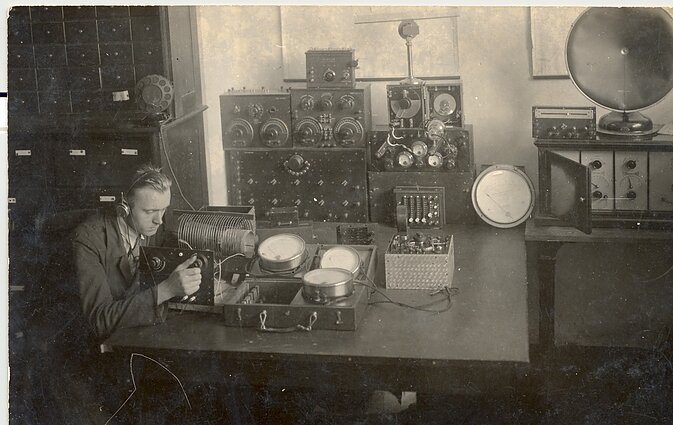
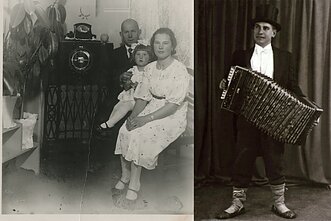
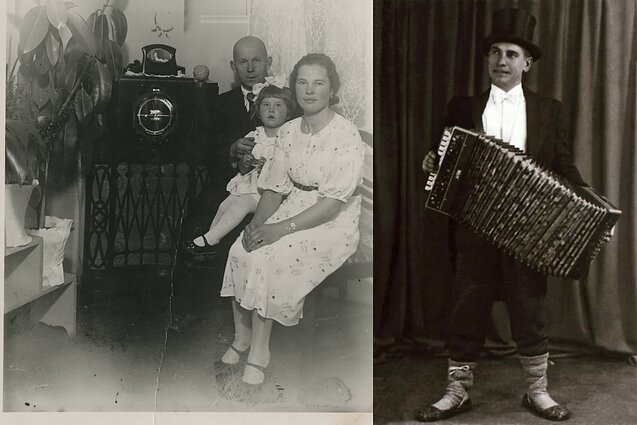
Counting radio listeners in the interwar period is not difficult because there was a compulsory licence fee. While there were around 300 radio sets when the first broadcasts began, the number later grew rapidly and reached about 80,000 by the eve of the Second World War.
However, Lithuania lagged far behind in relative terms. In Denmark and the United Kingdom, there were around 200 radio sets per 1,000 inhabitants, while in Lithuania and Poland, the level of radio use was roughly ten times lower.
There was also a sharp divide between urban and rural listening habits. Radio first became a source of information for city dwellers.
“Lithuania’s average was about 23 receivers per 1,000 people, but in Klaipėda the figure was 177 and in Kaunas 131. Around 42% of radio subscribers were farmers, 19% civil servants, 11% teachers and representatives of other professions, 9% industrialists and merchants, 5% workers and about 3% priests,” Krutulys says.
He emphasises that these figures do not reflect the full structure of society at the time, but they do show who the programming was aimed at, with most content directed at urban residents and farmers.
In the early years of broadcasting, there were also some strange accusations: people sometimes blamed radio waves and broadcasts for stronger storms or droughts. In other words, new technology was feared and associated with misfortune.
“In the very beginning, in 1926–1927, many farmers wrote that radio spoiled the weather and caused storms, and that heavier rain was the result of radio being introduced. Some people believed radio caused natural disasters,” the historian says.
Entertainment, propaganda and popular culture
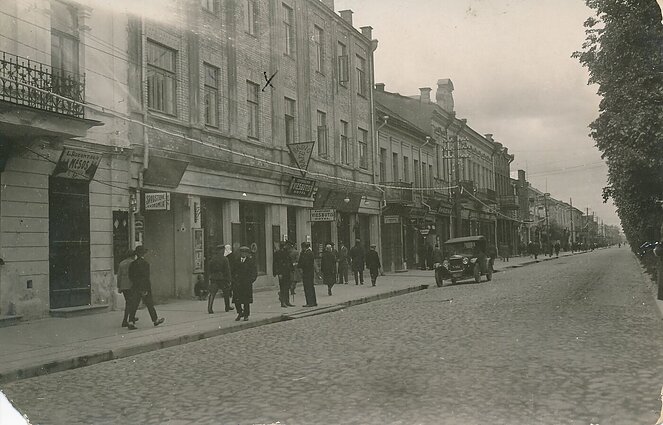
During the interwar period, Lithuania had two radio stations, with the one in Kaunas serving most of Lithuania.
As sympathy for Nazism grew, the state launched Klaipėda Radio in 1936. Its broadcasts were aimed at Klaipėda and Lithuania Minor, spread between the Konigsberg region and western Lithuania. The station was headed by the famous pilot and aircraft designer Antanas Gustaitis.
Although the radio stations were supervised and controlled by the state and propaganda was present on the airwaves, entertainment programmes also made up a significant share of the content.
“A popular feature of radio at the time was radio drama. Nineteenth-century operas were also broadcast, usually introduced with some historical context, and historical literature – more precisely historical novels and short stories – was read on air,” Krutulys says.
Surviving listener questionnaires reveal a great deal about public expectations. The range of requests was very broad, but above all, listeners demanded simpler music, because so-called “serious” music did not appeal to everyone.
“Already in 1928, people were complaining that only classical music was being played and listeners missed simpler songs,” the historian explains.
In 1929, the radio service and its supervision were transferred to the Ministry of Education. This reinforced the expectation that radio would serve as an educational platform.
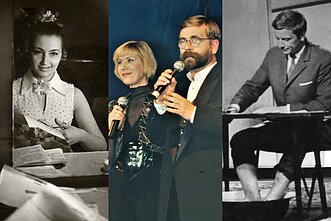
Nevertheless, broadcasters had to adapt to audience tastes and find ways to attract listeners. One of the most successful and memorable radio personalities was Petras Biržys, known as Pupų Dėdė.
His political satirical songs sometimes angered the leaders of authoritarian Lithuania.
“Biržys himself claimed he was arrested at least 10 times and even imprisoned because of what he said on the radio. It is likely that at least some of his harsher remarks about [President Antanas] Smetona or his circle led to various punitive measures,” Krutulys says.
Education, radio lectures and even the broadcasting of Masses became part of the station’s mission. Beyond opera broadcasts and news, radio was also involved in educating the nation. A significant portion of airtime was devoted to the issue of Vilnius.
Programmes became part of an information struggle after Vilnius Radio began operating in 1927. Kaunas sought to shape the opinions of Lithuanians living in Vilnius, then occupied by Poland, and for most of the interwar period, the Vilnius question remained one of the country’s central concerns.
“Some of the most important programmes were dedicated to Vilnius. Programmes such as Vilnius Hour, Occupied Vilnius and Our Vilnius constantly emphasised the fact of occupation and explained the difficult situation of Lithuanians in the region,” Krutulys says.
Patriotism was actively promoted, and military officers and the Riflemen’s Union were given airtime. The relationship between radio and the Catholic Church, however, was more complicated.
A tense relationship with the Church
Although Christians made up the majority of the population and religious programmes were broadcast, Masses were initially admitted to the airwaves only reluctantly. They began to be broadcast only in 1930. Even so, some clergy remained deeply sceptical of radio.
“Priests often accused the radio of promoting atheism. They claimed it supported freethinking, although there was not much basis for that. Whenever they had the chance, they stressed that radio should spread a Catholic worldview and propaganda,” Krutulys says.
While Masses struggled to find a place on the airwaves, other unusual content did appear. Esperanto, the artificial language that was then hoped would become universal, became fashionable in the interwar period. Its enthusiasts had their own radio segments.
“There were lessons on how to speak Esperanto, and even news bulletins were read in Esperanto. Stasys Sabalys stands out as one of the most active Esperanto enthusiasts and producers of these programmes. Interestingly, reports about Lithuanian history and current affairs were also read in Esperanto,” Krutulys says.
Most news content came from the ELTA news agency and other official institutions, along with weather forecasts.
The beginnings of radio in interwar Lithuania can therefore be seen in two ways. On the one hand, it was a tool for spreading state-approved messages.
On the other hand, radio was viewed as an educational platform that might one day even replace traditional schools – or so many people believed in the first decades of broadcasting.
“There were discussions that perhaps pupils would not need some lessons, because the radio captured attention so well and students could obtain information from it. At the same time, many debates emerged about a ‘people’s university’ and how radio should become a universal educational institution reaching even remote villages and people who had never attended school,” Krutulys says.

Newsletter
Every Friday morning.