












Teaching Lithuanian in foreign universities plays a vital role in strengthening Lithuania’s cultural ties, expanding international cooperation, and shaping the country’s image abroad. These efforts are being successfully led by Vilnius University (VU), which works in partnership with Baltic studies centres around the world – by sending lecturers, hosting students, organising internships, conferences, and language courses.
The Department of Baltic Studies at the VU Faculty of Philology has introduced the lecturers, students and alumni of these centres as the true ambassadors of Lithuania abroad, the university said in a press release.
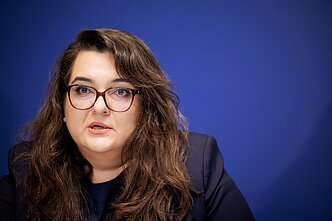
Dr Joanna Tabor, Head of the Department of General Linguistics, Gesture Studies and Baltic Studies at the University of Warsaw, is a scholar recognised for her contribution to Lithuania and awarded the Knight’s Cross of the Order “For Merits to Lithuania”.
She recalls how her journey into Lithuanian studies began, and how in 1995, after finishing school, she realised that everything she knew about Lithuania was shaped by a romanticised image, formed by reading the works of Adam Mickiewicz, Józef Ignacy Kraszewski and Czesław Miłosz.
Driven by curiosity and a desire to learn more about the country, she decided to pursue Baltic studies. Her choice may also have been influenced by family heritage – her ancestor Wajciech Albert I Tabor was a notable 15th–16th century figure in the Lithuanian Catholic Church, known for his support of the construction of the capital's defensive walls.
Dr Tabor says she never doubted her decision to pursue the field, although the studies were far from easy. The biggest challenge was mastering Lithuanian stress patterns: “In my opinion, it’s almost impossible for a foreigner to speak Lithuanian without an accent. When I was studying, I was sometimes afraid to speak up, worried I would say something incorrectly.” Still, she has always encouraged Baltic studies students to persevere and not fear mistakes: “It doesn’t matter what your accent sounds like – the most important thing is to communicate.”
She holds fond memories of her Baltic studies. What struck her most in the early lectures was the melody and sound of the Lithuanian language. The studies added colour to her life, enriching her both academically and culturally. According to Dr Tabor, language learning offers a new way of seeing the world – often through an unexpected lens.

Study friends – like a family
The Department of Baltic Philology at the University of Warsaw’s Faculty of Polish Studies was established in 1990, though Baltic studies as a separate programme began five years later. In the first year, 12 students enrolled, including two Lithuanian girls from the Punsk region. “The others were like me – odd ones, drawn to Baltic studies rather than the popular fields of business or economics. They were fascinating people with broad interests. One coursemate, Lucia, remains my closest friend, and I still keep in touch with the others. We functioned like a family,” she recalls, highlighting the warmth and support of the academic community that encouraged her to continue.
At the time, the university hosted well-known linguists like Axel Holvoet, Wojciech Smoczyński, and talented Lithuanian lecturers such as Ona Vaičiulytė-Romančuk, Irena Aleksaitė, Nijolė Birgiel and others.
In her third year, she spent a semester in Vilnius: “I lived in a dormitory in Saulėtekis with a colourful group of students from Finland, Norway, Japan, Russia, and the UK.” Dr Tabor took part in the Lithuanian language and culture courses for foreigners at the VU Faculty of Philology, which continue to attract learners from around the world.
“We studied Lithuanian intensively, but also had fascinating lectures on culture, for instance, with Dr Bronė Stundžienė. We also went on trips across Lithuania. Studying in Vilnius gave me the push to start speaking – in everyday life, I had to use Lithuanian,” she explains.
After completing her MA, she entered a doctoral programme, undertaking placements in Vilnius and collecting material for her dissertation. Her chosen topic was unconventional – she explored parallels between the writing of Jurgis Savickis and the paintings of Polish artist Witold Wojtkiewicz.
“It turned out that both depicted children in a very modern, unsentimental way. Masks also played a key role in their work, underlining the ambiguity of the characters and situations portrayed,” she explains. After defending her dissertation, she briefly left academia to work in publishing.
Later, the Baltic Philology alumna began teaching Introduction to Lithuanian Literature and Editing to students in the Baltic Studies department at the University of Warsaw – subjects she had hands-on experience with. She soon became head of the department:
“I try to pass on my love for the Lithuanian language and culture to students and promote Lithuania in Poland, mainly through translation.”

Dr Tabor has translated works by a wide range of Lithuanian authors, including Ričardas Gavelis, Kazys Saja, Jurgis Savickis, Renata Šerelytė, Undinė Radzevičiūtė, Birutė Jonuškaitė, Giedra Radvilavičiūtė, Laurynas Katkus, Rimantas Kmita and others.
She has also translated academic texts by Viktorija Daujotytė, Kristupas Sabolius, Dainora Pociūtė, Jūratė Čerškutė, Brigita Speičytė, and Aušra Martišiūtė-Linartienė.
Younger generations of Balticists are also translating Lithuanian literature into Polish. Many of the Lithuanian titles published in Poland in recent years are the work of scholars from the Warsaw Baltic Studies programme.
Falling in love with Vilnius
Dr Tabor says learning Lithuanian opened many doors and broadened her perspective. “When I arrived in Vilnius, I fell in love with the city immediately,” she admits. She recalls spending countless hours wandering the streets of the Old Town and Bernardine Cemetery, admiring the architecture. The Church of St Peter and St Paul left the deepest impression.
She feels at home in Vilnius – one of her favourite cities in Europe. “When I haven’t been for a while, I start feeling the pull to go back,” she says. She also misses the Curonian Spit – especially its calmness outside of the tourist season, in Nida.
Joanna often travels to Lithuania, both for work and to see friends. She has many – close, true friends with whom she travels and holidays. “Baltic studies gave me the chance to meet fascinating people,” she concludes with a smile.

Newsletter
Every Friday morning.