



Lithuanian MPs have rejected proposals to reveal the identities of people who have confessed to collaborating with the former Soviet KGB.
On Wednesday, the parliamentary Committee on National Security and Defence (NSGK) voted down separate bills put forward by MP Arvydas Anušauskas of the conservative Homeland Union–Lithuanian Christian Democrats (TS-LKD) and Remigijus Žemaitaitis, leader of the Nemunas Dawn party.
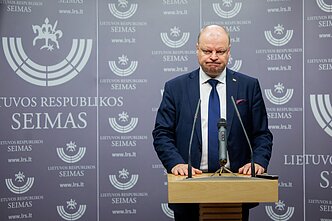
“In my opinion, neither of these bills should be approved,” said Juozas Olekas, First Deputy Speaker of the Seimas, ahead of the vote.
Further reading
The Social Democrat argued that disclosing the names of those who confessed would only benefit individuals who concealed their ties to the Soviet repressive apparatus and failed to come forward.
Conservative MP Arvydas Pocius called for careful consideration of what the state and public would truly gain from unsealing these records, warning of potential harm.
Independent MP Vytautas Sinica framed the issue as one of historical justice. He noted that the Lithuanian state had already honoured its original promise to protect the identities of those who confessed.
Sinica also questioned arguments that disclosing names would help Russian intelligence identify unregistered collaborators for blackmail, pointing out that many agent files remain in Russian hands.
Remigijus Bridikis, the newly appointed director of the State Security Department (VSD), also opposed declassifying the names of confessed collaborators, citing risks of exposing sensitive information to hostile actors.
Anušauskas has proposed amending the existing law to remove the provision that keeps the identities of confessed KGB collaborators classified for 75 years. His proposal would place future decisions on access to such information under the authority of government-designated institutions.
Žemaitaitis’ draft law outlines exceptions to confidentiality, suggesting that the identities of confessed collaborators should be disclosed if they belong to specific categories, including state politicians, public officials, judges, intelligence officers, career military personnel, heads and deputies of state or municipal institutions, public information producers, and political party members.
The current legislation, in effect since February 1, 2000, allowed former KGB and other Soviet intelligence operatives and informants to confess to a special commission. Those who came forward were guaranteed confidentiality for 15 years.
In June 2015, as the initial deadline approached, the Seimas extended the secrecy period to 75 years through an amendment.
However, the law does not guarantee absolute secrecy.
If such individuals run for public office –including the president, member of parliament, or local government – or apply for posts as judges or prosecutors, their confession is no longer considered a state secret and must be publicly disclosed as part of their official biography.
In 1991 and 1992, former KGB collaborators were offered an opportunity to confess to a temporary parliamentary commission.
A total of 1,589 individuals eventually registered their past collaboration with Soviet intelligence through the Lustration Commission.
While several attempts have since been made in the Seimas to lift the secrecy of their identities, none have been adopted.

Newsletter
Every Friday morning.