







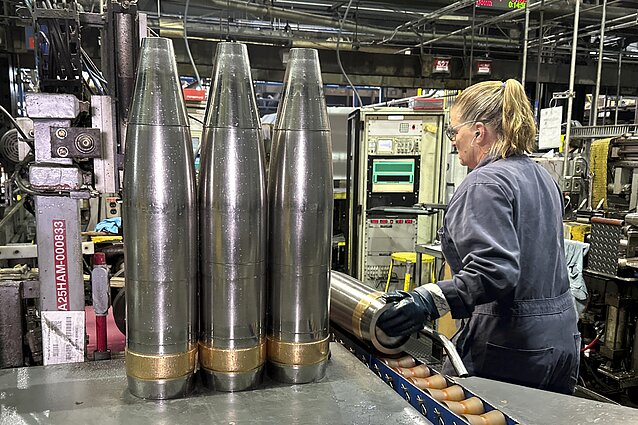
As the German ammunition factory is set to launch production in Lithuania within a year and a half, military industry reps are calling for a political push to kickstart European arms production.
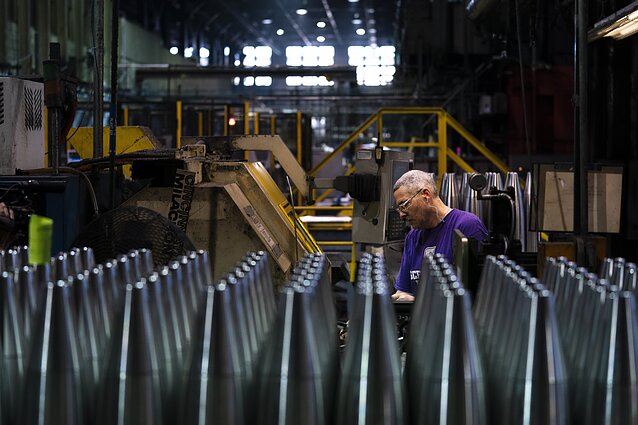
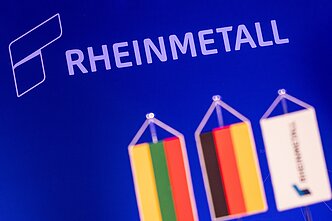
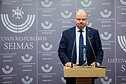
Last week, Lithuania’s outgoing government handed over a plot of land to the German ammunition manufacturer Rheinmetall. The company’s representatives said a new munitions factory there, near the town of Baisogala, would be up and running by mid-2026.
Roman Koehne, head of the future plant, says that the conditions for the plant have been created quickly. But most importantly, it will change the dynamics of munitions production not only in the region but in Europe as a whole.
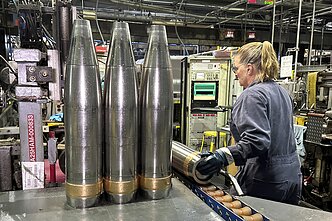
“The plant we are building, from the perspective of ammunition volumes, will definitely make a difference. It is a big step forward, not only for Lithuania but also for Europe. I would like to add that there is always room for expansion – perhaps new projects at the plant, new products. Lithuania can create an ecosystem for munitions and contribute to Europe and NATO,” says Koehne, CEO of Rheinmetall Defence Lietuva.
Another important agreement with Rheinmetall is that Lithuania has secured the possibility to purchase as much ammunition as it needs at market price.
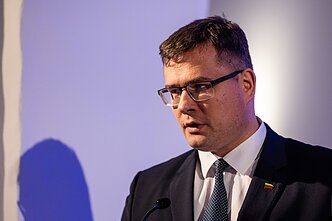
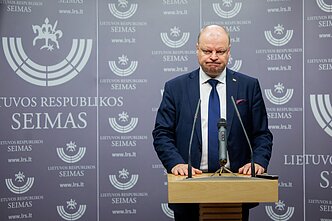
“First of all, the number of projectiles. I can’t name that number yet, but it is perfectly within our parameters as far as what we need for our stocks,” commented acting Defence Minister Laurynas Kasčiūnas.
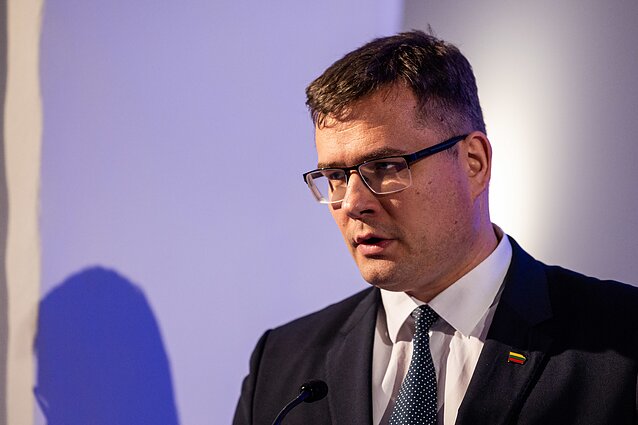
“We are solving the very important issue of [stockpiling] 155 mm ammunition in this way. Not to mention that there is less dependence on supply chains, that production is based here. […] Strategic autonomy for munitions – that is a huge thing,” he added.
Moreover, Rheinmetall’s foothold in Lithuania may also raise interest among other military industry companies. According to LRT TV sources, another German company, Quantum-Systems that produces unmanned aerial vehicles and systems, is also interested in expanding to Lithuania.
According to the company’s CEO, Quantum-Systems has been cooperating with Ukraine since the beginning of the war. The company’s products have made a significant contribution to Ukraine’s UAV operations, even establishing a logistics and spare parts centre.
“Here’s an analogy: the water level in a dam rises to two metres, the pressure increases, but our dam is only one metre high. It’s a problem. We have to respect this reality and that means we have to increase the number of troops, we have to increase our capacity. We have to respect the impact that unmanned systems have made and how that increases productivity. After all, we don’t have the manpower to fight,” says Sven Kruck.

Political barriers
The war in Ukraine has not led to a massive boost of the defence industry in Europe, mostly because there have not been political incentives, say defence industry representatives attending a conference organised by the German-Baltic Chamber of Commerce.
“We can clearly see that the policies of different countries are holding the industry back. We know we need to invest more, we want to, but unfortunately we don’t see the urgency. The need for urgency seems to prevent politicians from taking the right decisions,” says Lynn Scheinman, an SAP expert.
Germany is one of the countries that set the industrial pace in Europe. It is the continent’s largest donor to Ukraine and one of the largest defence industrial powers. But it is now now trapped in a political and economic crisis.
“Production has increased in Germany, but I think we are now in a situation where all German politicians know very clearly that the defence budget will have to be increased again. This has still not been done by our outgoing government. We therefore look forward to a new government next year that will not only properly assess the needs, but also encourage industry to increase production again,” argued Hans Christoph Atzpodien, head of the German Federation of the Security and Defence Industry.
Artis Pabriks, former Latvian minister of defence and foreign affairs, insists that politicians in Europe need to be pressed to invest in defence. But the best way to convince politicians is to set an example.
“Today, time is very precious. What we need now is to form coalitions with countries that are on a similar scale to us. At the moment, the countries around the Baltic Sea – Finland, Sweden, Norway, Denmark, the Netherlands, the United Kingdom, Poland – are thinking about developing and strengthening their defence. And it is very important to maintain the transatlantic link,” Pabriks, who now chairs the Board of the Latvian Defence Association, argues.
Former and future US president Donald Trump was one of the first to put pressure on European NATO members to raise their defence spending. Germany in particular drew Trump’s ire six years ago for failing to reach the 2-percent GDP benchmark.
Berlin did it after Russia’s invasion of Ukraine, but now the pressure, particularly from eastern NATO members, is to go up to and beyond 3 percent of GDP.
The defence industry welcomes the developments: if military budgets are going up, if contracts are being awarded for long-term acquisitions, the assembly belts will start moving faster.

Newsletter
Every Friday morning.