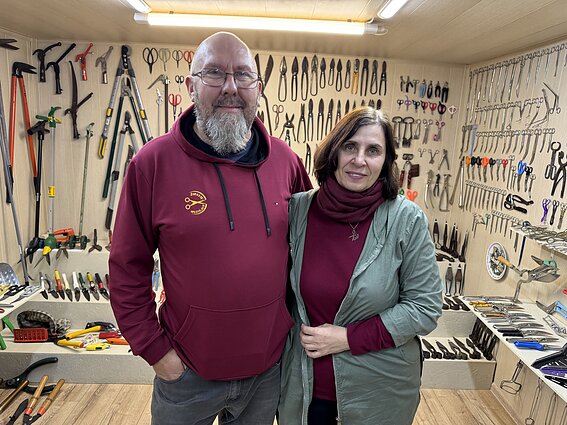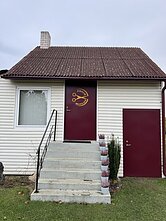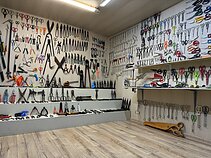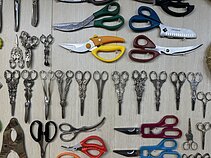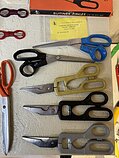









An unusual collection has given rise to an entire museum that welcomes visitors in the countryside of western Lithuania.
“You can’t collect all the scissors in the world, but you have to try,” laughs Kęstutis Mėlinis, who has set up a scissors museum in his farmhouse. The Scissors Museum, located in the village of Griniai in Kelmė District, boasts more than 1,500 exhibits and is the only one of its kind in the country.
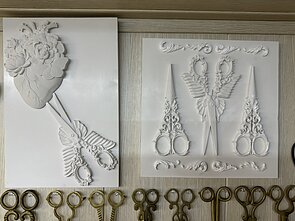
While seemingly an everyday object, Mėlinis has items in his collection that are anything but.
“Musical scissors from South Korea attract people to buy sweets. Suddenly, I saw that a childhood friend of mine works at the South Korean Embassy. I asked him, he bought it, and that’s how I have it. Scissors are not only for cutting hair, but also for playing music. In Peru, there is even a dance with scissors,” he tells LRT RADIO’s programme Beyond Vilnius.
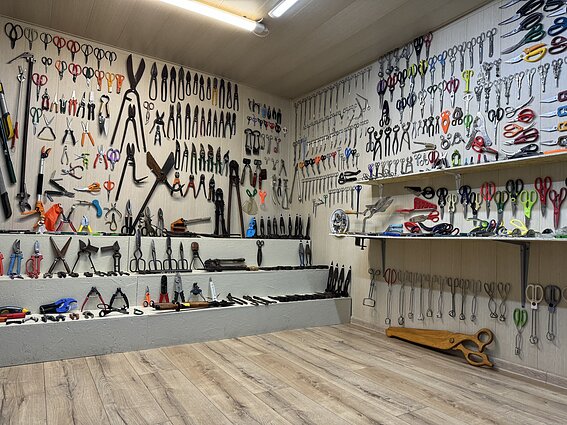
Mėlinis admits that he used to collect candy wrappers and postage stamps, but then wanted to have something unconventional.
“I used to collect candy wrappers as a child. In those days, there were quite a few of them. As an adult, I collected matchbox labels, postage stamps, coins, drink labels and cans. Then I thought I should do something more interesting, unconventional, something that not many people collect. So I started this collection nine years ago. I don’t know anyone else in Lithuania who collects scissors,” says Kęstutis.
As he says, his favourite part is looking for strange and interesting scissors. “Just recently, I found out that stained-glass makers also use double-bladed scissors to cut glass and drawings,” he says.
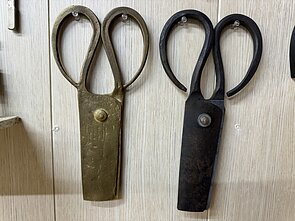
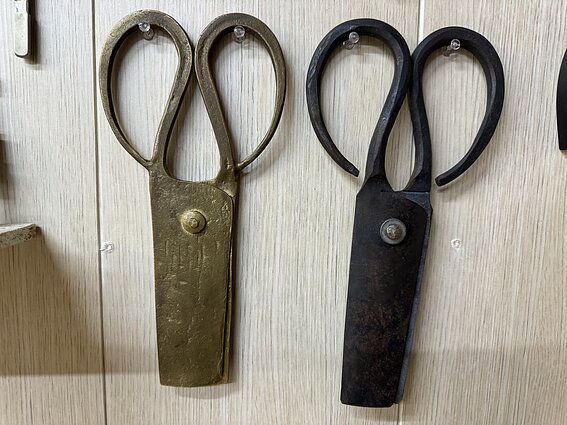
Visitors to Mėlinis’ museum can also learn about the history of the scissors. The oldest scissors in Lithuania, according to the collector, were found in the Gibaičiai cemetery in Šiauliai District.
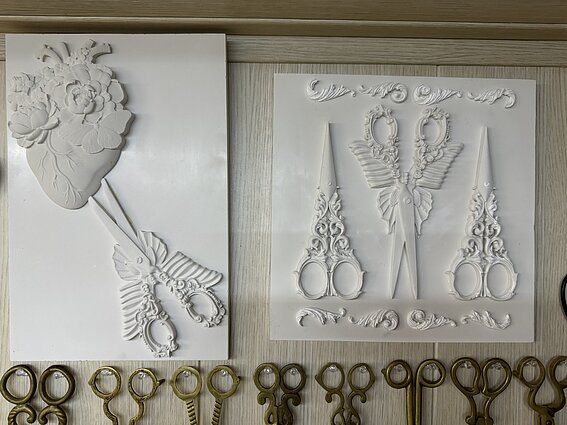
“According to literature, the first scissors – single-edged scissors – appeared 3–4,000 BC. The two-pronged scissors with rings that we are familiar with appeared in the Christian era around 100 AD in the Mediterranean region.
“In Lithuania, the first scissors were found in a woman’s grave in Šiauliai District, in the Gibaičiai cemetery, dating back to 300 AD,” he says.
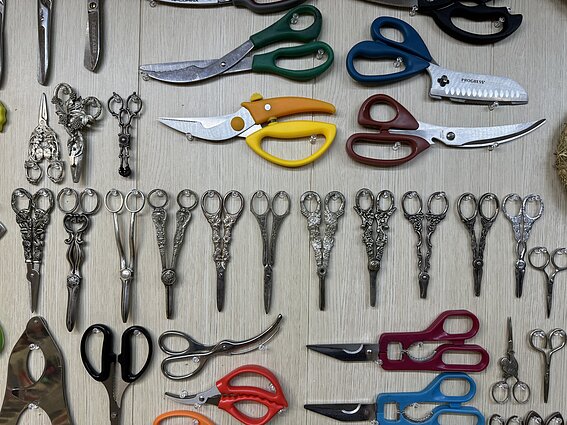
China and Taiwan produce 70 percent of the world’s scissors, while European countries account for only a few percent, says Mėlinis. The most practical kitchen scissors, he says, are those with a hole in the middle for opening cans or shelling nuts.
“You can open a bottle, crush a walnut, cut up a chicken,” he explains.
Sharp stories
Mėlinis opened his Scissors Museum two years ago. Visitors can expect more than just to see a bunch of tools.
“The most important part is my story. When people are interested, I keep them busy for an hour to an hour and a half, whether it’s just one person or an entire bus. I always ask when the person first encountered scissors in their life. And the first time they do is when they are born – to cut the umbilical cord,” says Mėlinis.
The man admits that sometimes he has to pay a lot of money for a pair of scissors that he likes, but he does not keep a register of what he paid for what. But it happens that particularly interesting items just fall into his lap as a bargain or a present.
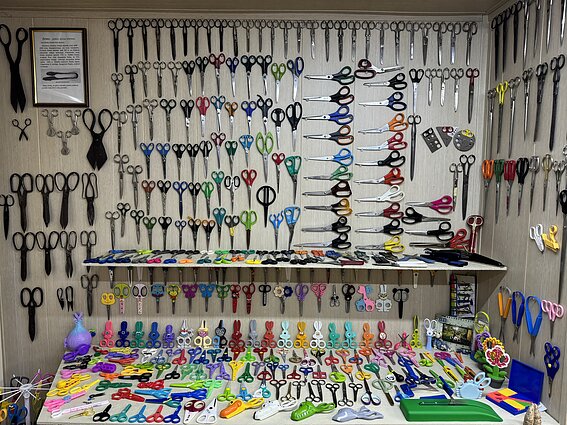
“I don’t keep a record of what I’ve paid. It’s easier on the head when you don’t know. Forgetting doesn’t hurt,” he says.
Collector wife
Kęstutis’ wife Edita also has her own hobbies. She collects mugs that remind her of other parts of the world, and she likes to weave hay.
“As a collector myself, and as I collect mugs with symbols from the places I visit, I also meet different people who tell me what they collect. I never seem to get any cup collectors,” she says.
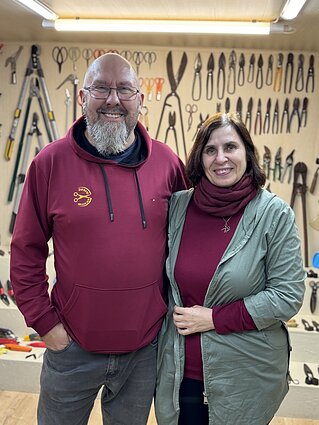
Edita’s collection now consists of about 150 mugs.
She enjoys living in the countryside, Edita adds, and there is no shortage of activities to keep her busy. It would be a nightmare if the family had to live in an apartment block, Kęstutis adds.
“I love it, I adore the countryside because it is full of good things. I am a collector of herbs, spices. I like to grow my own, and I like to run around in the woods, and afterwards I like to treat visitors and guests, my family,” says Edita.
“In the summer, it’s particularly hectic. The minute I leave for work, my husband is calling: visitors are on their way,” she adds.

Newsletter
Every Friday morning.